

The resignation of Joe Kent and Tulsi Gabbard’s Senate testimony regarding the Iran war have sparked a familiar debate in American politics: is there a growing rift between the so-called “deep state” and President Donald Trump’s administration, or are these simply routine disagreements within a complex governance system? Although the idea of a hidden institutional rebellion has gained traction in political discourse, a closer examination suggests a more nuanced reality, characterised by internal tensions, contested narratives, and shifting electoral implications rather than an outright institutional rupture.
Joe Kent’s resignation is a rare and significant moment of dissent from within the national security establishment. As a senior counterterrorism official, Kent reportedly challenged the administration’s justification for military escalation against Iran, arguing that the country did not pose an imminent threat. More critically, he suggested that key intelligence assessments may not have been fully communicated to the president, raising concerns about the integrity of decision-making processes at the highest levels of government. His claims point to a centralisation of authority within a narrow advisory circle, where dissenting views risk being filtered out before they can influence policy.
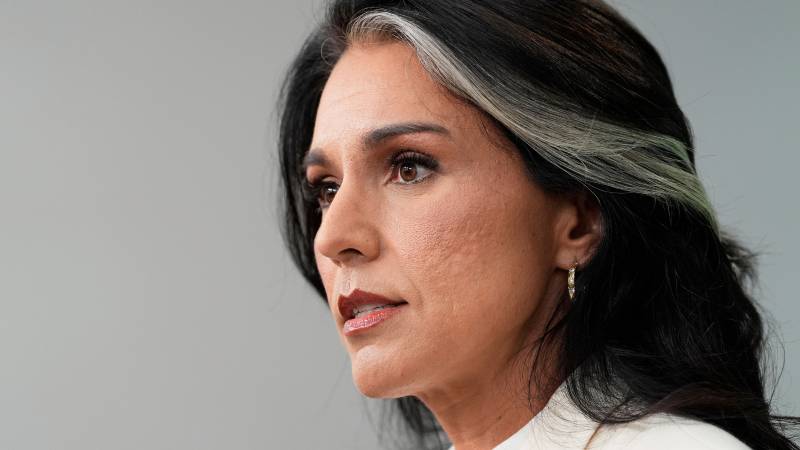
Tulsi Gabbard’s testimony before the Senate adds another layer of complexity to this unfolding situation. As the Director of National Intelligence, her role is to provide objective assessments of global threats. However, her statements reflected a careful balancing act. While acknowledging that Iran had been weakened, she stopped short of endorsing the administration’s claim of an imminent threat. At the same time, she reaffirmed that determining threats ultimately falls within the president’s authority. This dual posture, combining professional caution with institutional deference, highlights the inherent tension between intelligence analysis and political decision-making.
Taken together, these developments do not amount to a coordinated “deep state” rebellion. Instead, they reveal a fragmented policy environment in which various actors within the state apparatus—intelligence officials, political leaders, and advisers—hold competing interpretations of risk and strategy. Disagreement within government is not new, especially regarding war and foreign policy. However, what is notable is the visibility of these disagreements and their emergence in the public domain through resignation and congressional testimony.
From an institutional perspective, three key dynamics emerge. First, there is a clear centralisation of decision-making within the executive branch. When policy is shaped by a small group of advisers, the likelihood increases that alternative perspectives will be marginalised. Second, this episode underscores the politicisation of intelligence. Rather than serving as a neutral basis for decision-making, intelligence assessments appear increasingly subject to contestation and selective interpretation.
If the conflict remains contained and does not significantly affect domestic conditions, its impact on voter behaviour may be limited
Third, the situation reveals the limitations of institutional checks and balances. Despite visible dissent, Congress has struggled to exert meaningful constraint on executive war-making powers, highlighting the enduring asymmetry between the branches of government in matters of national security.
The significance of these developments lies not only within the corridors of power but also in their broader political consequences. For American voters, the impact is less about institutional theory and more about perception—specifically regarding leadership, credibility, and trust. As the United States approaches the midterm elections, these events are likely to subtly shape voter attitudes.
For Trump’s core support base, Kent’s resignation is unlikely to weaken their political loyalty. Instead, it can be interpreted through a familiar populist lens: that unelected bureaucrats and intelligence officials are resisting an outsider president determined to challenge entrenched elites. This narrative reinforces Trump’s long-standing political appeal as a leader confronting a resistant establishment. Gabbard’s testimony, which emphasises presidential authority, may further bolster this perception, suggesting that despite internal disagreements, ultimate control resides firmly with elected leadership.
The picture is more complex among moderate and independent voters, who often play a crucial role in midterm elections. For these groups, Kent’s assertion that Iran did not pose an imminent threat raises concerns about transparency and the possible manipulation of intelligence. Gabbard’s cautious stance may reinforce doubts about the strength of the administration’s case for war. In the absence of a clear and widely accepted threat, public support for military action tends to diminish, particularly if the conflict leads to economic strain or prolonged instability.
Among Democratic voters and anti-war constituencies, these developments are likely to be galvanising. Kent’s resignation provides an insider critique that can be used to question the legitimacy of the war, while Gabbard’s testimony offers further evidence of misalignment between intelligence assessments and political claims. In the context of a midterm election, where voter turnout is critical, such issues can serve as powerful mobilising tools, especially when framed in terms of executive overreach and the erosion of institutional accountability.
Economic factors will also play a crucial role in shaping electoral outcomes. If the conflict with Iran leads to rising oil prices, inflation, or broader economic disruption, voters are likely to link these developments to the administration’s foreign policy decisions. In such scenarios, Kent’s warnings may gain retrospective significance, increasing the political costs for the administration. Conversely, if the conflict remains contained and does not significantly affect domestic conditions, its impact on voter behaviour may be limited.
At a deeper level, these events contribute to an ongoing erosion of trust in institutions, but in a highly polarised manner. Rather than producing a shared scepticism, they reinforce existing divisions. Supporters of the administration may view these events as evidence of bureaucratic obstruction, while critics interpret them as signs of executive overreach. This divergence underscores a central feature of contemporary American politics: the same set of facts can generate entirely different political meanings depending on the audience.
In electoral terms, the most likely outcome is not a dramatic realignment but a marginal shift at the edges. Midterm elections are often decided in swing districts and among suburban voters, where small changes in perception can have disproportionate effects. If the opposition successfully frames the issue as mismanagement and a lack of transparency, it could influence these crucial segments. However, if the administration maintains a narrative of strength and necessity and avoids visible policy failures, the political damage may remain contained.
Ultimately, while the resignation of Joe Kent and the testimony of Tulsi Gabbard do not signal a deep institutional crisis within the American state, they reveal a system characterised by internal tensions, competing narratives, and the constant negotiation of power between expertise and authority. For voters, the significance of these events will depend less on their immediate impact and more on how they are interpreted, sustained, and connected to broader political and economic outcomes in the months ahead.