

The U.S./Western push for regime change in Afghanistan, Iraq, Libya, and Syria triggered violence and bloodshed, leading to widespread migration and internal displacement. Now, the question of regime change in Iran—supported by Israel, the United States, and some Western powers—brings its own dangerous ramifications. Israel and the United States argue that the removal of the Islamic regime in Tehran will automatically dismantle Iran’s nuclear programme. Hence, their focus is to exert maximum military pressure on Iran, aiming to bring about regime collapse and replace it with a pro-Western government.
Is regime change in Tehran possible following the massive Israeli attack on Iran on June 13? What are the perils of such a change, and how will it impact the region—particularly Pakistan?
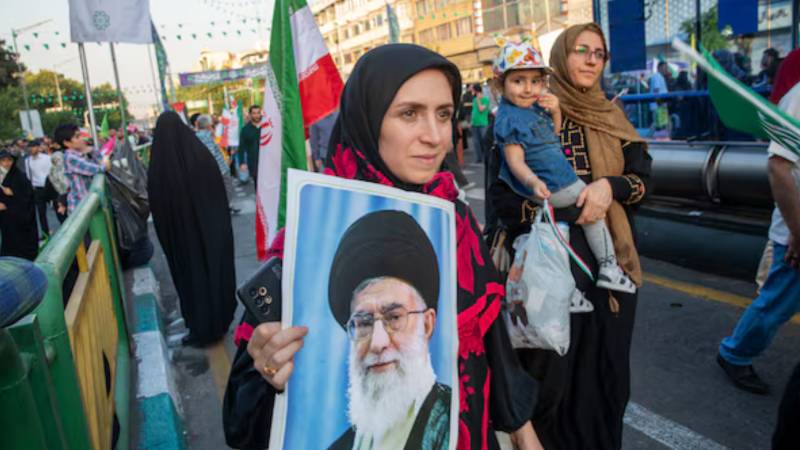
The U.S.-led policy of regime change is inherently disastrous. It creates a power vacuum typically filled by militant or violent groups, as witnessed in Libya and Syria. In the case of Afghanistan, the replacement of the Taliban regime after 9/11 led to a civil war that lasted two decades. Given the popular support base of the current Iranian regime, any forceful attempt to remove it will likely lead to mass domestic unrest and civil war. It is wishful thinking by Israel and the U.S. that opposition groups or pro-Shah factions will rise to support a Western-backed replacement regime.
Pakistan, as Iran’s western neighbour, sharing roughly 900 kilometres of border, will inevitably bear the brunt of any regime change in Tehran. This may come in the form of a refugee influx and domestic unrest stirred by pro-Iranian elements. Unlike in the case of Afghanistan, Pakistan cannot afford to remain indifferent to Israeli-U.S. efforts to overthrow the Khamenei regime and install a new government.
According to Newsweek’s 16 June 2025 opinion piece titled “Is Regime Change Possible in Iran?”: “Israel's campaign to set back Iran's nuclear programme reflects a shared, if mostly unspoken, ambition among Western and Arab allies: to end Iran's clerical regime. The terrible record of regime change efforts by the West has long muted such hopes—but Israel's early successes in the war are giving them interesting new life.”
If the Iranian people resist occupation, it will not necessarily be out of love for Khamenei—it will be out of patriotism and a desire to protect their homeland
Although U.S. President Donald Trump has deferred his decision to attack Iran by two weeks, will Israel wait? And can the U.S.—despite its advanced weaponry—succeed in replacing a regime with strong domestic support?
The Newsweek article further notes that Israeli jets have taken control of Iranian airspace, destroyed air defences, assassinated senior military and Revolutionary Guard officials, and heavily damaged numerous nuclear and missile sites. While most Iranian missiles were intercepted, some got through, killing more than 20 people in Israel.
With the regime exposed, Trump may issue an ultimatum to Iran—demanding the surrender of enriched uranium, an end to regional militia support, and cessation of ballistic missile production. If Tehran refuses, a U.S. strike becomes likely—potentially triggering Iranian retaliation, including strikes on American military targets like the Al Udeid airbase in Qatar.
The absence of open support from Arab or Muslim states for Iran has emboldened the U.S. and Israel. Whether veiled warnings from Russia and China will deter the Trump administration remains to be seen. The assassination of Iran’s top scientists and generals may have weakened the regime, but it could also be part of a larger trap—luring U.S. and Israeli forces into occupation, only to be met with fierce resistance.
From the CIA’s failed 1961 Bay of Pigs invasion of Cuba to the Iraq war of 2003, U.S.-led regime change has consistently produced catastrophic results. The toppling of Saddam Hussein, under false claims of weapons of mass destruction, plunged Iraq into chaos and inflicted severe human and financial costs on the U.S. Today, despite CIA confirmation that Iran does not possess nuclear weapons, Trump is still pushing for regime change.
Writing in the 18 June 2025 issue of USA Today, Susan Page observes: “Trump is making some of the same calculations that Bush did: Allegations of a nuclear threat, the urging of allies—in this case Israeli Prime Minister Benjamin Netanyahu—that the regime is weak and ripe to be toppled. And the appeal of making a bold stroke that solves a long-standing problem. But such decisions have often led to catastrophic consequences.”
Although the U.S. is covertly supporting Israel militarily, Trump has stopped short of a full invasion. His demand for Iran to unconditionally surrender and dismantle its nuclear programme has been outright rejected by Supreme Leader Khamenei.
Three key perils of regime change in Iran must be examined:
First, Iran’s capability to resist occupation. The Islamic Republic has endured for almost five decades, survived an eight-year war with Iraq, and remained resilient under decades of Western sanctions. How long can the U.S. engage with the Iranian state and its armed supporters? Can Washington risk a prolonged military engagement in yet another Middle Eastern country? The risk of Iran mining the Strait of Hormuz—a critical artery for global oil supply—could result in a global energy crisis. Such possibilities seem to have been ignored by both the Netanyahu regime and the Trump administration.
Second, Pakistan cannot escape the fallout. It has a long-standing relationship with Tehran. The 18 June meeting between President Trump and Pakistan’s Chief of Army Staff, General Asim Munir, in Washington, must not be misinterpreted. Critics point out that the U.S. is neither reliable nor credible; it has repeatedly abandoned Pakistan. There is concern that Washington merely flirts with Islamabad for strategic gain, while Pakistan tries to extract material benefits—often at the cost of principle.
If Pakistan provides airspace, bases, or logistical support to the U.S. in an attack on Iran, the domestic consequences will be dire. The history of Pak-U.S. relations since the 1950s has been marked by instability and mistrust—unlike Pakistan’s ties with China, which has consistently supported Islamabad during crises.
Former Israeli Deputy Defence Minister Meir Masri recently warned on social media: “After Iran’s campaign, we may seek to dismantle Pakistan’s nuclear programme.”
This chilling remark cannot be dismissed. The Indo-Israeli alliance has long targeted Pakistan’s nuclear assets. If Islamabad supports the U.S. in Iran, it may find itself next on the target list.
Furthermore, what will be the impact on Pakistan’s strategic partnership with China? If Islamabad sides with Washington, will Beijing remain neutral, or will it reassess its relationship with Pakistan?
If sanity prevails in the Trump administration, it will not fall into the Israeli trap of direct military confrontation with Iran.
Finally, the current crisis offers Tehran an opportunity for introspection. Why was Mossad able to infiltrate and assassinate high-profile figures? The regime must open political space for democratic engagement and tackle the entrenched mafias and corruption masquerading under revolutionary slogans. If the Iranian people resist occupation, it will not necessarily be out of love for Khamenei—it will be out of patriotism and a desire to protect their homeland.
For Israel, the U.S., and some Arab regimes, removing the Khamenei regime may appear to be the "opportunity of the century"—but the price of this gamble could be incalculable.
It is far better for Tehran to reform internally and for the world to give diplomacy a genuine chance—before catastrophe becomes inevitable.