

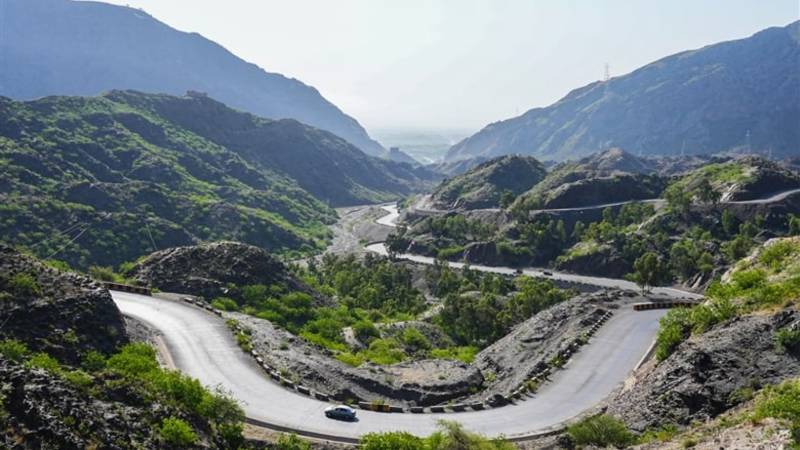
There are places that charm the eyes, and then there are places that stir the soul. District Khyber is one of the latter. More than just valleys and mountain passes, it is a living, breathing archive of civilisations, conquests, and cultures that shaped the subcontinent. As I stood amid its wind-swept peaks and sun-kissed plains, I felt not like a visitor, but like a witness to something ancient, sacred, and achingly beautiful. Khyber is not a destination. It is an experience, one that whispers its story through stones, scents, and silences.
The legendary Khyber Pass is more than a geographical corridor. It is the heartbeat of history. For centuries, it welcomed kings, conquerors, monks, and merchants. From Alexander the Great to Babur and the British, all walked this ancient artery that connects past and present. The Ali Masjid Fort, weathered but proud, stands like a poetic pause in time, reminding us that every wind that blows here carries the scent of an era long gone.
Beneath the rocky soil of Khyber lie the secrets of Gandhara, Buddhism, and pre-Islamic tribal might. This land is an open-air museum of stone carvings, stupas, ruins, and relics, each whispering their own truths to those patient enough to listen. You do not need an archaeologist's tools here, only a poet’s heart and a pilgrim’s curiosity.
If you seek meaning more than luxury, stories more than selfies, and skies that stir your insides, then Khyber awaits you
One of the most haunting and beautiful remnants of British colonial rule in Khyber is the now-defunct Khyber Railway. Its rusted tracks, abandoned tunnels, and skeletal bridges tell the story of a time when steam trains climbed these rugged mountains, connecting Peshawar to Landi Kotal. The journey was one of the most scenic rail rides in the world. Today, as the train lies silent, nature reclaims its path and history travellers walk along the tracks to imagine the thunder of wheels against the stones. The tracks may no longer carry carriages, but they carry echoes of ambition, empire, and enduring awe.
Tirah’s valleys roll like waves of green and gold, framed by commanding cliffs that rise like ancient guardians of time. The silence here is not empty. It hums. It is filled with the sound of hawks circling, springs gurgling, and wind brushing through pine needles like a prayer. The beauty is not soft or manicured. It is raw, wild, and unrepentantly powerful. Nature here does not just please. It speaks.
The people of Khyber are the soul of this place. In their stories, their music, and their fireside hospitality, you find a culture so rich and fierce that it defies the erosion of time. Women weaving, children reciting couplets, elders narrating myths, they are not clinging to the past, they are carrying it forward. Every shawl, every verse, every handshake is steeped in authenticity.
Khyber has also given us voices that rose beyond the hills, poets like Hamza Baba, the Sufi philosopher who wove metaphysics with tribal wisdom; Aseer Mangal and Rehman Baba, whose verses echo in every corner of the region. Poetry here is not just art. It is a way of remembering, resisting, and rising.
But even legends need love. Khyber today stands at a crossroads, rich in spirit but underdeveloped in resources. To preserve its magic, we must tread gently and build wisely. Better roads, schools, clinics, yes, but all with respect for its soul. Eco-tourism, heritage conservation, local entrepreneurship, these are the keys to unlocking a sustainable future where history and progress walk side by side.
If you seek meaning more than luxury, stories more than selfies, and skies that stir your insides, then Khyber awaits you. Let your boots touch this ancient earth. Let your eyes drink in the fierce grace of its ridges. Let your spirit rise with the wind of the Pass.
As the Sufi poet Hamza Baba once wrote:
ستا د جانان کلي ته چې زه تلم
د تاریخ پر زینو روان وم
When I walked toward my beloved’s village
I was walking up the staircase of history.
Khyber is that staircase.
Come, climb it. Listen to it. Feel it.
And in doing so you may just find a forgotten piece of yourself.