

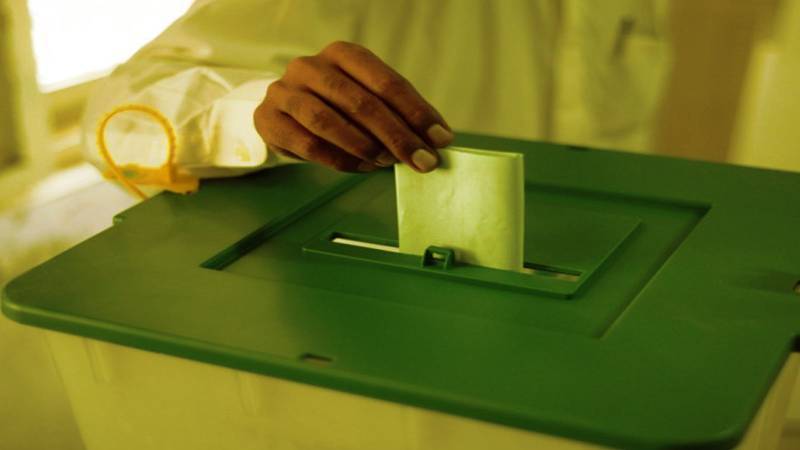
The Former President Dr. Arif Alvis’ offer, although given to an American media outlet CNN, still portrays his willingness to participate in any dialogue taken up for the election reforms in Pakistan. This gesture reflects a broader acknowledgment of the pressing need for electoral reforms in the country, a topic that has long been a source of contention and debate among political stakeholders and the general public alike.
Pakistan elections are held typically every five years under the system called First Past The Post (FPTP). This is a simple system where whoever receives the most number of votes, even if by a margin of 0.1%, gets the parliament seat, and the runner-up is out of any further chance to become a part of decision-making for the country until the next election. While this system is straightforward and widely used in various democracies around the world, it has its fair share of criticisms, particularly in the context of Pakistan's unique political landscape.
Considering the general overall perception of elections in Pakistan not being entirely fair gives an undue right to the winner and an uneasy feeling of being betrayed to the runners-up and election losers. This perception is fueled by allegations of vote rigging, lack of transparency, and the influence of powerful political elites, which have marred the credibility of electoral processes over the years. As a result, the FPTP system often exacerbates political polarisation and leaves a significant portion of the electorate feeling disenfranchised.
Clearly, over the years, despite many elections, the system is not correcting itself. When there is some progress, like in the 1970 elections, which were considered the fairest ones, things go back to square one when it comes to trusting the electoral outcomes. The 1970 elections, often hailed as a milestone in Pakistan's electoral history, demonstrated the potential for a fair and transparent process. However, the subsequent political turmoil and the eventual disintegration of the country highlighted the limitations of relying solely on electoral reforms without addressing underlying systemic issues.
In this system, the winner will still get their seat in the parliament in addition to a seat allocated to perhaps their runners-up because the margin of defeat was a few thousand votes
It is proposed that the system called Proportional Representation (PR) should be tried, and the work to establish that system with consensus should start now. Simply explained, it is based on popular vote, where the calculation on allocating seats to political parties is based on the proportion of votes they receive at the national or regional level. In PR, seats in the legislature are allocated to political parties based on their share of the total votes, aiming to reflect the overall popular vote. This system has been successfully implemented in various countries, including Germany and New Zealand, where it has contributed to more inclusive and representative governance.
In this system, the winner will still get their seat in the parliament in addition to a seat allocated to perhaps their runners-up because the margin of defeat was a few thousand votes. This approach ensures that the voices of a broader spectrum of the electorate are represented in the legislative process, fostering a sense of inclusivity and reducing the winner-takes-all mentality that often characterises FPTP systems. Trying this system should work more coherently for Pakistan, and on top of it, a sense of harmony will prevail rather than the sense of animosity which becomes more evident after every election.
Moreover, the adoption of PR could address some of the structural challenges that have hindered Pakistan's democratic development. By encouraging coalition-building and power-sharing among political parties, PR has the potential to reduce the adversarial nature of politics and promote a culture of compromise and consensus. This, in turn, could lead to more stable and effective governance, which is essential for addressing the myriad socio-economic challenges facing the country.
One hopes this will make things better for everyone. However, the transition to a PR system would not be without its challenges. It would require significant legal and constitutional changes, as well as a concerted effort to build public awareness and support for the new system. Additionally, the implementation of PR would need to be accompanied by broader electoral reforms, such as the introduction of electronic voting machines, measures to ensure the independence of the Election Commission, and mechanisms to prevent the undue influence of money and power in the electoral process.
In conclusion, while the FPTP system has served as the foundation of Pakistan's electoral framework for decades, its limitations have become increasingly apparent. The introduction of Proportional Representation offers a promising alternative that could address many of the shortcomings of the current system and pave the way for a more inclusive and representative democracy. The Former President's willingness to engage in dialogue on electoral reforms is a positive step in this direction, but it will require the collective efforts of all political stakeholders and civil society to turn this vision into reality. Only then can Pakistan hope to build a democratic system that truly reflects the will of its people and lays the foundation for a brighter and more prosperous future.