

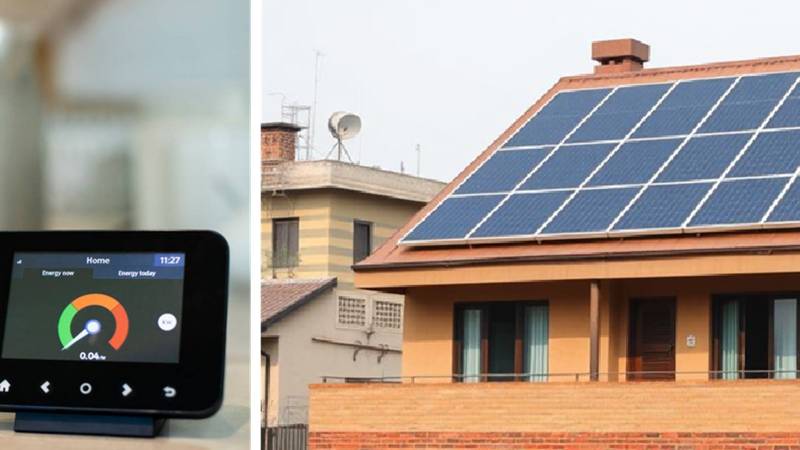
Once a country deploys smart meters widely, it lifts a major barrier to the deployment of modern rate designs, such as time-varying rates (TVRs). TVRs can lower customer bills and enhance affordability. They can encourage the replacement of petrol cars with electric vehicles (EVs). They can also encourage the replacement of gas furnaces, water heaters, cook tops and clothes dryers with electric equipment. They can also lower utility costs by reducing the need for expensive peaking units and by improving the utilisation rate of the electric grid.
In other words, TVRs can simultaneously promote economic efficiency and equity, while accelerating the transition away from fossil fuels in homes, commercial buildings, industrialisation and transportation. Simply put, TVRs hold the key to the energy transition.
Once load shifting occurs, utilities will not spend as much on peaking capacity as they did previously. Load factors will improve, helping to lower costs for all customers, and accelerating the transition away from fossil fuels
So why are they not widely deployed? To answer this question, let's study the features that are common to those utilities that have successfully deployed TVRs. Ten features stand out.
1. These utilities have made customer-centricity the lynchpin of their strategy. They are in business to support customers, not just to earn revenues for themselves.
2. They are environmentally focused. They want to lower emissions not just in the generation of electricity but also in the consumption of electricity.
3. They excel in engaging with stakeholders, including all organisations that participate in the regulatory process. These include consumer groups, environmental groups, and the regulator. And they also include members of the public, the media, and broadly defined government officials. Ideally, they would also include influential public figures who have nothing specifically to do with electricity but have widespread credibility in the country.
4. They provide enabling technologies such as smart thermostats to customers and educate them in how to use them.
5. The TVRs they design are intended to reward customers with a significant amount of money, not just one or two percent, but 10-15 percent. Only then will customers lower their consumption at peak times and boost their consumption during off-peak times.
6. The TVRs they roll out have been stress tested in customer interviews, vetted in focus groups and validated through scientifically designed pilots. Utilities don’t suddenly impose TVRs on customers. They introduce them gradually, first by offering them on an opt-in basis and later on an opt-out approach. They offer at least 2 or 3 TVRs. Perhaps two could be offered on an opt-in basis, with significant price discounts, and a third could be offered on an opt-out basis, with modest discounts.
7. They market TVRs to customers in everyday language that customers can digest easily. In other words, jargon and technically complex concepts, which are common when utilities talk to experts and regulators, are expunged.
8. They ensure that all the relevant departments within the utility are in harmony. These include customer service, billing, rate design, demand response, and generation. And, of course, they should include the executive team, most of all the Chief Executive Officer (CEO). Unless the CEO is on board with the transition to TVRs, it will fail.
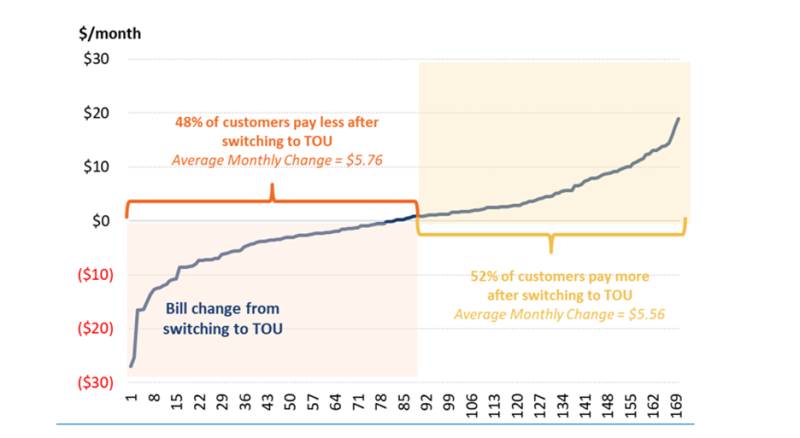
9. They recognise that under flat rates, customers who use less energy during the peak period are subsidising those customers who use more energy during the peak period. In other words, under flat rates customers with flatter load shapes are subsidising customers with peakier load shapes. In other words, they are cognizant of the inequity of flat rates and want to fix it. They want to rectify this inequity by replacing flat rates with TVRs. As shown in the graph below, which is based on data from a US utility, roughly half of the customers would immediately see lower bills if they shifted from flat, cost-unreflective rates to cost-reflective TVRs -- even before they engaged in any load shifting.
10. They recognise that TVRs will incentivise all customers to flatten their load shapes, by reducing usage during peak periods and building it during off-peak periods. Once that happens, more than two-thirds of all customers will see lower bills, as shown in the graph below.
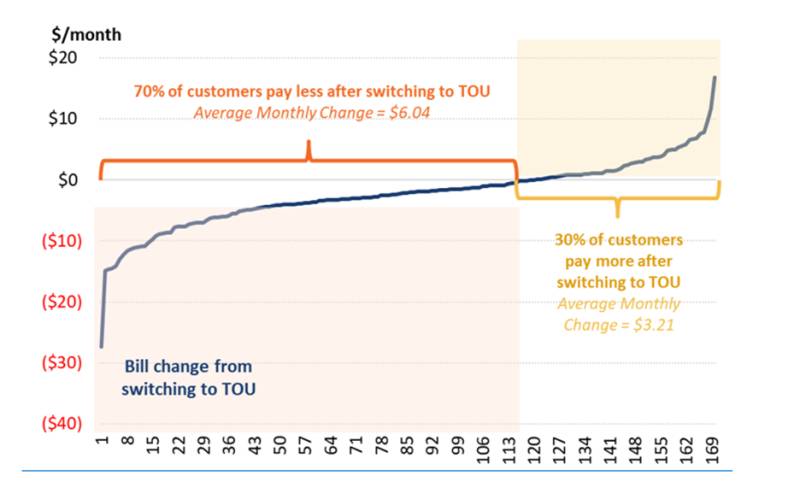
Once load shifting occurs, utilities will not spend as much on peaking capacity as they did previously. Load factors will improve, helping to lower costs for all customers, and accelerating the transition away from fossil fuels, which is essential to slowing down the pace of climate change.
These ten features distinguish utilities who succeed in deploying TVRs from those who fail in deploying TVRs. They are based on decades of experience with designing, implementing and evaluating TVRs around the world.