

“In the emerging world of ethnic conflict and civilisational clash, Western belief in the universality of Western culture suffers three problems: it is false; it is immoral; and it is dangerous” — Samuel P. Huntington
At one point in time, the British Empire had its presence in lands covering over 13.7 million square miles, ruling about 458 million people, amounting to almost a quarter of the Earth and its population. Today, the United Kingdom has shrunk to hold space in restricted islands to the north-west of mainland Europe, with scattered and loose hold over fourteen small self-governing jurisdictions around the world. Such is the rise and fall of empires in history!
While the Irish and English share deep genetic foundations, their ethnicities are distinguished by various ancestral migrations, distinct linguistic and religious heritages, and subtle physical genetic markers. It would be difficult for a non-white observer to point out an English person from an Irish person, as both seem to look alike.
Historically, since ethnicity became tied to religious identity, Roman Catholicism in the case of the Irish and Protestantism for the English, it became a source of a long-drawn conflict between these two nations.
Ireland’s history has evidence of human activity that dates back 33,000 years. However, sustained occupation began around 8,000 BCE, with main settlers ranging from Mesolithic hunter-gatherers to Celts, Gaels, Vikings, Normans, etc., who established 150 petty kingdoms. The Anglo-Norman invasion in 1169 introduced the English with the establishment of the Lordship of Ireland.
In 1541, Henry VIII declared himself King of Ireland, which began a century-long warfare to bring the entire island under British control. Thus commenced an era of displacing the locals, confiscation of lands, and settling Protestant colonists, particularly in Ulster.
Penal Laws passed by the British government and Irish Parliament between 1695 and the early eighteenth century were enacted for stripping Catholics of land and political rights and teaching lessons to Protestant dissenters.
The aim was to secure the political and religious supremacy of the Church of Ireland, restricting Catholics from owning land, voting, holding public office, entering professions, or accessing education. In short, it was the colonisation of Ireland, just like India, and the initiation of the Irish struggle for independence.
Britain partitioned the island in 1920 following a civil war, with separate parliaments — a Protestant north-east and a Catholic south and north-west. However, republicans opposed the formula, and in 1922, the Irish Free State was formed with Dublin as its capital, and by 1949, it became a republic, leaving the British Commonwealth. Meanwhile, the north-east — Northern Ireland — withdrew and accepted self-governance within the United Kingdom, but the sectarian clashes between the majority Protestants and minority Catholics continued.
Armed combat with one’s own people can only increase unrest and perpetuate violence
In the midst of this repressive and inhumane environment, and immediately after the Easter Rising on 24 April 1916, emerged the Irish Republican Army (IRA), a series of nationalist paramilitary organisations. Two principal nationalist leaders accused of supplying arms to ‘rebels’ were arrested.
The idea of the uprising was to end British rule in Northern Ireland and to achieve a unified, independent Irish republic. However, limited resources and lack of unity against the British power of artillery bombardments compelled Patrick Pearse to surrender along with fourteen others. They were executed following a court-martial by the British authorities, which further added fuel to the fire. Thus began the War of Independence for the Irish.
The IRA conducted a decades-long campaign of bombings and shootings in areas that were predominantly occupied by Protestants in Ireland. A bomb attack on a restaurant in County Down in 1978 killed 12 people and injured 30. Two roadside bombs in Warrenpoint killed 18 British Army soldiers in 1979. In 1987, a bomb exploded at a war memorial service, killing 11 civilians and injuring 63.
These incidents were not restricted to Ireland but found their way onto the British mainland. During the period from 1974 to 1996, bombs were exploding in Birmingham, Guildford, Manchester, Brighton, and London, targeting the public and key politicians. Ross McWhirter was shot dead in 1975 at his home after offering a reward for information on IRA bombers.
In 1979, Lord Mountbatten was assassinated by a bomb on his fishing boat, and the killing of Airey Neave, a Conservative Member of Parliament, was claimed by the Irish National Liberation Army (INLA). Even 10 Downing Street, the residence of the British Prime Minister, was not spared.
Women’s involvement in these uprisings was largely defined by their membership in Cumann na mBan (the Irishwomen’s Council), established in 1914. Though their participation has been undervalued, they were actively supportive through roles ranging from auxiliary support to direct combat, emphasising the significance of these uprisings.
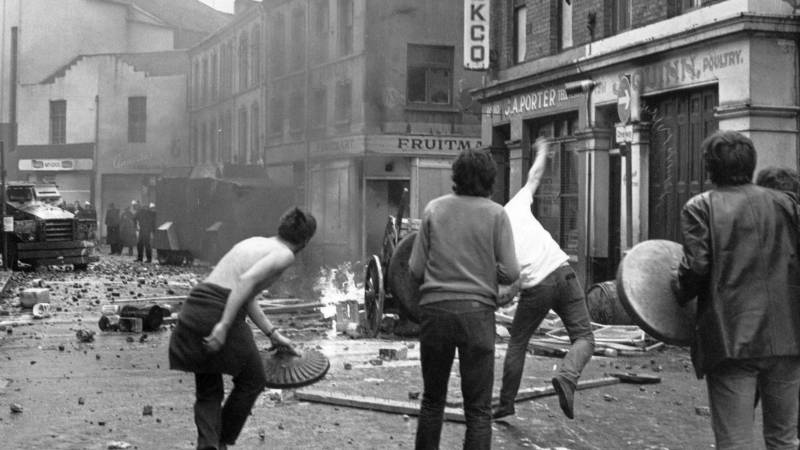
The Protestant majority and Catholic minority in Northern Ireland were always in conflict. In 1969, growing violence between these groups led to the installation of the British Army to maintain peace, but in 1972, following terrorist attacks in Ireland and Great Britain, the UK Parliament established direct rule of Northern Ireland.
In 1985, an Anglo-Irish treaty gave the Republic of Ireland a consulting role in the governance of Northern Ireland. It was not until 1993 that the Republic of Ireland and the United Kingdom held talks to agree on a framework for resolving problems and bringing lasting peace to the region.
This chapter from recent history carries many lessons for us, too. One thing is definite: armed combat with one’s own people can only increase unrest and perpetuate violence; it can never foster peace. Despite the elimination of important leaders, Britain failed to bring about law and order, choosing instead to suffer casualties and heavy economic losses. These were halted only with the decency of dialogue, together with compromises on a human level.