

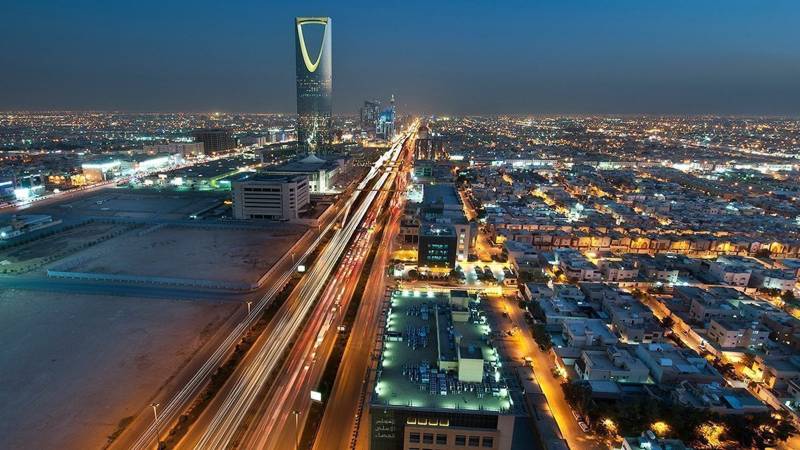
It was a hot summer afternoon in Riyadh, the capital of the Kingdom of Saudi Arabia. The temperature had climbed to nearly 48°C, a familiar reality during the peak of the season. It was around 12:30 PM, and I was driving through the busy roads near King Khalid International Airport on my way to the Princess Nourah Bint Abdulrahman University Automated People Mover (PNU-APM) Depot for my afternoon shift.
Inside my car, the air conditioning provided welcome relief from the intense heat outside. Beyond the windshield, however, thousands of vehicles crowded Riyadh's wide highways, reflecting a city that relied almost entirely on private cars for daily transportation. Like many residents at the time, I often wondered whether Riyadh could ever develop a modern public transport system capable of transforming the way people travelled.
Across the region, Dubai Metro had already demonstrated how investment in rail infrastructure could reshape urban mobility. Riyadh, however, presented a far greater challenge. Its vast urban landscape, rapidly expanding suburbs, and heavy dependence on road transport made the vision of a city-wide railway network seem distant.
What I did not realise that afternoon was that my daily commute marked the beginning of a remarkable personal journey. Over the following decade, I would have the privilege of witnessing—and contributing to—one of the world's most ambitious sustainable mobility transformations. What began as a routine drive to work eventually became part of a much larger story: Riyadh's evolution into one of the world's leading examples of modern railway development.
The Beginning of My Railway Journey
My professional railway journey began with the Princess Nourah Bint Abdulrahman University (PNU) Driverless Metro, a pioneering project that would later become an important milestone in Riyadh city railway development.
Civil construction of the system began in 2009, and following the inauguration of the university by the Custodian of the Two Holy Mosques, King Abdullah bin Abdulaziz Al Saud, on the 15th of May 2011, the railway entered approximately 15 months of testing and commissioning. Commercial passenger operations officially commenced in late August 2012, following the end of Ramadan, making it the world's first fully driverless metro operating entirely within a university campus.
Every shift deepened my appreciation for railway automation and demonstrated how intelligent transport systems could move thousands of passengers with exceptional precision and reliability
The PNU Driverless Metro is a fully automated campus transit system comprising four elevated routes, covering approximately 11.5 kilometres and serving 14 stations. The network operates a fleet of 22 electric driverless two-car trains, each capable of carrying up to 110 passengers at a maximum operating speed of 60 km/h. Designed to transport up to 11,000 passengers per hour and approximately 60,000 passengers daily, the system provides safe, reliable, and efficient connectivity between academic buildings, student residences, hospitals, administration facilities, and other key destinations across one of the world's largest women's universities.
Working within the Operations Control Centre (OCC) gave me a unique opportunity to observe how an automated railway operates behind the scenes. My responsibilities included monitoring and supporting the Fixed-Block Railway Signalling System, ensuring the safe, reliable, and efficient movement of trains throughout the network. Every shift deepened my appreciation for railway automation and demonstrated how intelligent transport systems could move thousands of passengers with exceptional precision and reliability.
More importantly, the experience changed the way I viewed urban transportation. It strengthened my belief that advanced railway technologies could one day transform mobility far beyond a university campus. At the time, however, few could have imagined the scale of transformation that Riyadh itself was about to undertake.
The Vision Begins
While I was building my career at the PNU Driverless Metro, discussions about an even more ambitious project were beginning to capture national attention.
During 2013, newspapers were filled with headlines about the proposed Riyadh Metro. International engineering firms competed for contracts, transportation experts discussed the future of sustainable mobility, and public interest continued to grow. Although construction had not yet begun, many railway professionals recognised that the project had the potential to fundamentally reshape transportation across the Saudi capital.
In 2014, that vision began to take shape as construction officially commenced. Over the following years, I watched Riyadh Metro evolve from engineering drawings into one of the largest driverless metro projects ever undertaken. Station by station, depot by depot, and line by line, a new transportation network gradually emerged across the city. What had once seemed like an ambitious vision was steadily becoming reality.
From Vision to Reality
The vision that had captured national attention in 2013 soon became one of the world's most ambitious urban transportation projects.
Over the following decade, Riyadh Metro gradually transformed from a collection of engineering drawings into a modern railway network that reshaped the city's skyline. Every year brought visible progress. New stations emerged across the capital, depots took shape, viaducts stretched across major highways, and sophisticated railway systems were installed and tested. What had once seemed like an ambitious dream was steadily becoming reality.
The Riyadh Metro officially entered passenger service in phases between December 2024 and January 2025. Today, it is a 176-kilometre fully automated driverless metro network comprising six colour-coded lines and 85 stations, making it one of the world's largest automated metro systems. Designed to carry up to 3.6 million passengers per day, the network represents a remarkable achievement in engineering, innovation, and sustainable urban planning. Delivering a transportation system of this scale required exceptional engineering expertise, advanced railway technologies, careful planning, and close collaboration among leading international companies.
Beyond its engineering significance, Riyadh Metro represents a major investment in sustainable mobility. By providing residents with a reliable, efficient, and environmentally friendly alternative to private vehicles, the network is helping reduce traffic congestion, improve connectivity, lower greenhouse gas emissions, and enhance the overall quality of urban life. These achievements reflect Saudi Arabia's long-term commitment to building a smarter and more sustainable transportation future.
Growing Alongside Riyadh Metro
As Riyadh Metro continued to take shape, my own professional journey also evolved.
After proudly serving the PNU Driverless Metro for six years, I was honoured to join the Riyadh Metro Project, allowing me to contribute to another landmark chapter in Saudi Arabia's railway development. Throughout my career on Riyadh Metro, I worked across Lines 3, 4, 5, and 6, supporting railway operations from three depots and three Operations Control Centres (OCCs). Working alongside multidisciplinary teams and international railway specialists provided invaluable experience in operating and maintaining one of the world's most advanced driverless metro systems.
Looking back today, I consider myself fortunate to have experienced Riyadh's railway transformation from two unique perspectives. I first witnessed the success of the Kingdom's pioneering driverless campus railway at PNU, and later had the privilege of contributing to one of the largest urban metro projects ever developed. I was not merely observing Riyadh's transportation revolution—I was part of a team helping to support its successful operation.
For me, this journey represents far more than career progression. It reflects the extraordinary pace at which Saudi Arabia has embraced innovation, modern railway technologies, and sustainable mobility over the past decade.
The Journey Continues
Although the successful opening of Riyadh Metro marked a historic milestone, the city's railway transformation is still continuing.
The next major step in Riyadh's long-term mobility strategy is the King Abdullah Financial District (KAFD) Monorail. Unlike Riyadh Metro, which provides city-wide public transportation, the KAFD Monorail is designed to improve mobility within one of the Kingdom's most important financial and commercial districts while providing seamless connections with the Metro network.
The project was originally conceived as part of the KAFD master development, with construction beginning around 2014–2015. After several years of suspension, it was officially relaunched on the 30th of October 2024, when KAFD Development & Management Company awarded the design, construction, and supply contract to the consortium of CRRC (Hong Kong), CRRC Nanjing Puzhen, and Hassan Allam Construction Saudi during the Future Investment Initiative (FII) 2024.
It is important to note that the KAFD Monorail is currently under development and has not yet entered passenger service. Once completed, it will become a fully automated, driverless circular transit system designed to provide efficient internal transportation throughout the financial district.
According to the current project plans, the Monorail will comprise a 3.6-kilometre elevated network, six stations, and six driverless monorail trains. The system is expected to carry up to 3,500 passengers per hour, with each train accommodating approximately 280 passengers. It is planned to connect offices, residential developments, hotels, retail centres, entertainment facilities, and the Riyadh Metro, while supporting KAFD's ambitious "10-Minute City" vision, enabling residents, employees, and visitors to reach most destinations quickly using sustainable public transport instead of private vehicles.
The Monorail demonstrates that Riyadh's investment in sustainable mobility extends well beyond the Metro. It represents another important step towards creating an integrated urban transport ecosystem that prioritises accessibility, efficiency, and environmental sustainability.
On Track Towards the Future
While the KAFD Monorail represents the next stage of Riyadh's urban mobility transformation, another ambitious railway project has the potential to further strengthen the city's integrated transport network.
The Qiddiya High-Speed Rail (QHSR) is a proposed high-speed railway that will connect King Salman International Airport (KSIA), King Abdullah Financial District (KAFD), and Qiddiya City. The project is intended to provide fast, efficient, and sustainable transportation while supporting Saudi Vision 2030, Expo 2030, tourism growth, and regional economic development.
At the time of writing, the Qiddiya High-Speed Rail has not yet entered construction. The project remains in the procurement phase, with the bidding process underway and proposal submissions expected in late July 2026. Once awarded and completed, it is expected to become another landmark investment in Saudi Arabia's rapidly expanding railway network.
A Unique Railway Ecosystem
When viewed together, these projects tell an extraordinary story of Riyadh's transportation evolution. Within less than two decades, Riyadh has developed—or is developing—four major rail technologies within a single metropolitan area:
- Automated People Mover (APM) using Fixed-Block Railway Signalling.
- City-wide Driverless Metro using Communications-Based Train Control (CBTC).
- Fully Automated Monorail designed for urban district mobility.
- High-Speed Rail planned to connect major economic, tourism, and transportation hubs.
Few metropolitan areas around the world have developed—or are actively developing—such a diverse combination of modern railway systems within a single urban region. Countries such as Japan remain global leaders in integrated rail transportation. Metropolitan areas including Tokyo, Osaka, and Nagoya successfully operate Metro, Automated People Movers (APM), Monorail, and High-Speed Rail as part of their mature transportation ecosystems.
Upon the successful completion of both the KAFD Monorail and the Qiddiya High-Speed Rail, Riyadh is expected to become the first metropolitan area in the Middle East—and among only a handful of metropolitan areas worldwide—to feature all four of these modern rail technologies. Such an achievement would represent another major milestone in the Kingdom's transportation development and further strengthen Riyadh's position as an emerging global leader in sustainable urban mobility.
Building a More Sustainable Future
Riyadh's transformation extends far beyond the construction of railway infrastructure. It reflects a long-term commitment to creating a cleaner, smarter, and more sustainable city.
According to the World Bank's Sustainable Mobility Framework, well-planned public transportation systems improve accessibility, reduce dependence on private vehicles, lower greenhouse gas emissions, improve air quality, reduce traffic congestion, and support sustainable economic growth.
Riyadh's expanding railway network strongly reflects these internationally recognised principles. The operational Riyadh Metro has already begun changing how residents travel by providing a reliable and environmentally friendly alternative to private vehicles. Future projects, including the KAFD Monorail and Qiddiya High-Speed Rail, are expected to further strengthen connectivity across the metropolitan area once completed.
Studies have also highlighted the environmental benefits of improving first- and last-mile connectivity to Riyadh Metro. Integrating metro services with feeder buses, micromobility solutions, and pedestrian infrastructure has the potential to reduce annual CO₂ emissions by more than one million tonnes, shorten travel times by around 20%, and reduce NOₓ and PM₂.₅ emissions throughout the transport network. These initiatives directly support the sustainability objectives of Saudi Vision 2030 while contributing to a healthier and more liveable urban environment.
A Vision Becoming Reality
The remarkable transformation of Riyadh reflects the ambitious leadership of His Royal Highness Crown Prince Mohammed bin Salman and the strategic objectives of Saudi Vision 2030. Through sustained investment in infrastructure, smart cities, and sustainable transportation, the Kingdom continues to redefine urban mobility while diversifying its economy and improving quality of life.
Under the leadership of His Royal Highness Prince Faisal bin Bandar bin Abdulaziz Al Saud, Governor of the Riyadh Region, the capital continues to advance some of the world's most ambitious transportation projects while overcoming significant engineering, operational, and logistical challenges. These efforts are positioning Riyadh among the fastest-transforming metropolitan areas in the world and establishing a strong foundation for future sustainable growth.
A Personal Reflection
Whenever I look back, I often remember that hot summer afternoon when I drove through heavy traffic on my way to the PNU Driverless Metro. At the time, I wondered whether Riyadh could ever become a railway city. Today, that question has largely been answered.
The city is no longer defined solely by its highways. It is increasingly recognised for its expanding network of modern railway systems, world-class infrastructure, and long-term commitment to sustainable mobility. From the pioneering PNU Driverless Metro to the operational Riyadh Metro, and the future KAFD Monorail and Qiddiya High-Speed Rail, Riyadh's transportation story continues to unfold.
For me, this article is more than a record of railway projects. It is the story of a city that dared to imagine a different future—and took decisive steps to build it. I feel deeply privileged to have witnessed this remarkable transformation firsthand and, in my own way, to have contributed to one chapter of Riyadh's extraordinary journey towards becoming one of the world's leading examples of sustainable urban mobility.