

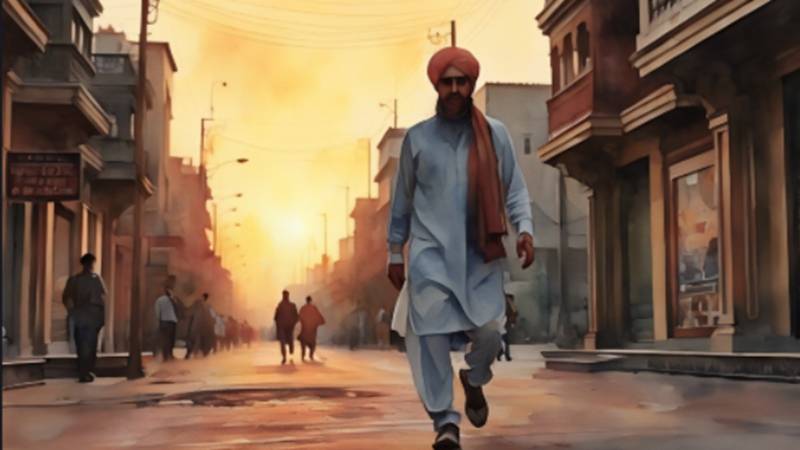
Before August 1947, Hyderabad's urban landscape was woven with a rich, organic nomenclature. Particularly, the names of its streets, lanes, and roads inherited originality, reflecting family legacies, the occupations of its inhabitants, vital trading points, distinctive local landmarks, and the cherished remembrances of socio-cultural and political leaders. This elaborate urban vocabulary extended to bazaars, institutions, civic amenities, and diverse places of worship, including mandirs, marhis, asthans, darbars, gurdwaras and masjids. However, the tragic Partition of 1947 irrevocably altered this landscape, immediately rendering Hyderabad's Hindu Sindhis "address-less."
Driven by a quest to reconnect with this lost urban heritage, I recently visited the old quarter of Hyderabad. My sole navigational aid was an antique map. To my dismay, it only delineated major roads and a few prominent streets, leaving the network of smaller lanes unmentioned. Despite this limitation, I remained confident, armed with the knowledge that my destination, Bhai Gola Singh's Akal Bhoongo, was nestled within Sikh Paro. The map, initially a source of assurance, became utterly irrelevant the moment I approached from the north and turned onto Resham Galee. Confusion enveloped me.
In my bewilderment, I spotted a milkman on his motorcycle heading towards me. I halted him with a hopeful wave of my hand. He graciously stopped, and I promptly introduced myself, requesting guidance to Sikh Paro. He shook his head kindly, introducing himself as Muhammad Suleman from the Phuleli area, explaining that he supplied milk to local tea stalls. Halting his motorbike, he pondered for a moment before remarking that in Ayub Khan's era, Sikh Paro was accessible via numerous routes, but now, only two remained convenient. I immediately inquired about these convenient routes. He paused, gave a kick to his bike, the vertically oval-shaped milk containers balanced precariously over the back seat. Clutching the bike's handles, he explained that one convenient path was via Resham Galee. He added that it would connect to Sipahmalani Ghitee (now Urdu Bazar), then Beerbalani Ghitee, and finally Sikh Ghitee. Before riding off, he advised me to take a right turn.
Driven by a quest to reconnect with this lost urban heritage, I recently visited the old quarter of Hyderabad. My sole navigational aid was an antique map. To my dismay, it only delineated major roads and a few prominent streets
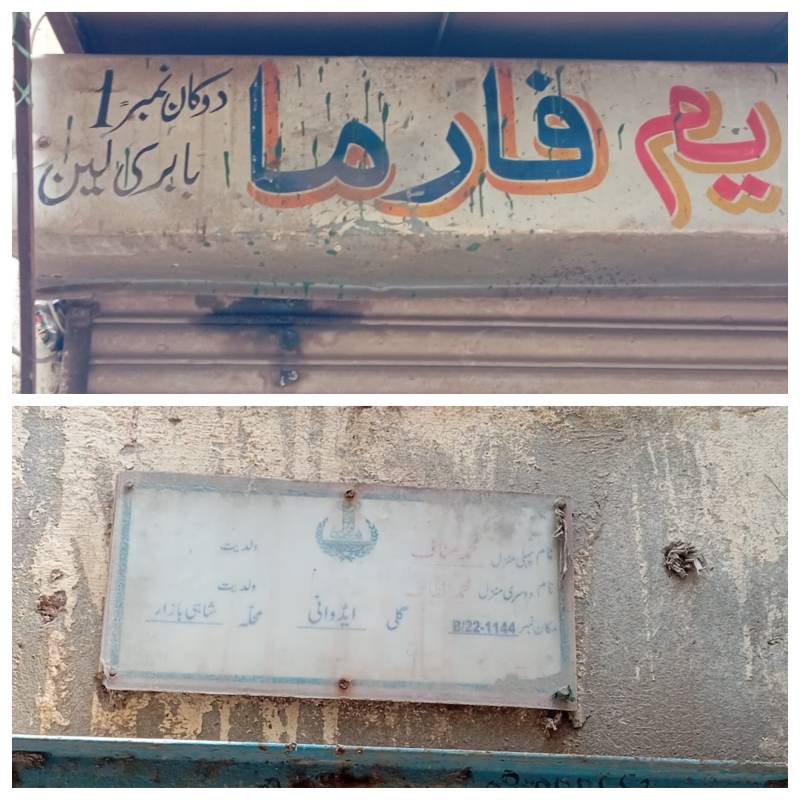
I set off, following his directions, yet a growing uncertainty gnawed at me regarding my precise heading. Further along, I approached an elderly man and asked for directions to Sikh Paro, appending my purpose: "Bhai Gola Singh's Akal Bhoongo is located there." With a dismissive wave, he gestured vaguely, then asked for the name of the Ghitee (lane). When I replied "Sikh Paro," he entered a reflective mode, posing a question to himself: "If there is Babri Ghitee, then where could be Sikh Ghitee?" He then offered me a direction, adding the crucial detail that a shop stood directly in front of the Gurdwaro (Akal Bhoongo).
Honestly, his mention of "Babri lane" instantly disoriented me, prompting me to reconfirm with him that my map indicated "Advani lane," not "Babri lane." He fixed me with a stare for a moment, then, a mischievous smile played on his lips. "How could we possibly retain the name 'Advani'," he mused, "who led the Babri Masjid demolition movement?" Without another word, he departed abruptly, not even waiting for my thanks. I followed the gentleman's advice, and after a gentle fifteen-minute walk, I finally reached my destination—Bhai Gola Singh's Akal Bhoongo, a reminder of Hyderabad's contested memory and fragmented past.
It is appropriate that I should introduce Bhai Gola Singh, a sant born in 1834 within the very heart of Sikh Paro, Hyderabad. His father, Bhai Santo Singh, was a well-established businessman, and his cousins too were figures of considerable affluence. The family's commercial footprint extended to Sukkur, Gidu Bandar, and Hyderabad itself, with business offices and stores. Initially, Bhai Gola Singh engaged with his cousin's kothi (business outlet), but he swiftly disengaged, feeling an undeniable call towards spiritual pursuits. His disinterest in worldly affairs—business, wealth, and status—was profound. He soon detached himself entirely from the family's joint ventures, dedicating his days instead to katha keertan (discourses and devotional singing) and satsangs (spiritual gatherings). His routine became a sacred rhythm: he would leave his home in Sikh Paro around 4:00 am, traverse Chchotki Ghitee, and reach the Qandharani Khalsa Sangat Akal Bhunga in West Katch. Then, around 1866, driven by his devotion, he established a new Akal Bhoongo in Sikh Paro, remarkably close to his own residence. He reverently installed the Sri Guru Granth Sahib within its precincts, and the bhoongo quickly gained popularity among the neighbourhood, becoming affectionately known as Bhai Gola Singh Jo Akal Bhoongo.
Bhai Gola Singh's spiritual renown equally resonated with both the Amils and Bhaibands of Hyderabad. He was a devout believer in the wisdom of Sri Guru Granth Sahib. To anyone who approached him, seeking solutions to spiritual dilemmas or worldly concerns, his response was invariably concise yet deeply impactful: "Guro watt matho tek, aeen panhenje kamna lae sawal kar, iho poro theno" (Bow before the Guru Granth Sahib, pray for the fulfilment of your desire, and it shall be granted).
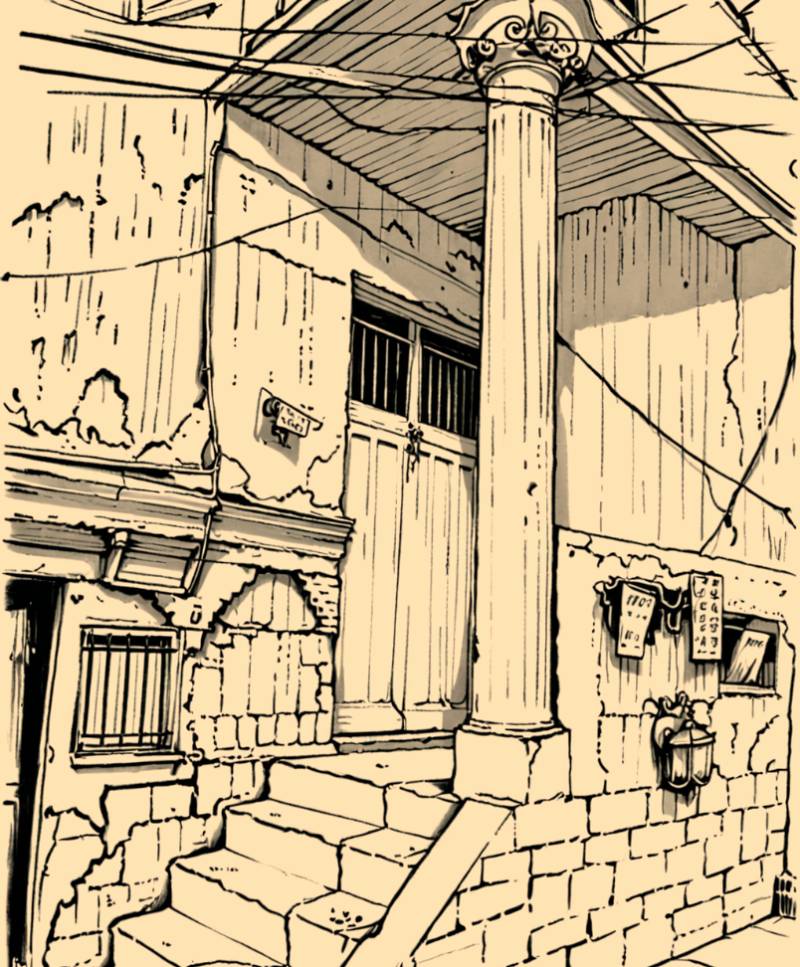
Bhai Gola Singh's daily spiritual regimen remained uninterrupted. He would arrive at the Bhoongo around 3:00 am. From 5:00 am to 7:00 am, he would either sing or recite "asa ki var,: a sacred composition focusing on the 'Creator-Being' and the 'Creator-Being' extended to Nature. Subsequently, around 7:00 am, the katha of Sri Guru Granth Sahib would commence. This Sikh tradition involved gianis (learned individuals) explaining the meaning and importance of the gurbani (verses) of Sri Guru Granth Sahib. Following this, he would impart the wisdom of sukhmani sahib to visitors and devotees, then read or sing from suraj prakash, a monumental hagiographic text chronicling the lives of the Sikh Gurus. Remarkably, he would also read from the Bhagavad Gita, encouraging reflection on its timeless message and philosophy. In the evening, he would return to the bhoongo around 4:00 pm, beginning the session with jaap sahib. This would be followed by parkarma (circumambulation of the sacred Sri Guru Granth Sahib), and then aarti (a ritual offering of light accompanied by singing). Finally, he would read aloud the suraj Katha to the gathered audience, a discourse that praises and cherishes the lives of all the Sikh Gurus, bringing the spiritual day to a close.
Throughout his life, Bhai Gola Singh was accompanied by his spiritual companions, Bhai Harkishandas, Bhai Odhhondas, and Bhai Satramdas, all of whom shared his love for reciting and singing religious poems and shabads. A striking feature of his conduct was his unwavering principle of never accepting a single paise from devotees' homage or donations. All that he received was immediately distributed among the needy, irrespective of whether they were Hindu or Muslim. His family's expenses, meanwhile, were meticulously borne from the rents of their properties and the earnings from their joint businesses. Bhai Gola Singh consistently sought the company of Bhai Khemchand Kirpalani and Gaga Sahib, both of whom also cherished his presence. Bhai Gola Singh passed away in February 1903, at the age of 69 years, but the spiritual activities of the Bhoongo continued uninterrupted, a testament to his enduring legacy till 1947.
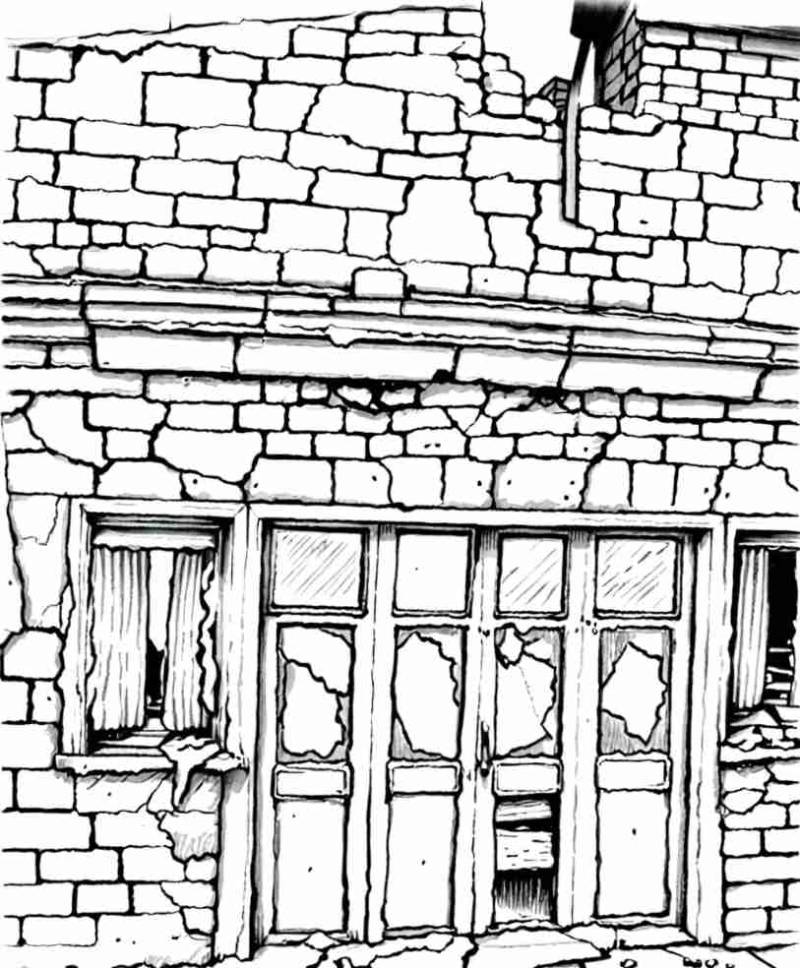
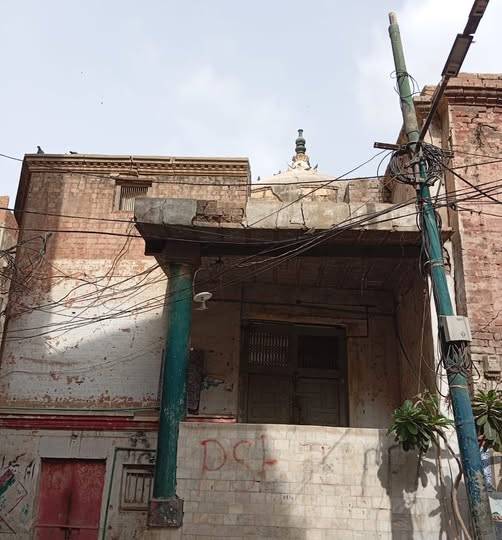
Today, the sacred Bhai Gola Singh Akal Bhoongo endures, yet its surroundings are utterly changed. The Partition drastically altered Hyderabad's visage—neighbourhoods shifted, streets acquired new names imbued with political, economic, and ideological meanings.
Amidst this altered landscape, the crucial question arises: how long can this bhoongo truly retain its history and its very physical form? I believe its authentic past has already been eroded, a silent casualty of time and deliberate re-narration. Now, it stands as a fragile sentinel, bravely evading the covetous gaze of the builder mafia, and battling a harsh environment that relentlessly threatens to shorten its already precarious existence.