


Kotri is a town located along the banks of the River Indus in the southern part of Sindh province, Pakistan. It has significant historical and cultural resonance due to its strategic location and role in the early development of railway infrastructure during the British colonial era. The town is associated with the advent and use of the Indus flotilla on the River Indus by the British colonialists, which facilitated the transport of goods and services, as well as the construction of the Kotri barrage and metallic bridge in the first decade of the independence of Pakistan. Kotri town features religious heritage buildings that date back to the time of British colonial rule.
British colonial rulers and officials associated with the railway department and Indus Flotilla constructed early residential quarters in the railway colony of Kotri and also established sacred places, including churches, in Karachi, Kotri, and Hyderabad. In the early years, these sacred spaces met the religious sentiments and needs of British Christian officials, symbolizing the presence of Christianity and colonialism in the newly occupied territories of the subcontinent. British colonial officials demonstrated cultural patrimony of Christianity through establishing churches and cathedrals.
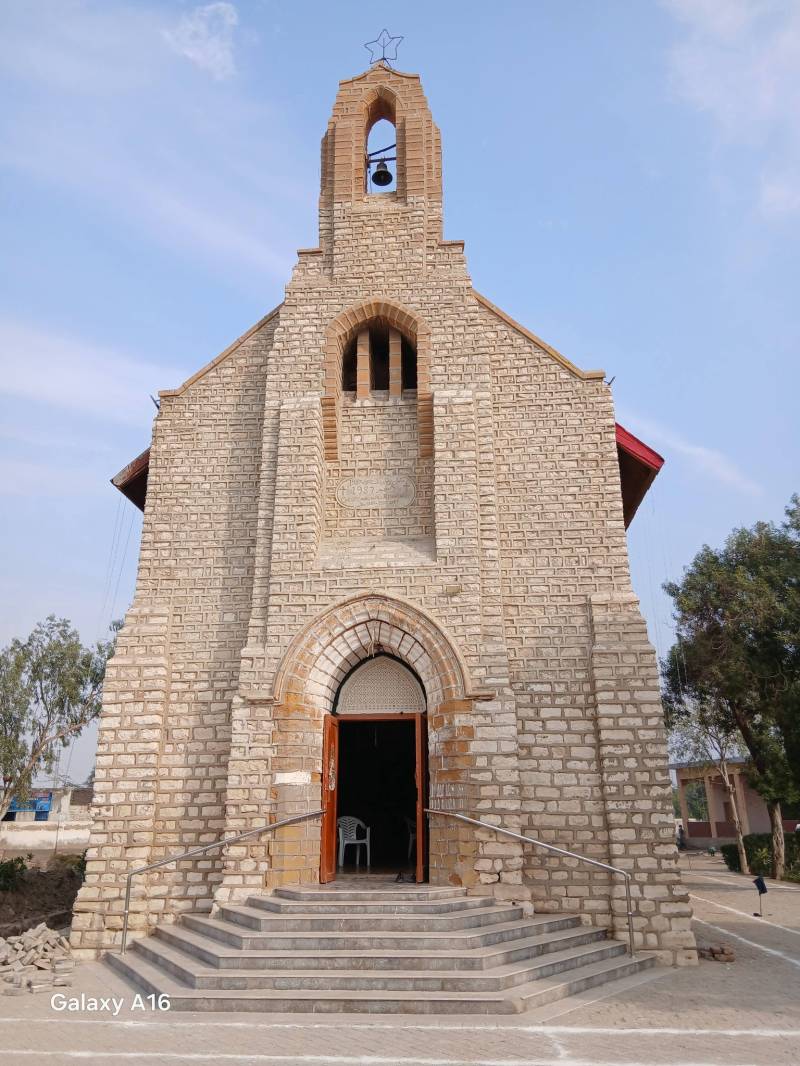
A striking example is an old stone masonry church that remains in the railway colony of Kotri, showcasing the intersection of British colonial infrastructure and religious memory. Christ Church, located on the north side of the railway station, is the oldest Church associated with the railway line established by the British colonial administration in Sindh, connecting Karachi and Kotri. The stone structure of Christ Church Kotri is tied to the history of the Protestant church movement. Plaques displayed in English in the main hall indicate that the church was built in 1846, following the British colonial conquest of Sindh.
Christ Church, located on the north side of the railway station, is the oldest Church associated with the railway line established by the British colonial administration in Sindh
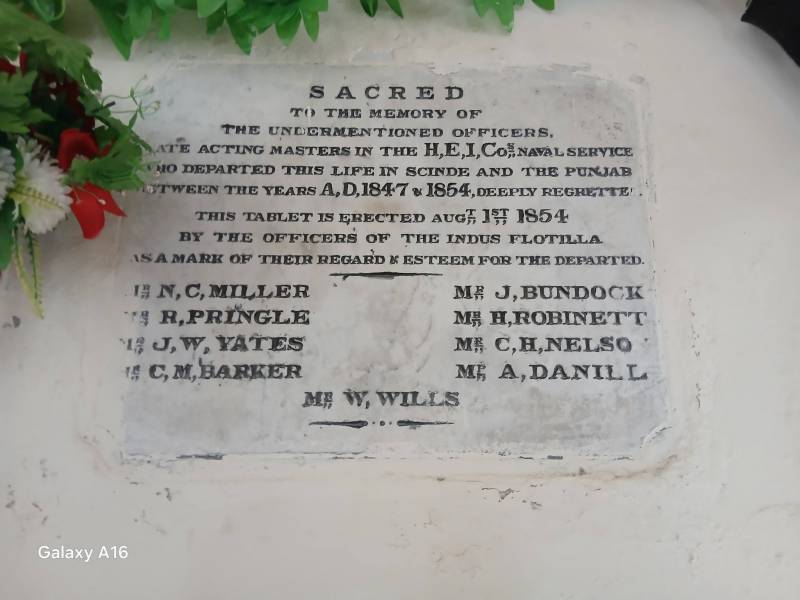
The six textual tablets displayed on the walls of the main hall of the Church commemorate the valour and memory of British colonial officers, their children and families. One tablet, located on the southern side wall, lists the names of the masters of the East India Company's Naval Service who departed their life in Sindh and Punjab between the years 1847 and 1854. This tablet states that it was erected by the officers of the Indus Flotilla. Additionally, another tablet lists the names of the engineers of the Indus Steam Flotilla who departed their life between the years 1860 and 1878. The third tablet commemorates the memory of a child named Ethel Catherine Forster, who was four years and two months old when she drowned in the River Indus on December 27, 1868. It also mentions the name of her mother, who passed away in October 1870 aged 38 years.
The information displayed on the walls of Christ Church Kotri highlights the colonial administrators who served in the British naval service stationed along the River Indus in Kotri, along with their families. The church functioned as a cultural space and platform for these colonial officers and families to commemorate and preserve their personal memories marked with sacred symbolism and sacrifice.
The main entrance of the church is located on the west side. Following the patterns of Protestant religious material culture, the architectural design typically excludes statues, sculptures, and iconography of biblical stories and figures, except for the representation of the Cross both inside and outside the building. The church is constructed primarily of stone, which is said to have been transported from the Jungshahi area of Thatta in Sindh. The roof of the church is made of wood and features a plain design, with no carvings or floral patterns visible from the inside. The wooden windows, located on both the lower and upper sections of the stone walls, also lack decorative elements, which is typically a distinguishing characteristic of Catholic churches. The increased number of windows suggests that they have been intentionally added to improve ventilation during hot summer days. During my field visit to the Church, one respondent even noted that during the summer season, the hall stays cool and comfortable for the sacred visitors.
It was a Sunday, and visitors, including children and young adults, congregated to prepare for the Christmas celebrations. The young male and female participants were busy organizing various segments to showcase scenes from the biblical story about Christ, Mother Mary, and several other characters.
The Christ Church in Kotri, which now operates under the Diocese of Hyderabad, continues to inspire the Christian community of Kotri and Hyderabad. It plays an important role in rekindling community life by providing moral and religious services, particularly for the youth.
Before the partition during British colonial rule, this church was part of the Diocese of Bombay, and therefore, no historical records detailing its past are available with the current Presbyter in charge, Rev. Shoaib Palous. He shared that after the partition and the creation of Pakistan, the church functioned under the administration of Diocese of Karachi for a time. At one point, the church was even closed. However, it resumed operations in the 1980s. During my visit, Rev. Palous showed me register dating back to 1985, which was maintained by the pastor at that time, highlighting the entries for baptisms. He highlighted that this Church was established for and by the colonial officers who it seems lived here in the railway colony quarters.
He generously explained the current services in place at the historic Christ Church focuses on three aspects of Sunday worship, Holy Communion, and the Sunday school. Rev. Shoaib Palous explained about the idea of the ministries of the church which includes youth ministry, women ministry, and Sunday school.
The exact total area and property details of Christ Church in Kotri are not well documented. However, according to a recent survey conducted by the Culture, Tourism, Antiquities and Archives Department, Government of Sindh, the current area of the Church is approximately 1.7 hectares.
Due to salinity and damp conditions, a complete renovation of the Church took place in 1987. After almost thirty-eight years, the need for another renovation of Christ Church in Kotri has resurfaced in 2025. This project has been recognized for its conservation, preservation, restoration, and upgrade. On December 2, 2025, Anthony Naveed, the Deputy Speaker of the Provincial Assembly of Sindh, visited the site and inaugurated the conservation and restoration work of the Church. The restoration efforts for Christ Church are currently underway. During my field visit, Rev. Shoaib Palous shared details about the conservation work, which includes the installation of French drains to protect the building from salinity, restoration of the roof to prevent water seepage, and preservation of the dilapidated stone walls. The Diocese of Hyderabad made special efforts to advocate for the restoration of the colonial-era Christian religious heritage of Christ Church Kotri with the provincial Sindh Government. The field team from the Directorate General of Antiquities and Archaeology consistently visits the Church to monitor the progress of the restoration work.
For students of anthropology, archaeology, and history, Christ Church Kotri may symbolize the memory and narrative of British colonialism, reflecting the presence of East India Company officers stationed in the railway colony and the Indus Flotilla under British naval service. However, for the local community, particularly the impoverished Christian population living in the area, it serves as a sacred space for communal gatherings, sharing, celebration, holy service, food, and social support.