

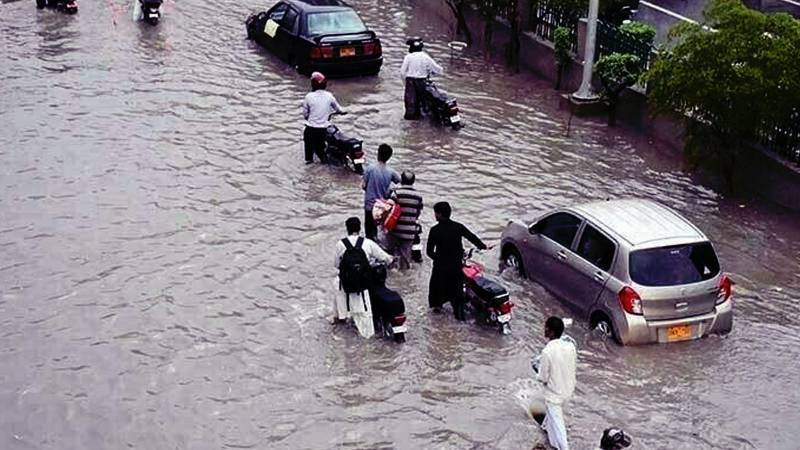
For once, there is a genuinely encouraging development emerging from Pakistan’s governance landscape. The National Disaster Management Authority (NDMA), under the stewardship of a highly competent engineer, has begun shifting the national conversation on urban flooding from reactive crisis management to proactive Disaster Risk Reduction (DRR). In a country where institutions are often criticised for responding only after a catastrophe strikes, this change in thinking deserves recognition.
Urban flooding is no longer an occasional inconvenience; it has become one of Pakistan’s defining environmental and governance crises. Every monsoon now turns roads into rivers, paralyses economic activity, damages infrastructure, and claims lives. Yet the causes are not mysterious. Rapid and unchecked concrete expansion has sealed the soil beneath our cities, preventing rainwater from naturally infiltrating the ground. Outdated drainage systems, many designed decades ago for much smaller populations, can no longer cope with the intensity of modern rainfall. Climate change has further amplified the frequency and severity of extreme weather events.
Against this backdrop, NDMA’s effort to promote DRR represents a significant intellectual and policy shift. Rather than merely dispatching rescue teams after floods occur, the institution is attempting to address the structural causes of urban flooding itself. The concept is simple but transformative: resilient cities must absorb water instead of merely trying to drain it away.
This philosophy underpins the emerging idea of “Sponge Cities”, an urban planning model already implemented in countries such as China and increasingly adopted across Europe and Asia. Sponge Cities rely on parks, greenbelts, wetlands, permeable pavements, and open public spaces to absorb rainwater naturally. Instead of forcing all rainwater into overloaded drains, the city itself becomes part of the hydrological solution.
Encouragingly, Pakistan is beginning to explore this direction. NDMA’s efforts to restore greenbelts and revive public green spaces in major cities deserve appreciation. The Interior Minister has also played an important role by advocating for greener urban development, particularly in Islamabad, despite political criticism and resistance from vested interests. In a political culture where environmental concerns are often treated as secondary to commercial development, this commitment is noteworthy.
What makes the episode particularly disturbing is that such encroachments occurred under the oversight of institutions meant to uphold the law itself
However, while these initiatives are commendable, they only address part of a much deeper problem. Urban flooding in Pakistan is not merely an engineering failure; it is the cumulative outcome of decades of corruption, institutional negligence, and ecological destruction carried out in the name of real estate development.
For years, public authorities and private developers have collaborated in converting land originally reserved for parks, playgrounds, graveyards, greenbelts, and natural stormwater channels into residential and commercial plots. These are not minor administrative violations. They are acts that have fundamentally altered the geography and climate resilience of Pakistani cities.
Rawalpindi’s Judicial Colony is one painful example, and it is also my own bitter experience of living there. Areas originally designated as green buffers and stormwater pathways were gradually converted into concrete developments. The park, once located directly in front of my house, a communal green space where children once played, and families gathered in the evenings, was slowly and quietly erased under residential construction.
I watched this tragedy unfold before my own eyes as the judicial management transformed a public park into residential plots. What was once meant to be a green breathing space for the community was sacrificed to concrete and commercial greed. The loss was not merely environmental; it felt like witnessing the burial of a shared civic conscience.
What makes the episode particularly disturbing is that such encroachments occurred under the oversight of institutions meant to uphold the law itself. Living through this transformation firsthand has shown me how environmental destruction in our cities is not accidental, but the direct result of deliberate planning failures and institutional silence.
This was not simply an urban planning failure; it reflected a deeper moral collapse in governance. When public parks can be transformed into profitable plots without accountability, public welfare is sacrificed at the altar of private greed. The responsibility for this crisis rests heavily on civic authorities such as the Capital Development Authority (CDA), Lahore Development Authority (LDA), Karachi Development Authority (KDA), and similar agencies across the country. Urban master plans are not arbitrary documents. They are carefully balanced frameworks designed to protect both human settlement and ecological stability.
Under accepted planning principles, approximately 31% of urban land should remain allocated for roads and circulation, around 8% for parks and green spaces, 2% for graveyards, and additional land for schools, hospitals, and public facilities. These allocations are not decorative luxuries. They are essential safeguards against congestion, heat accumulation, and flooding.
Yet in city after city, these allocations have been steadily eroded. Greenbelts are reduced to create additional plots. Natural drains are narrowed or blocked. Wetlands disappear beneath luxury housing schemes. Public spaces quietly vanish from revised layouts. The result is visible every monsoon season.
When heavy rains strike Islamabad and Rawalpindi today, roads flood not because nature has suddenly become hostile, but because the city’s natural drainage systems have been systematically destroyed. In Islamabad’s E-11 sector, the narrowing of stormwater channels contributed to the tragic 2021 flooding that claimed innocent lives. Similar patterns exist in Lahore, Karachi, and countless smaller towns where ecological planning has been subordinated to speculative real estate expansion.
Identify every illegal alteration of parks, greenbelts, playgrounds, and drainage systems over the past decades, determine who approved these changes, and hold them accountable
The destruction of urban greenery has also intensified Pakistan’s growing climate crisis. Trees and parks regulate temperatures, absorb rainfall, recharge groundwater, and improve air quality. Their disappearance has accelerated the Urban Heat Island effect across major cities.
Temperatures in Islamabad, Rawalpindi, Lahore, and Karachi have risen significantly over recent decades due to relentless concretisation. Concrete structures absorb and radiate heat long after sunset, while the absence of vegetation reduces natural cooling through evapotranspiration. As a consequence, electricity demand for air conditioning has surged, placing additional pressure on Pakistan’s already fragile energy system.
Groundwater depletion presents another alarming consequence. In Islamabad, groundwater levels are falling steadily because natural recharge zones are being paved over. The long-term implications are severe: water scarcity, increased heat stress, deteriorating air quality, and rising public health costs.
This is why the debate over urban flooding cannot remain limited to drainage infrastructure alone. It is fundamentally about governance, accountability, and environmental justice.
In this context, the National Accountability Bureau (NAB) must reconsider the scope of its mission. Environmental corruption is no longer separate from economic crime; it has become one of its most dangerous forms. In recent years, NAB has increasingly evolved into what many now describe as a “Real Estate Excellence Centre”, given its growing engagement with housing schemes, land verification, and property-related fraud investigations. That evolution now places upon NAB a far greater national responsibility: it must become the institution that completes NDMA’s mission of reducing urban flooding in Pakistan’s major cities, including Lahore, Karachi, Rawalpindi, and Islamabad.
The illegal conversion of parks, graveyards, greenbelts, and natural drains into commercial assets represents the theft of public safety itself. When civic authorities approve revised master plans that erase ecological protections for private profit, they are effectively weaponising bureaucracy against citizens.
The beneficiaries are often politically connected developers and complicit officials whose fortunes multiply while ordinary citizens bear the cost through floods, disease, and declining quality of life.
Fortunately, modern technology now makes such crimes increasingly difficult to conceal. Satellite imagery, GIS mapping, drone surveillance, and digital land records can identify illegal land-use changes with extraordinary precision.
Countries such as India have already integrated geospatial technologies into land governance systems. Through digital land identification frameworks and online registration systems, property ownership and land-use changes are monitored transparently. Similar systems in East Asia and Europe have dramatically reduced fraud and strengthened enforcement of urban planning.
Pakistan, by contrast, continues to rely heavily on fragmented, paper-based land records, which are vulnerable to manipulation and disappearance. NAB has an opportunity to change this. The Bureau’s proposed online plot verification is a useful start, but genuine reform requires a broader vision. Pakistan urgently needs a comprehensive digital land governance framework integrating satellite monitoring, GIS planning, and public urban records.
More importantly, NAB must now play a decisive role in completing NDMA’s DRR endeavour by undertaking a nationwide forensic land-use audit. This audit should not rely solely on the civic authorities that permitted violations. Independent experts, urban planners, environmental scientists, hydrologists, and GIS specialists must be involved.
The objective is simple: identify every illegal alteration of parks, greenbelts, playgrounds, and drainage systems over the past decades, determine who approved these changes, and hold them accountable.
Temporal satellite imagery and GIS analysis already provide the evidence. Globally, environmental destruction is increasingly treated as potential ecocide, a crime against humanity. Pakistan should not wait for international pressure.
The floods that kill citizens because drains were blocked for profit are not accidents. Converting graveyards, wetlands, and parks into housing schemes is an assault on the social contract.
If NDMA’s DRR strategy is to succeed, it cannot operate alone. Engineering cannot compensate for institutional corruption. Restoring resilience requires restoring integrity, and that is where NAB must step in.
The choice is stark: continue allowing real estate expansion until every monsoon becomes a national disaster, or embrace development that recognises ecological systems as essential infrastructure. Ultimately, urban flooding is about the kind of society Pakistan wishes to become. If NAB acts decisively, combining transparency, accountability, and long-term planning, Pakistan can still reverse course. The challenge now is resolved.