

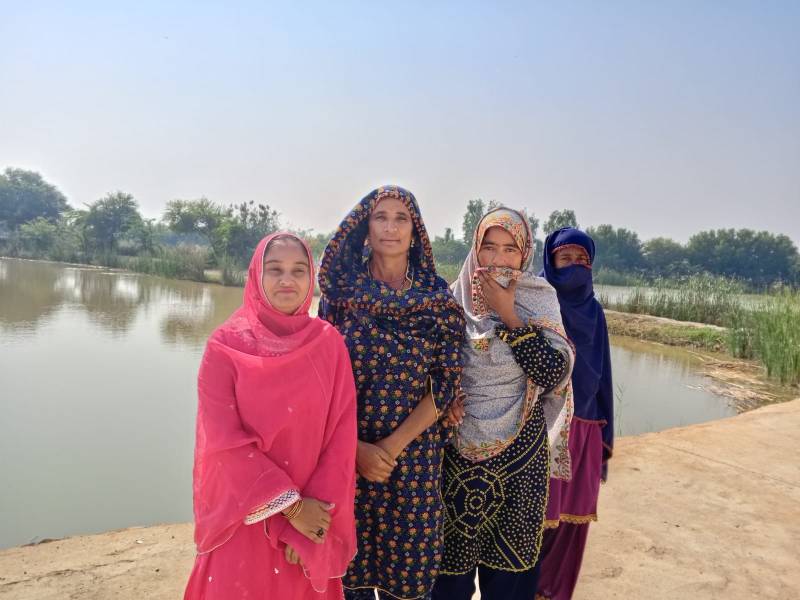
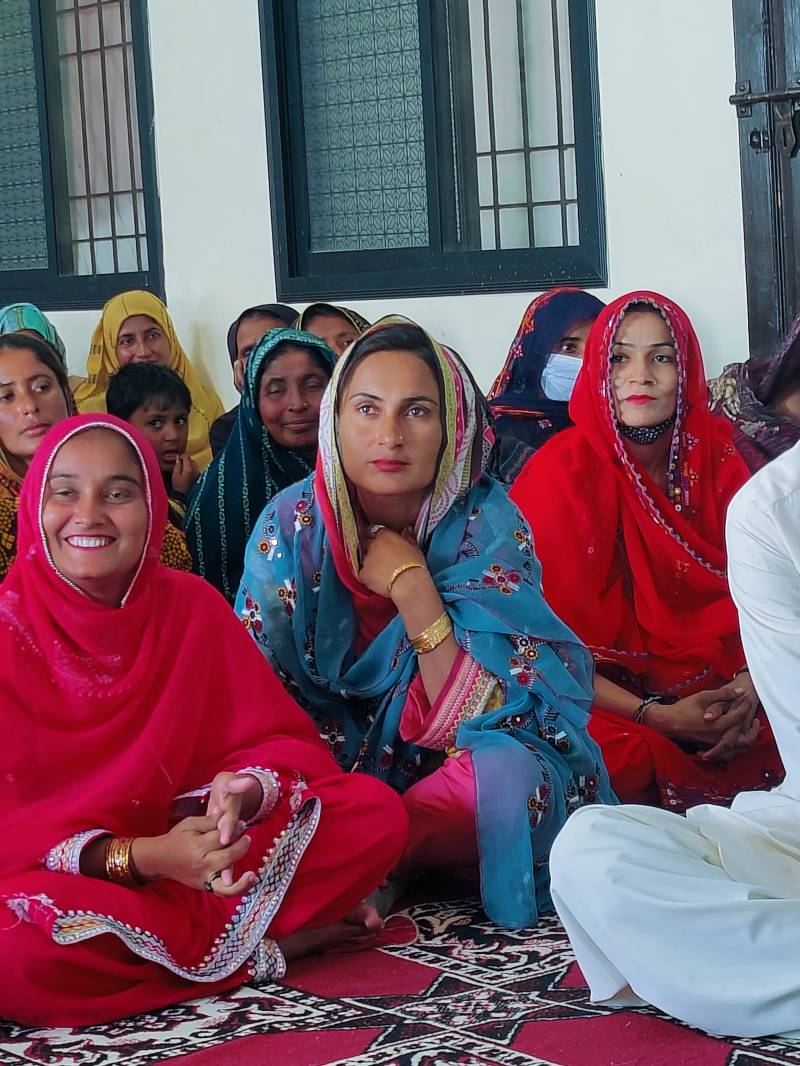
Lakho Bhanbhro, a remote village in Sindh’s coastal district of Thatta, where this year’s monsoon floods left a trail of destruction, is a place where mud roads and unplastered homes are the norm. Yet here, in a settlement still bearing the scars of disaster, rural women speak confidently about entrepreneurship, business models, and financial independence. Wrapped in simple chadors, these women amaze visitors with their poise, clarity of thought, and the determination woven into their everyday speech.
Their awareness of education, the environment, and their rights is striking. Working alongside the men in their families and with support from various non-governmental organisations, these women have transformed Lakho Bhanbhro into a model village.
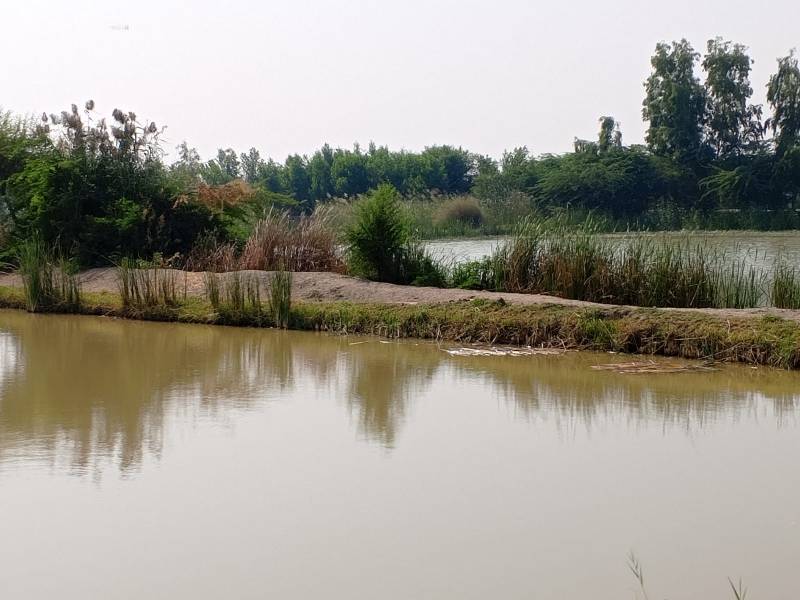
As you enter the settlement, broad ponds glisten under the sun. Once nothing more than waste dumps, they now host thriving fish farms. Women here raise fish on a commercial scale, turning what was once an environmental hazard into a sustainable source of income.
This transformation began with interest-free loans from the Sindh Rural Support Organization (SRSO), which helped residents launch small businesses. Women of all ages are now part of this growing community of entrepreneurs.
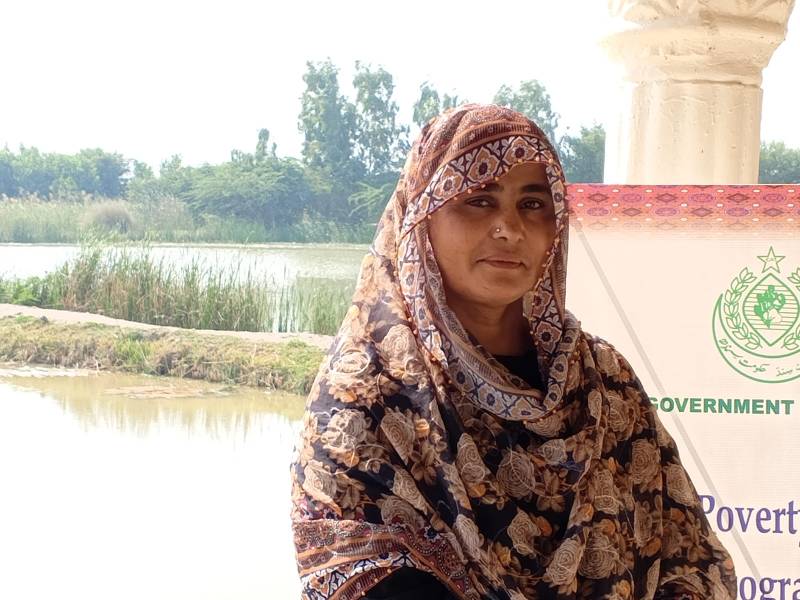
One of them is Zahra, a soft-spoken woman in her mid-forties with only a fifth-grade education, and the president of the village organisation. Smiling confidently, she explains how five women from her group collectively secured a loan of 2.8 million rupees to establish a fish farm.
They trained with SRSO, and while the men in their families support them, the business is firmly led by women. As Zahra proudly shows her ponds, she describes how the fish and the dreams of the families involved are growing fast.
This is the first time Zahra and her group have handled such a large loan. Before this, they took smaller amounts. She laughs as she recalls the scepticism villagers initially felt when SRSO first approached them in 2017, inviting every household to contribute 100 rupees to form a local support organisation. “We refused and sent them back,” she says.
Later, women from nearby villages told them how beneficial the interest-free loans had been. “We realised that if we formed an organisation, we too could earn, support our families, and fulfil our children’s needs.” When SRSO returned, the women welcomed them. They formed the local support organisation, received training, and soon began taking loans.
There are 900,000 registered households in the district. The government cannot provide 900,000 jobs. But through entrepreneurship, we can help people become self-sufficient
Zahra recalls her own journey, starting with a 13,000-rupee loan she repaid on time, followed by 50,000 rupees to open a small shop, then 40,000 more to buy a cow. Now she manages a fish farm. “My business partners are all women,” she says. “Men help us, but we are not dependent on them.” Recently, each member earned 50,000 rupees in profit.
Another group of villagers, men and women together, leased three acres of land using an SRSO loan. “We used to be sharecroppers,” says a proud Shabana Khaskheli, “but now we are the contractors.”
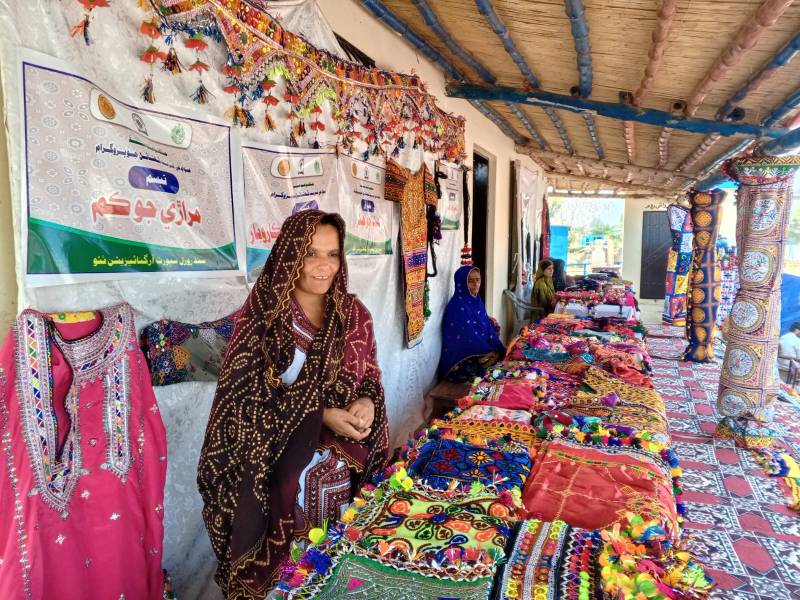
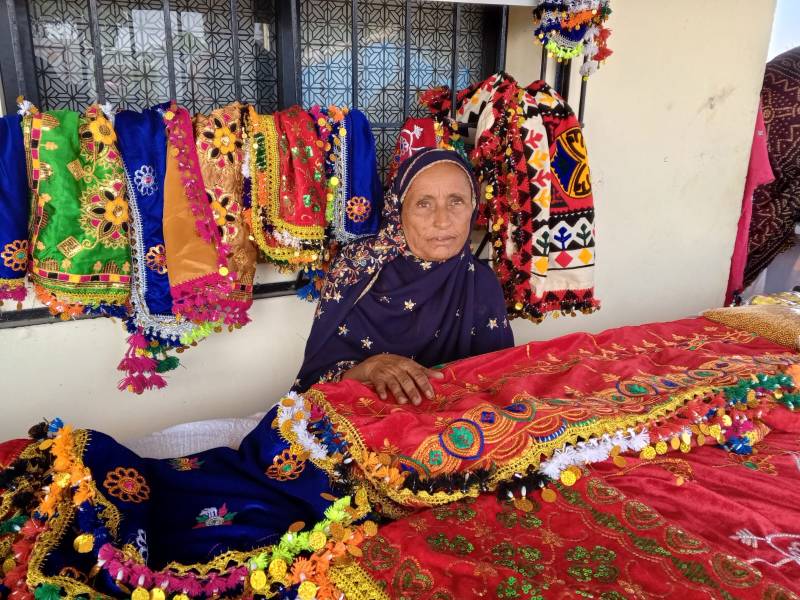
Then there is Raheema, known for her exquisite handicrafts. With an 80,000-rupee loan, she and her daughters and daughters-in-law began producing embroidered clothes and traditional Sindhi Ralli. Their vibrant, hand-stitched pieces, adorned with silk, beads, and gota, sell quickly, especially at exhibitions. SRSO organises a major handicrafts exhibition in Karachi every year, and Raheema’s group has participated several times. She proudly notes that they repaid their loan within the 12-month deadline, and now their business is thriving.
One of the most remarkable women in Lakho Bhanbhro is Ami Shoro. Years ago, she was left disabled after her husband attacked her with an axe, injuring her spine. In 2017, SRSO provided her with a wheelchair and a 15,000-rupee loan. Through the embroidery skills of her hands, she now earns a dignified living for herself and her six children.
The presence of non-governmental organisations has clearly boosted the community’s confidence.
Safia Bhanbhro shares this proudly: “SRSO taught us how to work with other organisations. Before, our village was in terrible shape. Dirty water stood everywhere, people couldn’t even visit each other. Now, with support from SSEP, USAID, FAO, and the European Union’s UNIDO project, we have built latrines, kitchens, solar streetlights, a reverse osmosis plant, and even a two-room primary school with benches. We also have a community hall. Solar panels now power our homes and shops, so even with frequent outages, our work never stops.”
Across hundreds of such villages, SRSO, part of the Government of Sindh’s Peoples Poverty Reduction Program, is helping transform lives. SRSO’s Chief Executive Officer, Mohammad Dittal Zulfiqar Kalhoro, is known for his hands-on approach. A finance specialist who once worked in telecommunications, he was drawn to the social sector and joined SRSO in 2013, becoming Chief Executive Officer in 2015.
SRSO currently operates in 15 districts of Sindh, organising over 1.43 million households.
Kalhoro explains the organisation’s philosophy using a Thatta example: “There are 900,000 registered households in the district. The government cannot provide 900,000 jobs. But through entrepreneurship, we can help people become self-sufficient.”
For Thatta alone, SRSO has allocated 200 million rupees in loans for 2,000 people. The organisation targets the poorest households, ensuring no deserving family is left behind. Its process is rigorous, profiling each area, conducting household surveys, meeting with local religious leaders, and assessing poverty using a detailed 50-question form designed to prevent false claims.
Households with a poverty score between 18 per cent and 23 per cent receive grants, while those scoring up to 32 per cent qualify for interest-free loans. Individuals can access loans ranging from 15,000 to 400,000 rupees, while groups can receive up to 3 million. The loan recovery rate is an impressive 99 per cent, with only 400,000 rupees defaulted out of a total disbursement of 1 billion.
“Our 2,500 staff members meet 25,000 to 30,000 women every day,” Kalhoro says. “We see how their thinking is changing. The impact of this programme is spreading through rural society like a fragrance.”
Indeed, rural women here are not only achieving economic independence but are also actively reshaping their society.
Suraiya Lashari captures this spirit in a verse she hums:
“Plant a single tree, and the whole earth will remember you.”
Shabana Khaskheli embodies this spirit. She is fighting early marriage and has helped stop 25 child marriages so far. “We formed a committee of respected elders,” she explains. “Whenever we hear of a child marriage, we go and talk to the parents. Some listen. If they do not, we warn them of the legal consequences. Fear of the police and courts usually stops them.”
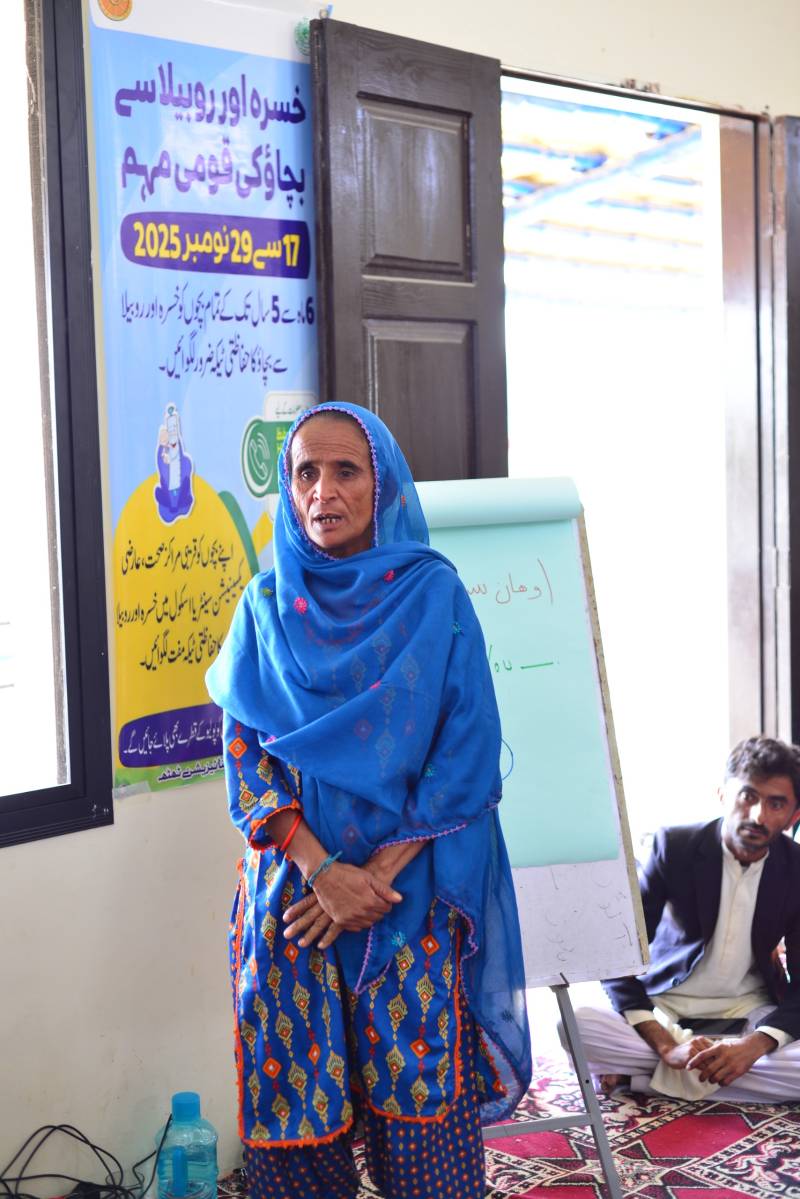
Shabana also works as a polio vaccinator. Early on, people taunted her husband, telling him his wife would “run away” if he allowed her to work. But he supported her, and today she is a frontline worker helping immunise 200 girls a day during the recent human papillomavirus vaccination campaign. “It’s not easy,” she says. “People insult us, but our officers stand with us. Together, we convince the community.”
Another inspiring figure is young Safia Bhanbhro, who says, “Education is a person’s third eye.” Having completed tenth grade, she enrolled in a boys’ college miles away and plans to sit her intermediate exams privately. She dreams of becoming a doctor. She recalls how people criticised her father for letting her study beyond primary school. “My father told them, ‘Let the relationships break if they must, I will educate my daughter.’”
Today, the entire village is benefiting from that decision. Safia now teaches at the SRSO-supported primary school and is shaping the minds of the next generation. Every girl in her class aspires to become a doctor, and every boy aims to join the police force. Elderly women now come to enrol their granddaughters in school.
The shift in mindset is unmistakable, and it is what truly makes Lakho Bhanbhro a model village.