

It does not matter if we are merely literate or highly educated: we all put words to page. Some of us just sign pay slips, mark attendance, or fill out forms. Others pen technical reports, articles, lengthy theses and books. Within fiction and non-fiction, a wide range of types exist. Yet, some subjects in the social sciences truly demand steady writing. These fields include anthropology, history and archaeology. This is so because people love to hear stories. Hold on for a moment, and allow me to draw a link between Lewis Carroll’s Alice’s Adventures in Wonderland, Professor Brian M Fagan, and Bhanbhore. But before showing that connection, it feels right to tell you a bit about each.
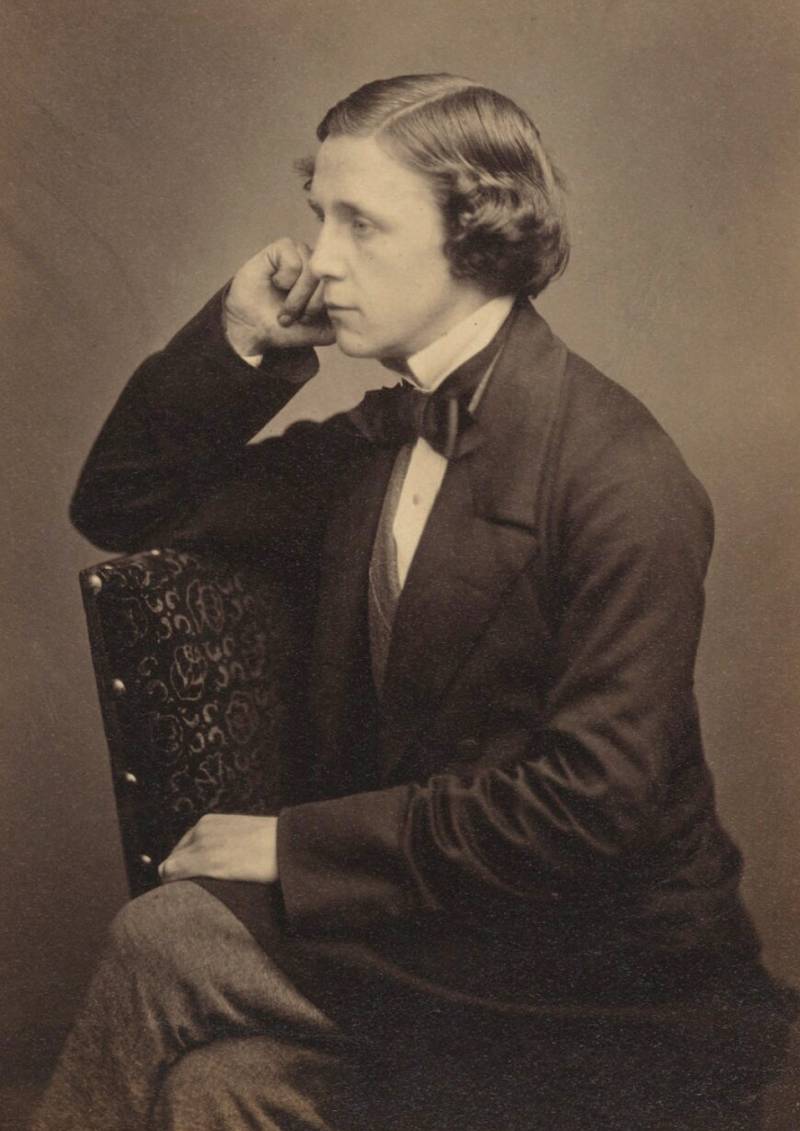
Let me start with Lewis Carroll’s book. It first came out, with pictures, in 1865. To this day, the ideas within it have stirred the minds of thinkers, scholars, and everyday readers alike.
Professor Brian M Fagan’s name might be new to a common reader, but for archaeologists, his name is well-known. His works are seen as a bridge between common readers and academia. It is understood that he is one of the archaeologists who simplified complex archaeological ideas through his clear and plentiful writings.
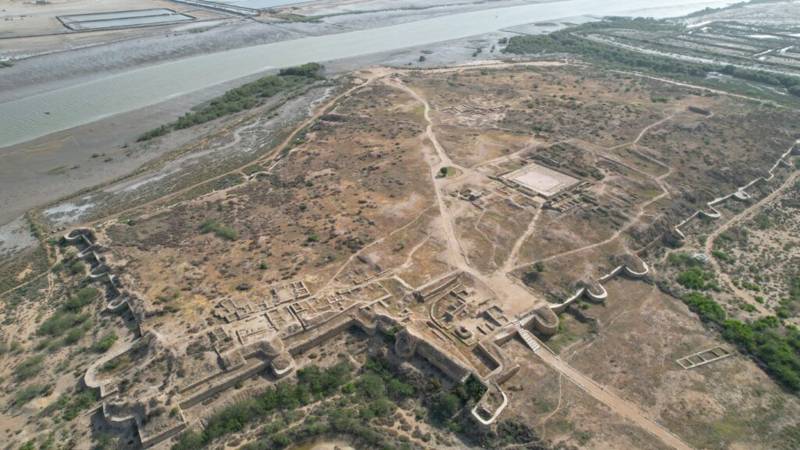
Now, let us turn to Bhanbhore. It is an archaeological site set on a dried-up branch of the Indus River. It lies about 40 kilometres (roughly 25 miles) from Karachi, along the Karachi-Thatta National Highway. In the 1950s, Dr NB Baloch and Pir Hisamuddin Rashdi convinced Dr Fazal Ahmad Khan to start digging there again. Much later, in 2010, a joint team from Pakistan and Italy began actively digging. This writer, for the last three seasons, has been a guest of the Italian team and the Director General of Antiquities & Archaeology, Government of Sindh.
So, it is the right moment to unpack the link among Alice’s Adventures in Wonderland, Professor Brian M Fagan, and writing about Bhanbhore. Let me untangle this knot. The Alice book offers writers an unbounded imagination; it helps them to find their true selves in their words. The story tells writers to be ready to accept change and shape their narratives accordingly. Furthermore, it confirms the value of asking hard truths about old ways, pushing them to think anew. Likewise, young archaeologists can learn from Professor Brian M Fagan how to simultaneously engage with the past and present, and what the basic requirements are to spark public interest in archaeology.
Now, for Bhanbhore’s turn. Last year, during the 2024 digging season, I was at Bhanbhore meeting my Italian archaeologist friends, and I also met some students or recent graduates of archaeology. We talked about writing popular articles on facts and finds from Bhanbhore. In that short discussion, we all agreed there is a need for such writings. Holding this talk in mind, and drawing some thoughts from books and Professor Brian M Fagan’s articles, I have come to realise that people are eager to hear stories, no matter if they are of the past or the present. Therefore, popular stories of archaeology are always welcomed. However, writing about archaeology asks for a different set of skills and viewpoints.
Professor Brian M Fagan warns that while an archaeology degree certainly allows someone to write about archaeology. But many others also hold similar qualifications. Consequently, just having a degree is not enough to write a compelling story about Bhanbhore or other sites. Professor Fagan urges aspiring writers to consider what other strengths they possess that make them the best one to write about their specific idea? What unique voice and insight do they bring? What makes them stand apart to tell this particular tale? Let us assume that along with their qualifications, they also possess the required abilities and merits. Yet, many archaeologists still hold back from writing popular accounts of their findings. Allow me to share my own experience.
I have worked with archaeologists who are active diggers. However, most of them failed to write about their discoveries in a way that common folk would enjoy. According to them, this is because they are torn: should they write about ivory, or bricks, or bones? This state of limbo often leaves them quite still. Their words reminded me of a conversation between the Cheshire Cat and Alice.

When Alice asked for guidance on which road to take, the Cat said, “That depends on where you want to get to.” When Alice replied that she didn’t care where she went, the Cat concluded, “Then it doesn’t matter which way you go.” Therefore, aspiring or seasoned archaeologists must choose the topic they truly want to write on, and what message they want to share with readers.
In any writing, even archaeological writing, the idea is more important than the author. An effective archaeological story engages readers by evoking the sensory experience of discovery
Another trait, though not often found among archaeologists who write, is their failure to grasp that archaeological stories don’t come from grand historical events. In fact, the life of archaeological stories stems from field notes—the clear descriptions of pottery chips, pebbles, stones, spear tips, broken pottery, bones, and dried seeds. These gathered facts move the story, with an assurance that ancient life was never still; it always changed and moved.
Professor Brian M Fagan has warned that a lasting challenge for archaeological writers is ensuring their ideas and findings match the other allied sciences of archaeology. Another trap that young archaeologists often fall into is thinking that a fancy topic will grab a reader’s attention. They forget that readers are drawn to fresh and unique ideas. For example, when writing about Bhanbhore, perhaps a potter’s secret skill might attract readers, rather than just a general discussion of the pottery itself. A story that offers new wisdom appeals to readers.
Just last week, I met with a group of young archaeologists, and some of them shared that a common struggle they face is starting an article. I told them that it is true, a white sheet of paper or the blinking screen of a laptop can seem daunting. However, the writing process is the same across all lands: all writers must start. No good writing comes without the act of writing itself. With a smile, I echoed the King’s words from Alice’s Adventures in Wonderland: “begin at the beginning, and go on till the end comes, then stop.”
I added that writing asks for passion, a certain kind of ‘madness.’ I joked that if we are talking about writing on this musical evening, it is clear we are all touched by some form of ‘madness’. Again, I brought up Alice and the Cat’s words: “we are all mad here.” Alice asked “how?” The Cat replied, “You must be, or you wouldn’t have come here.” Yet, we all agreed that the most important part is the first sentence—the hook—that immediately seizes the readers’ interests. Truly, a strong hook, paired with a fulfilling end, ensures reader engagement.
Nowadays, archaeologists, like other writers, often believe that writing is a gift from above, a kind of magic, a supreme experience. But they forget that it is a craft. It is learned, and good writing is always hard. It rests on a sound idea. It demands long hours of practice and great skill to make the words live. Another key aspect of archaeological writing is that it must focus on a particular era of the archaeological site. It must also be understood that archaeological writing requires thorough research. However, too much research can cause the writer to get lost in a heap of needless facts. Nevertheless, the story should include basic facts and sources. Furthermore, field visits and talks with active archaeologists are crucial. It seems fitting to quote a character from Alice’s Adventures in Wonderland: "The best way to explain it is to do it." This quote is very true for archaeological writing. While other subjects mostly tell or show, archaeological writing means exploring and digging—these are not just words, but hard actions.
In any writing, even archaeological writing, the idea is more important than the author. Authors’ boastfulness reminds me of Alice’s words to the Queen of Hearts: “your court and people were nothing more than a pack of playing cards.” This outburst shatters the false belief that authors are more important than the idea. We must accept that there is no lack of good ideas. Archaeologists who are actively working or teaching likely have a list of potential topics in their diaries and field notes. But they often delay, thinking that one day there will be ample time to write. Sadly, that day often never comes, as other temptations frequently overcome the passion for writing. Therefore, it is absolutely essential to start now, instead of waiting for an ample time or ideal spot—pin-drop silence of Miani Forest, or the mesmerising glow of a full moon over the Thar Desert.
Just begin writing, with an understanding that the first draft should be written without counting words. Then, that first draft must be left alone for a few days. After that, print a copy, read it line by line, sentence by sentence. Make edits, and then ensure the text is improved, the story is able to engage readers, no major idea has been left out, facts are correct, and appropriately placed. This first draft should be treated as a private work, to be shared with only a few trusted friends—perhaps a fellow writer or a co-worker. Consider the second draft an elevated stage of the article. Therefore, it must focus on the story in a broad manner and retain a storytelling spirit. Now, the text should be free from worn-out phrases and excessive adjectives. The text now has a believable story, and that principle should guide every word choice and structural decision. Imagine this story has to be told to a friend, sitting by a blazing fire at a mach kachahri, perhaps held within the fort of Ranikot, both sipping a hot cup of coffee or a glass of wine. In such scene the story should flow smoothly, its sentences moving with rhythm, and its paragraphs purposefully mingled. Thus, listener will take it as a perfect piece of non-fiction.
But be warned that writing one good piece is not enough. Let us, with a hint of amusement, review websites, newspapers, or magazines with the sole purpose of listing those who have written only once or twice. I am sure such a list would be considerably long. It helps us to understand that writing one or two articles is no great feat; the real test is writing regularly. In most cases, readers often ask regular contributors about their daily writing habits. In this regard, let me apprise readers that a writer’s life isn’t always filled with bright ideas. Yes, there is inspiration, but it is found within the act of writing itself. The truth is that writing is hard work. Most writers say they can manage about four hours of fresh writing a day. Remember, each writer has their own best times, their own span for staying sharp and creative. But that doesn’t matter; what counts is having a firm habit of regular writing.
Now, the question is how to build this habit? There are many ways to grow it, but from my own experience, I have found that setting a clear plan and sticking to it works best. You might pick certain hours of the day, starting with just two hours at first, and then keep at it. Soon, this path will become a second nature. Another point often ignored is that any agreed deadline with an editor is like taking a trust loan against future work. This means meeting those dates ensures that you will be printed again in the same newspaper. Another common question is about place, where to write. However, there is no single, right answer that suits all. It is always a personal choice. For instance, some writers prefer libraries. Others work well on trains, in coffee shops, or even in waiting areas. Some writers are able to write in lobbies, or even on planes. But in all these situations, the real question isn’t just about the place itself. Instead, the point is finding a spot where one feels comfortable. This comfort allows you to pour out your ideas onto paper or a laptop for long periods of time.
An effective archaeological story engages readers by evoking the sensory experience of discovery. For example, an article about pottery should make readers hear its dull thud, crackling, crazing, chipping, breaking, ringing, and ping. Similarly, a text about stones and beads must remember the sounds of clicking and rattling. For bones, grinding stones, or ancient tools, the writing should convey a sense of scratching and grinding. If the story involves the movement of pottery, it should create a feeling of rusting and shifting. These sounds, often nearly inaudible at the excavation site, require archaeologists to make an effort to ‘sense’ them. Incorporating such sounds into writings give the story a powerful voice. As Alice's Adventures in Wonderland suggests, care of the senses leads to care of sounds.
Additionally, a story comes to life through a focused elaboration on a single item. Detailing a broken brick, a pottery shard, a dagger’s tip, a soiled grain, weathered coins, fragile scrolls, or ancient bones can give the story a distinct voice. Authors must feel sounds of artefacts, response their calls, and register them in their stories. Surely, such a lively and responsible story would be an excellent piece of non-creative fiction.