

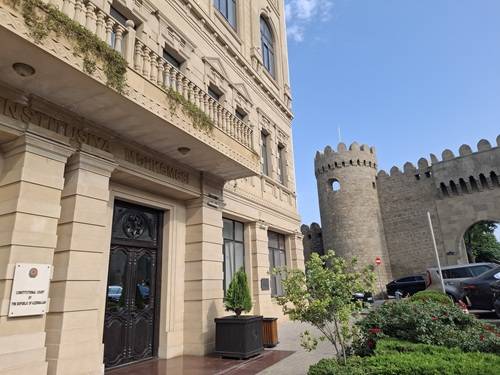
Baku, the capital of Azerbaijan is a pleasant and vibrant city. It has ultra-modern buildings along the Caspian shoreline interspersed with elegant French-style structures from the days when it a part of the Tsar of Russia’s Empire. Baku’s economic significance stems from the oil reserves located in its vicinity both on land and offshore. In fact, Baku was the birthplace of the modern oil industry, as the first industrial oilfields in history were drilled in that area of Azerbaijan, then a part of the Transcaucasian provinces of the Russian Empire which the Tsars had gained from Qajar Persia as a result of the Treaty of Gulistan. This wealth is visible throughout the city and it is interesting to see the various kinds of architecture have portrayed affluence over the centuries.
One part of its history that has been minimised, if not completely erased, is the Soviet era. The dreary utilitarian residential and commercial blocks which are ubiquitous throughout the former USSR are not seen in the unique blend of Paris and Dubai by the Caspian that is Baku.
This part of the world, though, has a far older story. Baku itself had been a key transit point between Europe and West Asia for centuries, the old city of Baku is a walled city located on a hill with ancient mosques and towers crisscrossed by quaint medieval cobblestone streets. Long before the advent of Islam, this region had been a stronghold of Zoroastrianism and the presence of crude oil and natural gas meant that naturally occurring fires were a part of the landscape. As fire is seen as a representation of the divine light in Zoroastrian theology, Azerbaijan became the site of numerous fire temples. Yet in the grand scale of things, this is also a very recent chapter in the story of Azerbaijan, as it is one of the birthplaces of civilisation – and there is a place not very far from Baku where that story has been written in stone.
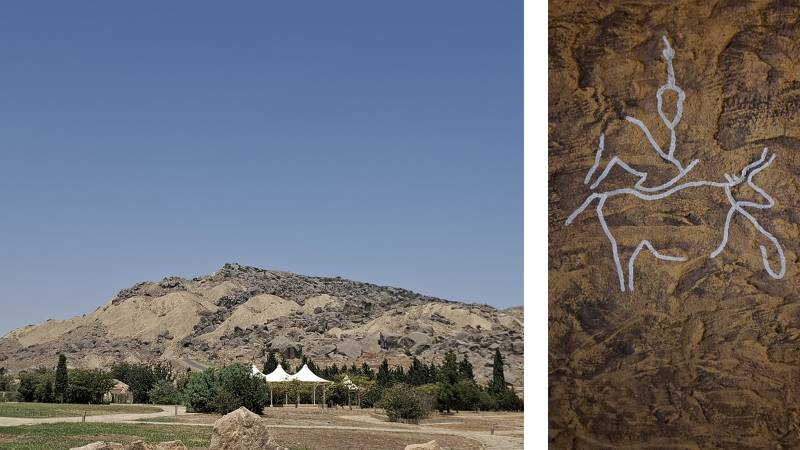
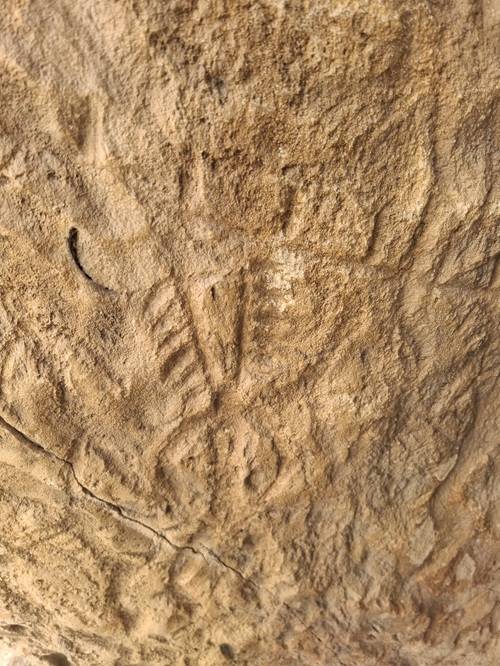
Ten thousand years ago, the stretch of Caspian shoreline south of Baku was a very different place from the arid rocky wasteland that it is today. Back then, the Caspian held more water. Thus the site upon which Gobustan lies was then right in front of the sea. The climate was also wetter, with a temperate savannah ecosystem where megafauna such as Red Deer and Asiatic Lions were abundant. The sea provided a bounty of fish including massive sturgeon and succulent salmon. It is this abundance of food that brought humans to the region for the first time 40,000 years ago. The continuous human presence in this area has been documented by petroglyphs, rock art, starting from the Palaeolithic and ending in the Medieval era. It is because of this uniqueness that it was first declared to be a UNESCO World Heritage Site in 2007.
After a long and arduous budget session, let us leave politics aside because that, as they say, is a story for another day. I had gone to Chitral to spend some time in my constituency, as I had not been there in over a month – when plans materialised to visit Azerbaijan. My in-laws and family were already there, so I joined them. As it was a family holiday, I spent most of the time running around after my toddler, taking in the sights and enjoying the amazing food, which is a delicious fusion of Turkish, Iranian and Uzbek cuisine with European influences. I had heard about the ancient petroglyphs nearby, but finally went to see them on my second-last day in Azerbaijan.
Gobustan is located about an hour and a half away from Baku, near the famous mud volcanoes (which we also visited afterwards, but weren’t much to write home about). My brother-in-law was my companion for the trip and was also the designated photographer. The Gobustan hills rise up above the arid plain (although arid in summer, the region gets substantial rainfall in winter and spring but unlike Baku does not experience regular snowfall) and at the base of these hills is a modern museum. Outside the museum building, there are reconstructions of the huts that the dwellers of this region would have inhabited in the Stone Age.
The transition from the Neolithic to the Bronze Age, and then the Iron Age, was very gradual. Perhaps, the people of the region had found the perfect balance of old and new
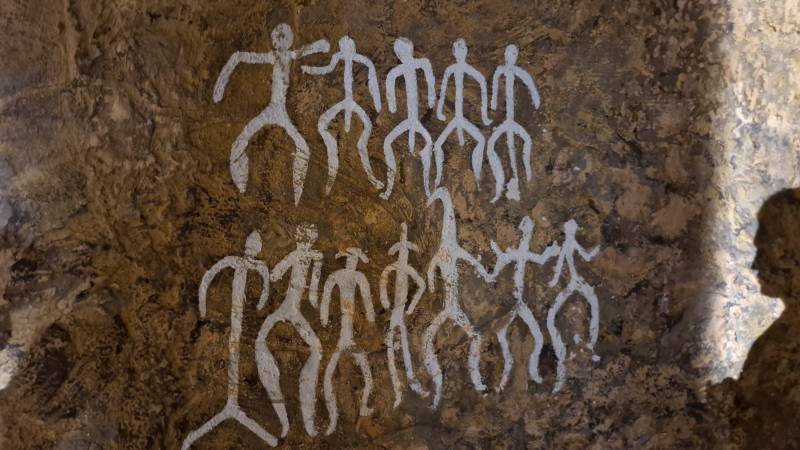
The museum itself is state-of-the-art and the guides are also extremely professional and proficient in English. Some of the rock carvings from the adjacent site have been shifted to the museum, but it mostly features reconstructions which are easier to observe. The story of the rocks shows how the oldest inhabitants used to hunt stags and wild horses, as well as harvest huge sturgeons from the nearby sea. Slowly we transition from the Palaeolithic to the Neolithic and goats and cattle with ropes around their necks signify the transition from hunting to raising livestock. Scenes of men with spears and bows going off to the hunt, shamans wearing antler headdresses and groups of people line dancing, very similarly to the folk dances still prevalent in the Caucasus region including Azerbaijan, show how civilisation bloomed in this part of the world.
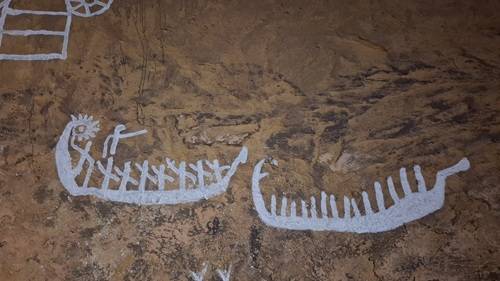
The Neolithic is an era of history that fascinates me. How mankind went from living like wild beasts to forming complex civilisations is something that has not yet been fully understood. The similarities of the Gobustan culture to the Neolithic cultures of what is now Pakistan is also apparent. Both feature aspects of worshipping the divine feminine, with figurines of pregnant well-fed ladies being an object of reverence. The cult of the ibex is also strongly represented in both regions. These majestic wild goats with their scimitar like horns held our ancestors in awe throughout Eurasia, carvings of boats are also well represented and it is interesting to note how similar they are to the pictures of vessels from Harappan art.
What is now Azerbaijan lies adjacent to two of the sites where agriculture first took place – including the domestication of animals and farming. Being in proximity to both Anatolia and the Zagros mountains meant that the transition from the Palaeolithic to the Neolithic occurred in this region earlier than other parts of the world, but from the petroglyphs it seems that both lifestyles blended and agriculture together with a hunting- and fishing-based lifestyle coexisted for a long time. The transition from the Neolithic to the Bronze Age, and then the Iron Age, was very gradual. Perhaps, the people of the region had found the perfect balance of old and new, and the surrounding landscape and the Caspian provided enough for them to be happy without the rapid urbanisation seen in Mesopotamia and the Indus Valley.
After the museum, we went to the nearby Gobustan site itself. This was my first time visiting a Stone Age site, so walking along the hills and into the caves, observing where the ancients lived their lives in a world that was still wild and pristine, was an almost philosophical experience. Seeing the caves where they would assemble to hold their rituals, escape the elements and record what they experienced in their day-to-day lives by etching it into the rocks invoked something deep within me, this was mankind at the dawn of our intellectual awakening!
From the hills, one can see the Caspian shoreline in the distance and the wide expanses of dry shrubland extending to the south. The people who created the petroglyphs lived there for millennia and over the generations would have seen the sea slowly shrinking and the coastline going farther away. The wooded lush savannah would also have transformed into the semi desert we see today and perhaps the elders would have told their grandchildren about the times of their own forefathers when the land was lush and herds of red deer and – before that – a strange massive beast with horns on its snout (the rhinoceros) would roam across the landscape. The Asiatic Lion would still have been around, as it did not go extinct until much later, and its roar would have been heard by the people of Gobustan until much later historical times.
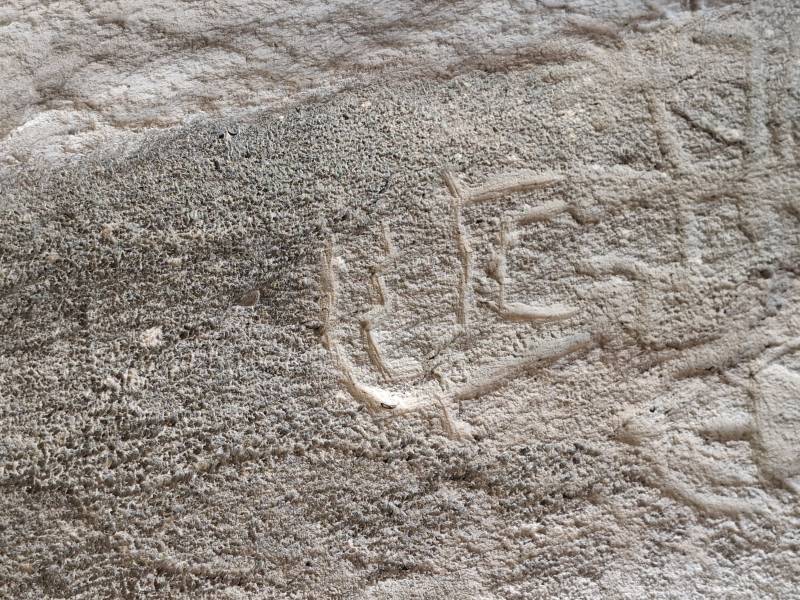
A Roman general, who had briefly led his legions right up to the Caspian during their wars with the Parthians, recorded his visit with an inscription in the Gobustan Hills. Later still, camel caravans coming from Arabia and Central Asia would stop by, and Mehrabs, showing the direction towards Makkah, began to be etched in on the same rocks where thousands of years earlier the shamans used explain this world and the realm beyond to the people of the rocks.
A visit to the mud volcanoes followed, and as I mentioned earlier, they are interesting but not quite awe-inspiring. Nevertheless, the museum which is adjacent to the mud volcanoes is brand new, and houses an impressive natural history collection with fossils, animal specimens and information on other mud volcanoes around the world. The building itself has a very futuristic aesthetic and stands out in the arid landscape like something out of science fiction.
Azerbaijan is a wonderful place to visit. The strong brotherly relations Azerbaijan and Pakistan enjoy are also reflected by the fact that Pakistanis are well received and – like in Turkey – all Azerbaijanis know the slogans “Jeevay Pakistan” and “Pakistan Zindabad.”
I had gone to Baku to experience the vibrant Azerbaijan of today, but it also rekindled my passion for exploration and antiquities. To my long-time readers, I hope you enjoyed this piece and Inshallah I will write again whenever my public service duties allow me some time to reflect and explore.