

Between the fierce peaks of the Hindu Kush and the sweeping valleys of the Indus Basin lie two nations joined by history, heritage, and humanity: Pakistan and Afghanistan.
While maps mark their separation with a sharp line, the people on either side know better: that borders may divide nations, but not memory. The tensions that have long defined Pakistan–Afghanistan relations are real, but so too is a shared cultural soul that transcends politics. To understand this relationship, we must look beyond strategy and statecraft to stories, faces, food, and fields.
The mountains from Nuristan to Swat have witnessed centuries of caravan trails, migration, conquest, and poetry. These ridges and valleys hold the footprints of traders, warriors, mystics, and lovers, shaping a cultural continuity rarely captured by diplomatic discourse. In Kandahar, an elder recites Pashto tapey by firelight, much like his cousin in Quetta. In Jalalabad, craftsmen chisel floral motifs passed down from ancestors who once crossed into Peshawar for the same trade. For many Pashtuns, whose ancestral lands span both sides of the Durand Line, this border feels like an afterthought imposed and artificial.
In vibrant markets like Chaman and Spin Boldak, life pulses with resilience and barter: colours of dyed fabric, scents of sun-dried fruits, children herding goats barefoot. Across these lands, the soul speaks through poetry from Ghani Khan in Pakistan to Khalilullah Khalili in Afghanistan, expressing love, war, and a longing for peace. Khalili once wrote: The homeland is not only soil and stone, but the pulse within the chest.
The terraced fields of Dir echo those in Badakhshan, both carved by hands hardened by labour but softened by prayer. A glass of green tea in Mardan tastes the same as one in Khost, shared often with strangers who become family.
For many, these connections stretch beyond borders and oceans. A family fleeing Kabul, finding shelter in Karachi before resettling in Western North Carolina, may still carry the taste of dried mulberries from a back alley in Peshawar, the call to prayer from Lahore’s Wazir Khan Mosque, or the scent of warm naan baked in a Ghazni tandoor. Now, decades later, the grandfather takes his children and grandchildren each season to the apple orchards in the Carolina hills not only for fruit, but for memory. It is, in its way, a ritual in remembrance of Wardak’s orchards, where his own father once picked apples under a sky he still dreams about.
Beyond headlines lie the hands that bake the same bread, mothers singing the same lullabies, villagers worshipping under the same sky
Though these children grow up among Appalachian forests, speaking English and living in another world, they carry within them an invisible architecture of place, passed down through smell, touch, and story.
Because place matters.
Not just as geography, but as inheritance, as memory, rhythm, and ritual. The soil of childhood, the shadows of mosques, the scent of apples, the texture of dust. These become internal landscapes. A young woman raised in the U.S. might long for a place she’s never seen, stirred by her mother’s stories of orchards that once bloomed in Wardak. A son may write poetry about monsoon rain in Lahore, not from experience, but from the ache of listening.
These are not just memories. They are inherited maps: lived, felt, and passed on in recipes, wedding songs, and bedtime stories. Quietly binding people to lands they no longer inhabit, but never fully leave.
Few regions are as visually arresting as the lands connecting Pakistan and Afghanistan. The grandeur of Bamiyan, the orchards of Swat, roaring rivers of Dir, and clay homes perched on Afghan cliffsides speak to a geography that resists simplification. But what makes these places extraordinary is not just the terrain, it’s the people: women painting pottery in Peshawar, boys playing cricket in Kabul’s dust, shepherds guiding flocks through snowy Torkham ridges.
Nature here is not background; it is character, shaping languages, livelihoods, and philosophies. The wind of the Khyber Pass has inspired warriors and poets alike; the rains over Spin Ghar water both Afghan and Pakistani soil, indiscriminately.
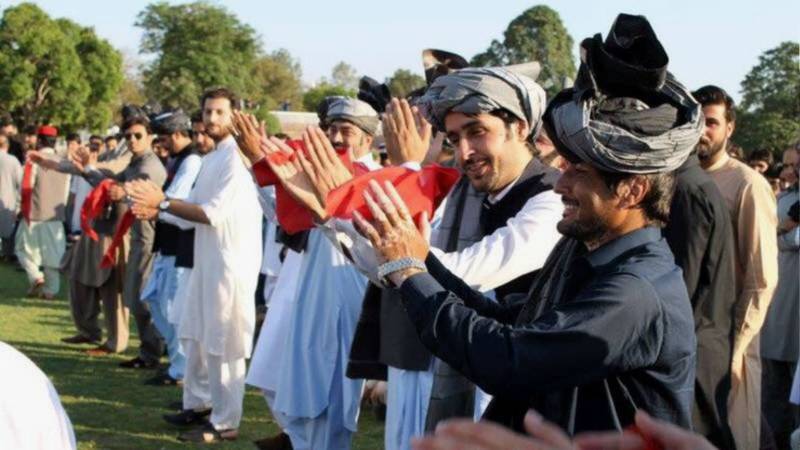
Culture is a bridge, not a barrier. The political lens reduces Pakistan–Afghanistan relations to grievances and strategy, but culture tells another story, one of intimacy, shared grief, and hope. Cross-border weddings occur despite tensions. Pashto music blares on both sides. Books travel eagerly, sometimes illegally. A grandmother in Lahore may still cherish a shawl woven in Herat; a boy in Kabul might wear sandals made in Multan.
This shared cultural wealth lives not only in the mountains but also in museums worldwide. The British Museum in London holds Bactrian gold and Gandharan sculptures; the Musée Guimet in Paris preserves marble Buddhas from these lands; the Metropolitan Museum of Art in New York houses Persian miniatures reflecting the Mughal and Timurid legacies. Back home, Islamabad’s Lok Virsa Museum preserves textiles, tools, and folktales from Afghan refugee communities narratives stitched into fabric, telling of exile, survival, and memory.
Much of this heritage now sits in Western glass cases, admired but disconnected. Yet even in exile, these pieces speak of beauty beyond borders, of a civilisational arc worth remembering.
The future of Pakistan and Afghanistan will not be shaped only by political summits but by nurturing the soil of everyday life, through community projects, educational exchanges, and conservation of shared ecosystems. Instead of viewing borderlands as zones of instability, we might see zones of opportunity. Cultural festivals, youth programmes, and craft revivals can reconnect generations who’ve forgotten they share a story.
Yes, tensions remain. But beyond headlines lie the hands that bake the same bread, mothers singing the same lullabies, villagers worshipping under the same sky. Perhaps then, we will see not enemies, but reflections.
The mountains remember what we forget.
They remember a time when this region was a centre of trade, learning, and beauty before empires drew lines through valleys and villages, before gunfire echoed louder than laughter.
It is time we remember, too, that between Pakistan and Afghanistan lies not just a contested border, but a shared inheritance. One too rich to ignore. One too human to abandon.
Perhaps if nations were not divided by fear, they could learn to be neighbours united in memory.