

A museum is not only a place of enjoyment but also a centre of learning, where historical artifacts reveal how people lived, built, and used objects in the past. In Pakistan, several museums preserve and present the regional histories of different areas, each with its own architectural and cultural identity. Among them, the Peshawar Museum stands out as one of the largest and most significant museums in the country.
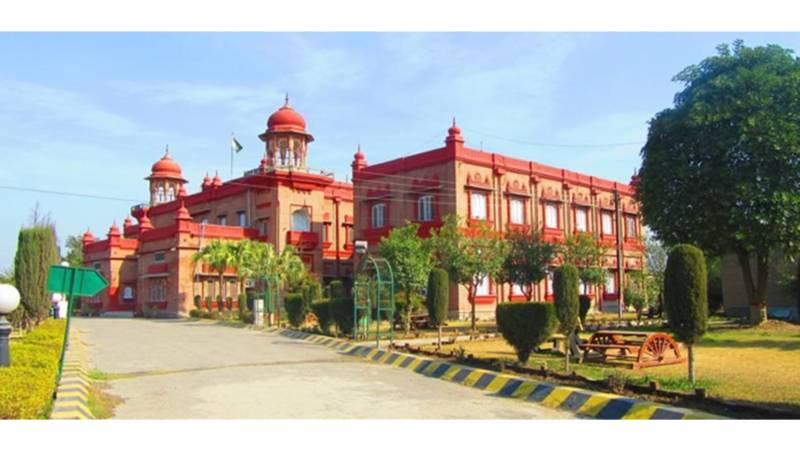
When I was enrolled in the MPhil program in Archaeology at Quaid-i-Azam University, Islamabad, in 2017, I read in a book on Pakistani museums that the Peshawar Museum is considered one of the largest repositories of Gandhara art in the world. This inspired me to visit and witness the collection in person. During the summer vacations, I planned a visit with my friend Kashif Iqbal, also an MPhil student in the Department of History. With great excitement, we reached the grand entrance of the museum and stood before its splendid façade, deeply impressed by its architectural grace and historical charm.
The Peshawar Museum is located in the Saddar area of Peshawar, near the Pakistan Army Cantonment. It was originally built in 1907 AD in memory of Queen Victoria during the British colonial period. The building reflects the Indo-Saracenic architectural style, a beautiful blend of Islamic and British elements. Later, in 1969 AD, additional halls were constructed to accommodate the expanding collection, allowing the museum to preserve and display a greater variety of cultural and historical materials, especially the remarkable Gandhara art that gives it worldwide fame.
Collections and Galleries
The museum houses an extensive collection representing various historical periods and cultures. Among its treasures are numerous sculptures of Gautama Buddha, stunning examples of Gandhara art, and effigies from the Kalash culture. The galleries also exhibit a wide range of weapons, pottery, jewellery, coins, inscriptions, manuscripts, paintings, and traditional dresses. Visitors can also explore ancient Islamic books, including early copies of the Holy Quran, as well as Mughal-period texts such as Bābur-Nāma, Ain-i-Akbari, Fatwa-i-Alamgiri, and the poetic works of Bahadur Shah Zafar.
The Peshawar Museum is not only a guardian of the region’s past but also as a living institution of education, culture, and inspiration
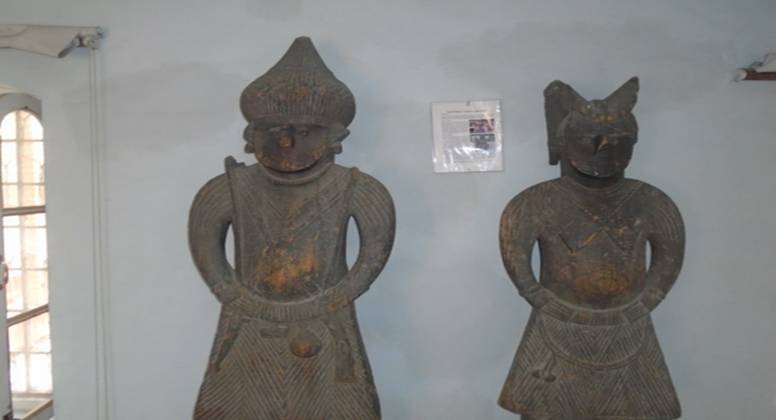
A special gallery displays household materials and provincial cultural artifacts, representing the Pashtun tribes and other regional communities. Traditional dresses, armour, pottery, musical instruments, and chappals reflect the craftsmanship and everyday life of the people, while collections from the Kalash Valley—including wooden effigies and mythological crafts—illustrate a living link to Pakistan’s diverse heritage.
Gandhara Art and Buddhist Sculptures
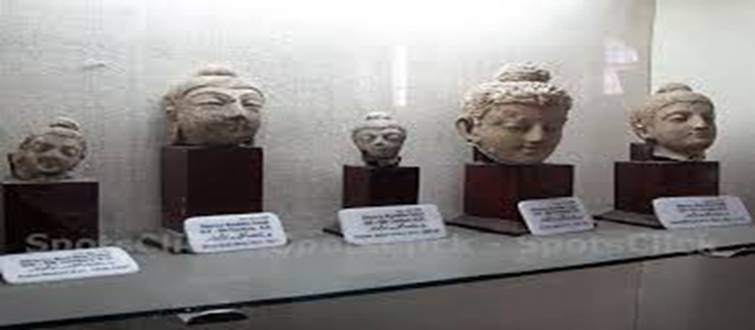
On the first floor, one of the large galleries is dedicated to Buddhist sculptures and headstones. These masterpieces narrate the life story of Gautama Buddha, illustrating various episodes of his spiritual journey.
Among the museum’s most celebrated treasures is the Seated Buddha Statue from the Gandhara period (2nd–4th century AD). Carved in grey schist stone, it reflects the unique fusion of Greco-Roman artistic style with Buddhist iconography. The calm expression, wavy hair, and classical drapery represent spiritual enlightenment and compassion. Such sculptures are found only in the Gandhara region (modern-day Pakistan and Afghanistan), where Hellenistic and Indian cultures met, making this art form unique in world history.
Other stucco sculptures and headstones in the gallery show the Buddha in various postures—meditation, blessing, and teaching—symbolising inner peace and the path to nirvana. The fine detailing and grace of these works highlight the artistic excellence of the Gandhara civilisation.
Numismatics Gallery and Ancient Coins
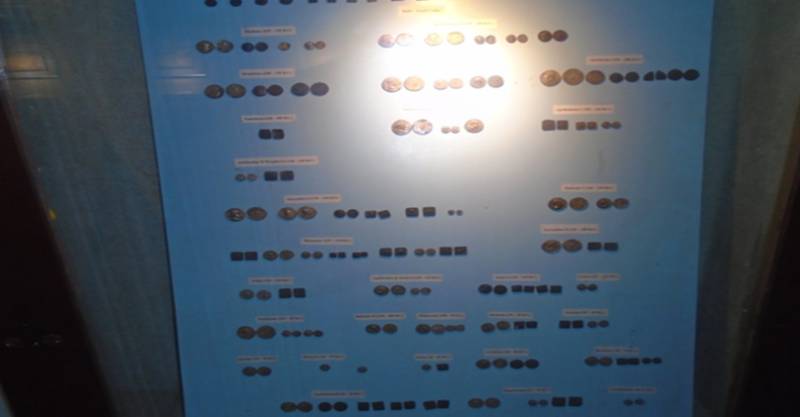
Another fascinating section of the museum is the Numismatics Gallery, which illustrates the chronological development of coinage in the Indian subcontinent. The collection includes punch-marked coins, considered the earliest currency of South Asia. These irregularly shaped coins bear engraved symbols of plants and animals—such as elephants, lions, and snakes—displayed in colourful showcases.
The gallery also displays Indo-Greek coins, introduced by King Demetrius I, made of silver and copper. Some coins depict the king wearing an elephant headdress, while others show him standing or bearing inscriptions in Kharoshthi script. The coins of King Eukratides show his bust on one side and a horse emblem on the other. Many of these were excavated from ancient Gandhara sites, connecting them directly to the region’s archaeological legacy.
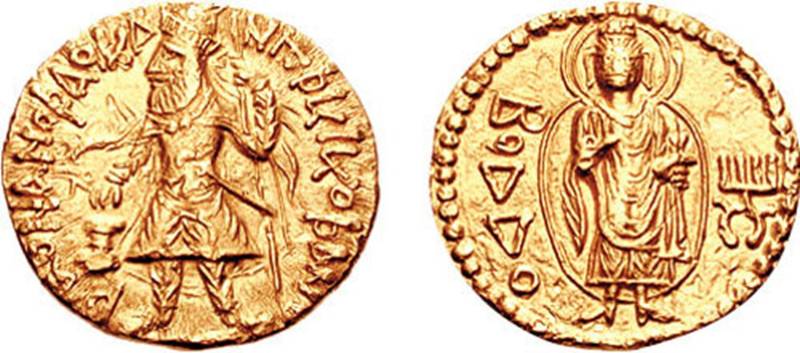
One of the museum’s most prized exhibits is the gold coin of Emperor Kanishka I (circa 127–150 CE). Kanishka, a great patron of Buddhism, issued coins depicting both Greek and Indian deities with Greek inscriptions. These coins represent the cultural fusion and economic prosperity of the Kushan Empire, when Peshawar (Purushapura) served as its capital. They serve as vital records of the political, religious, and artistic exchanges of that golden era.
Equally fascinating are the Kalash Wooden Effigies, found only in the Kalash communities of Chitral. These carved figures are made to honour ancestors and are rich in mythological symbolism. They provide rare insights into a pre-Islamic belief system that continues to survive in isolation, preserving centuries-old cultural traditions.
Visitor Experience and Museum Environment
Being a student of archaeology, I explored every section of the museum with great curiosity and academic interest, noting details from the prehistoric collections to the medieval exhibits. Each gallery is thoughtfully arranged in chronological order, with clear labels describing the historical context of every object.
The museum staff were highly cooperative and showed great hospitality when I introduced myself as an archaeology scholar. Well-maintained green lawns, rest areas, and a cafeteria make the visit comfortable for families, researchers, and students alike. The Peshawar Museum thus stands not only as a guardian of the region’s past but also as a living institution of education, culture, and inspiration.