

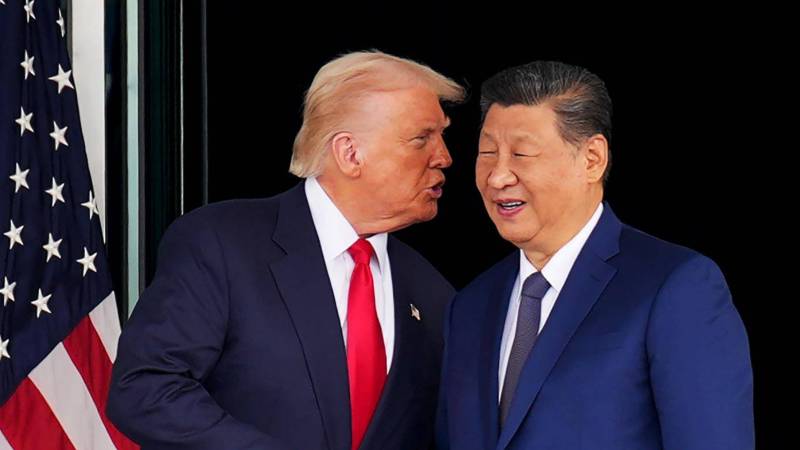
The recent summit between Donald Trump and Xi Jinping in Beijing was more symbolic than substantive, yet it may still prove to be one of the most significant diplomatic meetings in recent years. Although both leaders announced limited commercial agreements and pledged to stabilise relations, the summit ultimately revealed the depth of the strategic rivalry shaping the international order in the twenty-first century. More importantly, it underscored the emergence of a new world order increasingly defined by multipolarity, strategic competition, and the gradual decline of uncontested American dominance.
At first glance, the meeting appeared constructive. China agreed to purchase additional American goods, including Boeing aircraft, agricultural products, and energy imports. Both governments signalled their desire to reduce tensions after months of disputes over tariffs, Taiwan, artificial intelligence, and instability in Iran and the Middle East. Dialogue channels were reopened, and both sides attempted to project an image of responsible leadership.
However, beneath the diplomatic rhetoric, the summit demonstrated that the United States and China remain locked in structural competition for global influence. The deepest disagreements, especially over Taiwan, technological supremacy, military competition, and the future of the international order, remain unresolved.
One of the most important aspects of the summit was symbolic rather than economic. Xi Jinping successfully projected China as an equal superpower to the United States. The carefully choreographed diplomacy, the language of mutual respect, and the tone of the discussions reinforced Beijing’s long-term ambition to establish itself as a co-equal global power rather than a subordinate player within a US-led order. Some observers even described the summit as reinforcing the emergence of a “G2” world dominated by Washington and Beijing.
For decades following the Cold War, the United States enjoyed unprecedented global dominance. The collapse of the Soviet Union created what many scholars termed a unipolar world in which Washington shaped global trade, finance, military alliances, and international institutions with relatively limited resistance. However, the Beijing summit reflected a fundamentally different geopolitical reality. China is no longer merely an economic power integrated into a US-led global system; it is increasingly seeking to reshape that system to suit its own strategic and political interests.
Thus, the summit added an important dimension to the evolving new world order. Instead of a world organised around a single hegemonic power, the emerging international system appears increasingly fragmented, competitive, and multipolar. China’s rise, Russia’s assertiveness, the growing importance of middle powers such as India, Türkiye, and Saudi Arabia, and the weakening authority of Western institutions are all contributing to this transformation.
Many analysts argue that the United States and China are already deeply engaged in a structural rivalry characteristic of the Thucydides Trap
In this context, the Trump–Xi meeting symbolised a shift from an era of uncontested American leadership to one characterised by negotiated power balances between major states. China’s ability to host the summit on its own terms and present itself as a responsible global actor reflected Beijing’s expanding diplomatic confidence and strategic reach.
The most dangerous issue discussed during the summit was Taiwan. Xi reportedly warned Trump that Taiwan remains the most sensitive issue in US–China relations and cautioned that support for Taiwanese independence could lead to “clashes and even conflicts.” From Beijing’s perspective, Taiwan is not merely a territorial dispute but a core issue of sovereignty, nationalism, and legitimacy.
Conversely, Trump avoided making strong public commitments regarding Taiwan, including whether he would proceed with a proposed arms package for Taipei. This ambiguity reflected Washington’s broader strategic dilemma. On one hand, the United States seeks to support Taiwan and maintain credibility among its regional allies. On the other hand, direct confrontation with China over Taiwan could trigger a catastrophic conflict between two nuclear powers.
The Taiwan issue increasingly sits at the centre of global geopolitics, as it represents the intersection of economic rivalry, military competition, nationalism, and strategic credibility. It is also the issue most closely connected to the growing discussion of the “Thucydides Trap.”
The term “Thucydides Trap”, popularised by political scientist Graham Allison, refers to the danger that war becomes likely when a rising power challenges an established dominant power. The concept originates from the ancient Greek historian Thucydides, who argued that the rise of Athens and the fear this created in Sparta made war almost inevitable.
During the summit, Xi Jinping reportedly warned against a historical pattern in which strategic rivalry between major powers escalates into confrontation. Chinese state media portrayed his comments as an appeal to avoid falling into a “Thucydides Trap” between China and the United States. Xi argued that both countries must carefully manage their competition and prevent strategic distrust from spiralling into military conflict, particularly over Taiwan and the Indo-Pacific.
This strategic rivalry is increasingly evident across several interconnected areas. Military competition in the Indo-Pacific continues to intensify as China perceives expanding American alliances and military deployments as attempts to contain its rise. Meanwhile, Washington views China’s military modernisation and regional assertiveness as direct challenges to the existing international order.
Technology has also become a central aspect of geopolitical competition. Artificial intelligence emerged as a significant topic during the summit, with Trump asserting that the United States currently holds an advantage over China in artificial intelligence development. The competition over semiconductors, artificial intelligence systems, rare earth minerals, and advanced technologies has become more than just an economic dispute; it resembles a struggle for long-term global dominance.
At the same time, global crises are increasingly viewed through the lens of US–China rivalry. Discussions reportedly included issues in Iran and the security of maritime trade routes, particularly in the Strait of Hormuz. While both sides acknowledged the importance of maintaining regional stability and protecting shipping lanes, China refrained from making major public commitments regarding Iran, reflecting its broader strategy of balancing economic interests with geopolitical caution.
Xi’s references to avoiding the “Thucydides Trap” served two main purposes. First, they served as a warning against uncontrolled escalation between the two powers. Second, they allowed China to present itself as a responsible rising power committed to “peaceful coexistence”, while firmly defending its core strategic interests.
However, many analysts argue that the United States and China are already deeply engaged in a structural rivalry characteristic of the Thucydides Trap. Even when tensions ease temporarily through summits or trade deals, the underlying competition for global leadership, technological superiority, military influence, and the architecture of a new world order remains unresolved.
The significance of the Beijing summit, therefore, lies not in the limited agreements announced but in what it revealed about the shifting balance of global power. The world is gradually moving away from a US-dominated unipolar order towards a more contested and uncertain international system, where China seeks not only recognition as an equal power but also a greater role in shaping the political and economic rules of the future.