

A new article in the IMF's Finance & Development magazine argues that geopolitics is rewriting the global trading system, and that the rewrite need not destroy cooperation. The piece carries unusual weight because of who wrote it. Aaditya Mattoo directs the World Bank's Development Research Group. Michele Ruta is a division chief at the IMF. Robert Staiger is chief economist of the World Trade Organization (WTO). When economists from those three institutions jointly propose changing the rules of trade, governments tend to read it.
Their starting point is simple. The GATT in 1947 and the WTO in 1995 were built for a world where governments used trade to raise national income, not to weaken rivals. That assumption is breaking down. The United States and China now treat trade as a strategic instrument, limiting technology transfers and restricting exports of critical goods. The common fear is that this fragments the world economy and unwinds three decades of integration.
The authors push back on that fear. Borrowing from the realist tradition in international relations, they model governments that care about relative power, not just absolute income. They cite the political scientist John Mearsheimer: a state will sometimes give up real gains for itself if those gains would make a rival even stronger. Applied to trade, a country may reject a profitable deal because it strengthens an adversary, or impose a costly tariff because it hurts that adversary more. This pushes tariffs up and trade down. Yet cooperation survives, the authors show, as long as governments still care at least somewhat about their own citizens' welfare. Only when a rivalry turns total, with a government caring purely about domination, does the case for cooperation disappear. Enlightened self-interest, the same force behind postwar trade opening, still works.
The harder question is how to move beyond the old bargain and build a new one. The WTO rests on two principles: reciprocity, where concessions are traded for concessions, and nondiscrimination, where a benefit given to one member is given to all. Geopolitical adjustment breaks both. When two rivals rebalance their trade, the side facing the smaller strategic shock often has to accept terms worse than the status quo, with nothing reciprocal in return. And when rivals strike a bilateral arrangement, outsiders absorb the cost.
The authors sketch two ways through. In the first, which they call "war and redemption," the old agreement collapses, a trade war drives tariffs higher, and governments eventually negotiate back down through the usual exchange of concessions. It is slow and expensive but stays inside today's rules. The second path is a negotiated transition that avoids the damage, but it forces one side to accept a non-reciprocal loss, which is precisely what WTO rules cannot process.
To show the danger to outsiders, the authors point to the 2020 Phase One deal between Washington and Beijing, under which China agreed to buy fixed quantities of American goods. World Bank analysis at the time found that exporters in Europe and Latin America would lose as China shifted purchases toward the United States. The deal was struck outside WTO rules because the system had no room for it. This is the trade diversion problem, and it bears directly on Pakistan.
Their proposed fix is a "geopolitical exemption." Rivals could make discriminatory tariff adjustments, but only under a strict condition: the world prices facing third countries must stay unchanged, so the harm is contained. There is precedent. The WTO already lets countries form free trade areas, which discriminate, provided they cover substantially all trade and do not raise barriers against outsiders. The exemption would extend that logic to strategic rivalry. It would be hard to enforce. The authors argue the alternatives are worse: adjustment happens outside the rules and damages neutral countries, or it does not happen and the world stays stuck in tariff conflict.
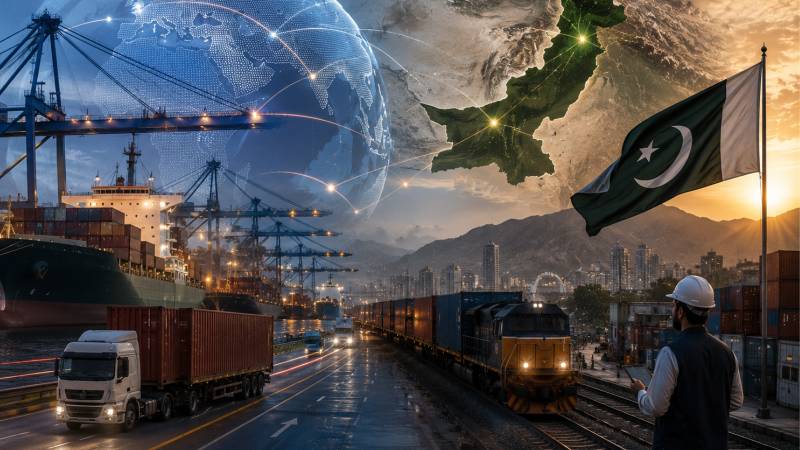
The United States and China now treat trade as a strategic instrument, limiting technology transfers and restricting exports of critical goods.
For Pakistan, that safeguard is what matters most. A small exporter benefits from the current system mainly because nondiscrimination limits how badly large powers can treat it. A more openly geopolitical order could erode that protection unless rules like the world-price condition are real and enforced. Pakistan's interest, then, is not to resist reform. It is to insist that any new flexibility for great powers comes with binding protection for everyone else. That is a position Pakistan can argue at the WTO alongside other small and middle economies, and it is more useful than broad complaints about an unfair system.
The numbers show why this is not abstract. Pakistan exported about 32 billion dollars in goods in 2024, roughly 0.12 percent of world trade, ranking near 33rd, with more than half of that in textiles and clothing. Vietnam has become the preferred base for firms leaving China and now sells more high-value apparel to the United States than Pakistan does. Bangladesh ships over 7 billion dollars of garments to the American market alone and has moved upmarket faster than Pakistan over the past decade. Most of the "China plus one" investment that companies have redirected since 2018 went to Vietnam, India and Mexico, not to Pakistan. The honest reading is uncomfortable: Pakistan did not miss globalization because the rules were unfair. It missed it because of power shortages, weak logistics, unstable policy and an export basket that barely changed in twenty years.
This brings us to India, and to news that has already overtaken the usual framing of this debate. India's economy is roughly ten times the size of Pakistan's, with total exports of goods and services now running well above 800 billion dollars a year. The question is no longer whether Washington and New Delhi will reach a deal. They announced a framework in February 2026. The United States cut its reciprocal tariff on Indian goods from 25 to 18 percent, and the two sides spent the first half of 2026 finalizing an interim agreement while negotiating a broader pact. Bilateral trade already runs near 220 billion dollars.
The direct effect on Pakistan is small, because Pakistan's access to the US market does not depend on India's. The indirect effect is larger and slower. A firm choosing a South Asian production base now sees India offering scale, cheaper access to the US and policy that, whatever its flaws, is more predictable than Pakistan's. Capital that might have considered Pakistan may flow to India instead. This is the Phase One problem from the IMF article in local form: when a large power cuts a deal, the country left outside absorbs the diversion.
Pakistan also faces a complication that the standard commentary tends to leave out. The article describes a world dividing into rival blocs, and Pakistan sits visibly on China's side of that divide. CPEC, Chinese lending and Gwadar tie Pakistan to Beijing at the very moment supply chains are reorganizing around distrust of China. That alignment narrows Pakistan's room to attract Western firms trying to reduce their China exposure. Pretending otherwise helps no one. The realistic task is to pull genuine industrial value from the China relationship, special economic zones that actually export rather than substitute for imports, while keeping enough independence to trade with all sides.
None of this is fixed by rhetoric about a strategic location. Geography placed Pakistan between South Asia, China, Central Asia and the Gulf. It has not turned that position into exports, because location is worth little without working ports, reliable power and stable tariffs. The remedies are specific and unglamorous. Cut the time and cost a container spends at Karachi and Port Qasim, since every day of delay adds to the final price of the goods. Hold energy tariffs steady long enough for an investor to model a ten-year return. Protect and use the duty-free access Pakistan already holds to the European Union under GSP Plus, which is a real existing advantage rather than a hypothetical hub. Choose three or four product lines beyond textiles, in areas such as processed food, surgical instruments, IT services and engineering goods, and back them consistently instead of launching a new policy each budget year.
The IMF article ends on a measured note: the trading system has adapted before and can adapt again. For Pakistan the lesson is sharper. The rules are about to give great powers more freedom to act strategically. Whether that leaves small economies more exposed or better protected depends on the fine print, and on whether countries like Pakistan turn up to argue over it. A strategic location is an opportunity, not an outcome. What Pakistan does at home will decide whether it helps shape the new trade order or simply lives with the version others write.