

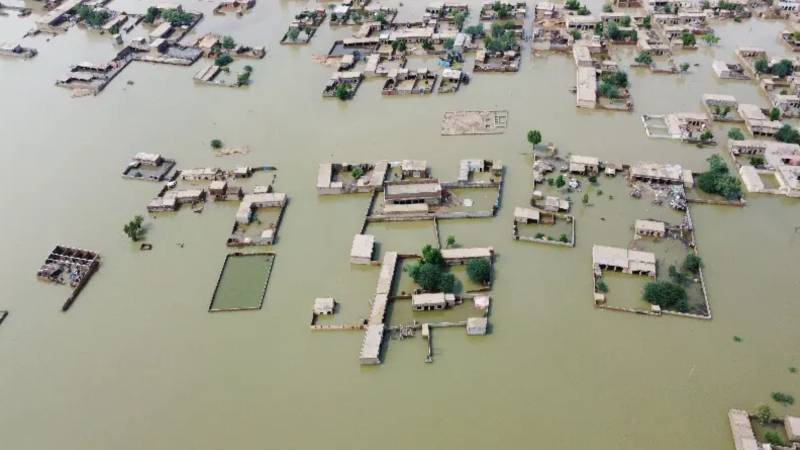
In 2022, vast areas of Sindh province in Pakistan lay under water. Villages were submerged, crops ruined, and livelihoods lost. While heavy monsoon rains attracted headlines, the deeper causes went largely unnoticed. Decades of poorly designed drainage, excessive use of pesticides and agro-chemicals, and rising salinity and waterlogging have left Sindh’s irrigation system struggling to cope. The floods are not merely a natural disaster; they are a symptom of infrastructure pushed beyond its limits.
Sindh’s irrigation network, part of the mighty Indus Basin system, was built nearly a century ago under British rule. Canals, barrages, and embankments once tamed erratic rivers, turning arid plains into productive farmland. For generations, it supported both food security and economic stability.
Today, however, the system is faltering. Drainage channels are inadequate to carry away excess water, leaving fields waterlogged and soils degraded. Decades of prioritising water efficiency, focusing on optimising short-term agricultural yield, have brought unintended consequences. Reduced flushing of the system has allowed salts to accumulate, creating widespread salinity problems and further lowering soil fertility. Farmers increasingly rely on chemical fertilisers and pesticides merely to maintain acceptable yields, while rising groundwater and even moderate rainfall can trigger local flooding. The 2022 floods made this painfully visible, as water spread far beyond riverbanks, exposing the limits of a system designed for a very different climate, agricultural structure, and population, and not equipped to handle the new normal.
This problem is not unique to Sindh. Across Asia, Africa, and South America, ageing irrigation systems face similar challenges. Canals in the Nile Delta, the Mekong’s irrigation networks, and river-fed schemes in India and Pakistan all show warning signs: waterlogging, salinisation, and infrastructure unable to match changing climatic patterns. These problems are symptoms, not anomalies.
Adaptive infrastructure and sustainable farming practices are no longer optional; they are critical for the long-term viability of the region
The human consequences are severe. Farmers face declining soil fertility, rising input costs, and uncertain yields. Communities are more vulnerable to floods, and local economies suffer. Climate change only amplifies the risks, with intense rainfall one year, drought the next, and rising temperatures pushing fragile systems to breaking point.
Sindh offers a clear lesson. Incremental fixes are no longer sufficient. The province, and other regions facing similar challenges, need bold interventions. Drainage systems must be redesigned, canals modernised, and groundwater and soil management integrated into a holistic approach. At the same time, prevailing agricultural practices—over-reliance on chemical fertilisers, inefficient irrigation, and monoculture cropping have compounded the problem, degrading soil fertility, polluting water, and worsening waterlogging. A rethinking of the entire agricultural system, alongside infrastructure renewal, is essential. Adaptive infrastructure and sustainable farming practices are no longer optional; they are critical for the long-term viability of the region.
Flooded fields, rising water tables, and saline soils are visible signs that irrigation systems are failing. The 2022 floods were a stark local warning, but they also carry a global message. Around the world, millions rely on ageing infrastructure that may no longer protect and feed them. Ignoring these warning signs risks repeating Sindh’s devastation elsewhere.
Sindh’s experience is a mirror for the world. It demonstrates the consequences of ageing infrastructure, outdated agricultural policy and practices, shortsighted management, and climate pressures converging. The message is urgent. Action is needed now to redesign, restore, and adapt these systems, or the floods will rise and the lands that once fed nations may fail.