

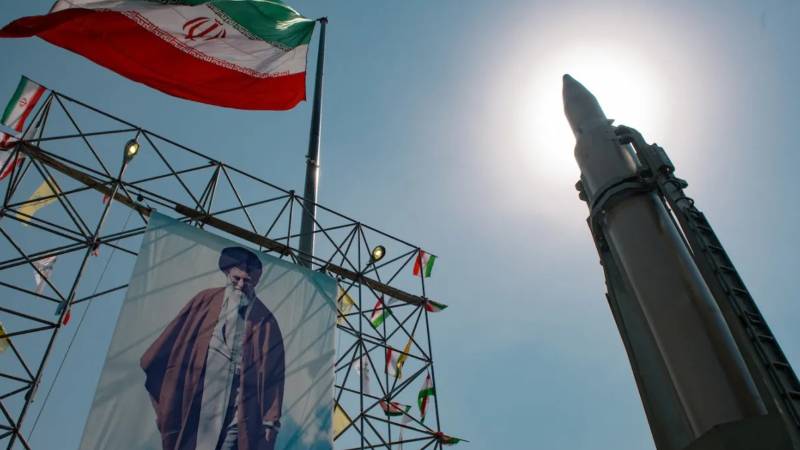
Armed conflict between Israel and Iran since 13 June gave rise to the notion that Tehran will go nuclear. Justifying Israel’s massive air attack on Iran and its military/nuclear sites, the Israeli Prime Minister Benjamin Netanyahu said that “he had acted to pre-empt a secret Iranian programme to build a nuclear bomb, claiming Tehran already had the capacity to build nine nuclear bombs.” Prior to the Israeli attack, the International Atomic Energy Agency (IAEA) expressed its concern about the Iranian nuclear programme and suspected that it is enriching uranium at a faster pace, violating the 2015 treaty.
The timing of the Israeli attack over Iran coincided with the holding of US-Iran nuclear talks scheduled to be held in Oman. The US left the Joint Comprehensive Plan of Action (JCPOA) during the first Trump presidency in 2018, which gave Iran an opportunity to accelerate its nuclear programme and augment uranium enrichment while at the same time rejecting IAEA’s warning that Tehran may get closer to building a nuclear bomb.
After the 2015 nuclear deal, some sanctions were lifted against Iran, but when the US left the JCPOA in 2018, Iran was not under any compulsion to adhere to the pros and cons of that deal. When Israeli intelligence reports indicated that Iran was very close to building nuclear bombs, Netanyahu used it to launch massive air strikes, killing top military generals and nuclear scientists of Iran.
Analysts viewing the Israel-Iran armed conflict are of the opinion that the hardliners in Tehran and Qom call it an “opportunity of the century” to accelerate their nuclear programme and test a nuclear device at the earliest. Iran’s nuclear ambitions are no secret, despite Tehran’s assertion that its nuclear programme is for peaceful purposes. But similar positions were taken by India and Pakistan, yet both neighbours ended up as nuclear states in May 1998.
North Korea followed suit and tested its nuclear device almost a decade ago. No action was taken against North Korea by the United States and its allies, and Pyongyang was able to get away with its nuclear testing and manufacturing of nuclear weapons. The problem with Iran is that it is a signatory of the Nuclear Non-Proliferation Treaty (NPT) and the Comprehensive Test Ban Treaty (CTBT). If it wants to test its nuclear device, it should quit both the NPT and CTBT, as was done by North Korea. However, both India and Pakistan were neither signatories of the NPT nor the CTBT, and they went ahead with their nuclear tests.
Today or tomorrow, Iran will have nuclear weapons, and the responsibility for pushing Tehran to go nuclear and augmenting nuclear proliferation in the Middle East will rest on Israel and the United States
Is the Iranian nuclear programme capable of conducting a nuclear test and developing nuclear missiles in a short span of time? Israel and other circles argue that at the present pace, it will take Iran weeks or a few months to develop nine nuclear bombs. But as said earlier, developing a nuclear bomb is one thing and working out a delivery system is another. Israel carried out an aerial attack called “three minutes over Baghdad” in 1981 and destroyed Iraq’s nuclear reactor and other facilities. As a result, the Iraqi nuclear programme failed to rebuild after the Israeli attack. In the case of Iran, Israel has claimed that it has targeted nuclear facilities and missile sites, but it is not clear to what extent it has caused damage to Iran’s capability to carry out a nuclear test.
According to Ibrahim Al-Marashi and Mohammad Eslami writing in Al Jazeera, 13 June, “Historians may well mark 13 June 2025 as the day the world crossed a line it may not easily step back from. In a move that shocked the international community and sent global markets reeling, Israel launched a wide-scale military operation against Iran in the early hours of the morning, striking targets across at least 12 provinces, including the capital, Tehran, and the north-western hub of Tabriz.
Among the targets were suspected nuclear facilities, air defence systems, and the homes and offices of senior military personnel. Iranian state media confirmed the deaths of several top commanders in the Islamic Revolutionary Guard Corps (IRGC).” They further stated that, “Whether Israel’s strikes succeeded in delaying Iran’s nuclear ambitions – or instead provoked Tehran to accelerate them – remains uncertain. What is clear is that the confrontation has entered a new phase. Should Iran exit the NPT and begin advancing its nuclear programme without the constraints of international agreements, some may argue that Israel’s campaign – intended to stop a bomb – may instead end up accelerating its creation.” Pressure on the Iranian regime is mounting from those who want to avenge the killing of generals and scientists along with innocent people who became victims of Israeli attacks far and wide across Iran since the early morning of 13 June.
Whether Iran should go nuclear needs to be examined from three angles. First, called an ‘opportunity of the century’, Iran is expected to accelerate its nuclear programme and take it to its logical conclusion by first withdrawing from the NPT and CTBT and then conducting nuclear tests. It is up to Iranian nuclear scientists how fast they are in completing their mission. Once Iran is nuclearised, it can deal with Israeli and American pressures. Nuclear deterrence will be Iran’s defence and, from a position of strength, it can preserve its security. There are numerous examples to prove that nuclear states, whether from the P5 or India, Pakistan and North Korea, cannot be deterred or blackmailed. Iran thinks that Israel and the United States have given a valuable opportunity to follow the nuclear road.
It means that Israel and the United States are responsible for pushing Iran to go nuclear. Israel, by launching its attacks, and the United States, by siding with the Jewish state, exposed serious violations of international law. It is yet to be seen how much support Iran can get from Russia, China and North Korea, along with Pakistan, in this hour of need. Second, if Iran tests a nuclear device and acquires delivery capability and nuclear missiles, it will have a greater responsibility like India and Pakistan regarding nuclear safeguards. But can Iran encounter further isolation at the international level if it goes nuclear? Nuclear-related sanctions against India and Pakistan were lifted after 9/11, and Iranian leaders may be confident that once they are in possession of nuclear weapons, they will have bargaining power and will talk with their adversaries from a position of strength.
Third, to what extent the nuclearisation of Iran will have a domino effect in the Middle East is not difficult to comprehend. Along with Israel, it is a nightmare for Saudi Arabia and other Gulf states to deal with a nuclear Iran. That eventuality may push Saudi Arabia to follow Iran. What will the American policy be if Saudi Arabia tries to follow Iran? Israeli Prime Minister Benjamin Netanyahu, while justifying his country’s attack over Iran, argued that Tehran’s nuclear programme is an existential threat to his country. But he failed to mention that Israel has more than 200 nuclear weapons and is the only nuclear state in the Middle East. Fear of losing its nuclear monopoly in the Middle East is a reality.
The hypocrisy of P5 states having nuclear weapons is a cause of augmenting nuclear proliferation. How can established nuclear powers prevent nuclear proliferation when they failed to dismantle their nuclear weapons? When Israel was tolerated by the West as a nuclear state, how can they prevent Iran or any other country from acquiring nuclear weapons?
Nuclear ambitions need to be eradicated in tandem and not by pursuing a selective policy. Today or tomorrow, Iran will have nuclear weapons, and the responsibility for pushing Tehran to go nuclear and augmenting nuclear proliferation in the Middle East will rest on Israel and the United States.