


Despite being born into an elite family, some individuals dedicate their lives to serving the community. A notable example is Professor Shivaram Pherwani, the architect of the Shikarpur Renaissance. He was a great advocate of female education. He was born into the prominent Pherwani family in 1868 in Shikarpur. He was the son of Narsingdas Pherwani. After receiving his early education in Shikarpur, he later moved to Karachi. He also studied in Bombay, where he earned his M.A. from the University of Bombay.
The Pherwani family, like many other Muslim and Hindu families in Shikarpur, played an instrumental role in modernising the City.
One learns from Sijj Jehra Pireen by Dr Anwar Figar Hakro (2018:89) that the ice factory was established by Professor Shivaram in 1904 in Shikarpur. According to Sindh Je Hindun Jay Tareekh, Vol. 1 (2002:195) by Bherumal Maharchand Advani, the first ice factory in Shikarpur was established by a German engineer. For the local population, this was a startling intervention into their everyday life. Many people thought that only foreigners could operate the factory. For them, this was not possible for locals, as they lacked the knowledge and mechanical skills. But Professor Shivaram changed their thinking by opening an ice factory in 1904.
One also learns from the work of Bherumal Maharchand Advani (2002) that Seth Udhaldas was a prominent merchant in Shikarpur who established a weaving mill. Later, in 1908, Professor Shivaram partnered with him at the mill.
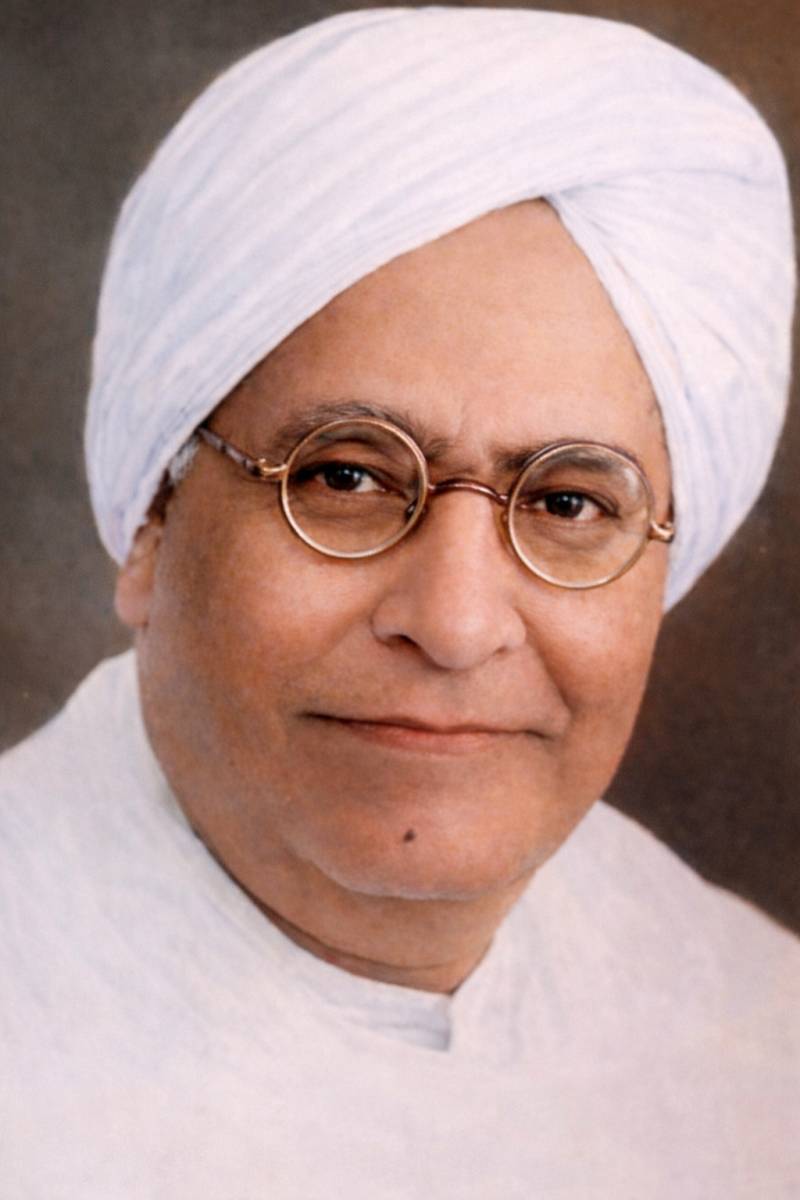
Although Professor Shivaram was involved in business, his heart was in academia. With business, he continued teaching and reading. Dr Anwar Figar Hakro (2018) states in Sijj Jehra Pireen that Professor Shivaram joined the University of Bombay as a professor of Sociology in 1912. Although he joined the University of Bombay, his roots remained firmly in Shikarpur. Distance never diluted his commitment to his people. He carried new ideas home with him, speaking, writing, and quietly mobilising reform, transforming academic learning into lived change. Through his continued engagement, Shikarpur became not just a place he came from, but a community he actively reshaped, blending modern thought with local realities and turning education into a catalyst for social reform.
Recognising the critical need for female empowerment, Pherwani founded the Women's Health and Education Society, establishing schools and hospitals specifically for women
From 1912 onward, attention shifted decisively toward social development. Educational initiatives were launched, health services were strengthened, and welfare-oriented activities began to take root. Shikarpur gradually acquired a new identity, not merely as a commercial town, but as a centre of social reform in Sindh. Educational institutions, health facilities, and community services began to appear, altering both the physical and intellectual landscape of Shikarpur.
Central to this transformation was a clear philosophy: progress could not be measured solely by wealth. In Professor Shivaram Pherwani’s view, education was the true foundation of development. Economic success without intellectual and moral advancement was incomplete. He aspired to turn Shikarpur into a model educational centre, where access to learning would shape a more capable and informed society.
This vision gained institutional form by 1924, when educational services were further organised and expanded. Primary schools were strengthened, scholarships were introduced, and student facilities were improved. As a result, the educational quality in Shikarpur rose noticeably.
In 1924, he returned to Shikarpur and was appointed Chairman of the Primary Board School Municipality, Shikarpur. During his tenure as chairman, he took sincere efforts to improve teaching standards in boys' and girls' schools in Shikarpur. He focused on new pedagogical skills and delivered his own lectures. Shikarpur saw him as a new reformer, educator, innovator, and knowledgeable person. Whenever the merchants and philanthropists of Shikarpur proposed establishing new schools, Professor Shivaram was always consulted. It said that was one of the reasons he left Bombay and returned to Shikarpur to take part in projects himself. He was also one of the key figures who took concerted efforts to establish Chillasing and Sitaldas College in Shikarpur, whose main donors were Chillasing and Sitaldas; hence, the college was named after them.
Professor Sivaram Pherwani was a great advocate of female education and health care facilities in Shikarpur. He laid the foundation of the Women's Health and Education Society on 15th April, 1924. Through this society, a women’s hospital was established, providing significant services in women's health in Shikarpur. Through his efforts, Kanya Patshala was established. Kanya Patshala, or girls' school, is an educational institution established specifically for the education of girls, primarily at the primary level. In the late nineteenth and early twentieth centuries, when female education faced strong social resistance, the establishment of Kanya Patshalas represented a significant reformist step. These schools were often founded by social reformers, educators, and philanthropic organisations who believed that education was essential for improving women’s social status and overall well-being.
In the early twentieth century, Shikarpur emerged as an important centre of social reform, where education and welfare were used as tools to address deep-rooted social inequalities. Two significant institutions in this reformist landscape were the Kanya Patshala and the Vidhwa Mandal, both aimed at improving the lives of women through education and social support.
The Kanya Patshalas provided basic education to young girls at a time when female literacy was limited and often discouraged. These schools focused on elementary learning, moral instruction, hygiene, and practical skills, helping to normalise the idea of girls' education within a conservative social environment. By investing in girls' schooling, reformers in Shikarpur laid the foundation for long-term social and intellectual advancement.
Complementing this effort, the Vidhwa Mandal addressed the hardships faced by widows, who were among the most marginalised groups in society. The Mandal provided widows with education, vocational training, and social support, enabling them to achieve economic self-reliance and dignity. Together, the Kanya Patshala and Vidhwa Mandal reflected a holistic approach to reform in Shikarpur, one that linked education, welfare, and social inclusion, and positioned the town as a progressive space for women-centred reform in Sindh.
According to "Shikarpur Shahar Jo Sindhi Adab Men Hisso" by Anwar Figar Hakro (2009), Professor Shivaram Pherwani founded the Women’s Health and Education Reform Association (Par Bandak Istri Sehat Sikhiya Sudhar Mandali) in 1938. This raises a question: are these the same associations, or are they two different organisations established by Professor Shivaram? Dr Anwar Figar Hakro also discusses these associations/societies separately in his books "Sijj Jehtra Pireen" (2018) and "Shikarpur Shahar Jo Sindhi Adab Men Hisso" (2009). In "Sijj Jehtra Pireen," he claims that the association was founded in 1924, while in "Shikarpur Shahar Jo Sindhi Adab Men Hisso," he states it was established in 1938.
Professor Shivaram Pherwani was appointed the secretary of the Women's Health and Education Society. Bherumal Maharchand Advani ( 2002) believes that Professor Shivaram founded the Mandali (association/society) specifically for women's health and education. This society operated three girls' schools and three maternity homes.
He launched a weekly newspaper, Shivak, along with Bolchand Wasomal Rajpal, the editor of Sindhu Monthly Magazine. Professor Shivaram Pherwani was also a member of the Sindhu Trust Board and a great supporter of Bolchand's literary Sindhu Magazine. Sindhu was launched in January 1932. The professor wrote articles in both Shivak and Sindhu, as well as in many other magazines and newspapers, in both Sindhi and English, on various issues.
Beyond journalism, Professor Pherwani authored and translated numerous books addressing key social issues. His writings covered children's education, public health, civic responsibility, the importance of books, human equality, and Hindu–Muslim unity. He also reflected on broader themes of civilisation, morality, and the purpose of education in everyday life. Writing in both Sindhi and English, including Municipal Efficiency, he reached diverse audiences.
Professor Shivaram Pherwani died in 1950. He was one of the most influential educational reformers in colonial Shikarpur. Deeply aware of the intellectual and social needs of his time, he worked consistently to promote education, ethical values, and public awareness.