

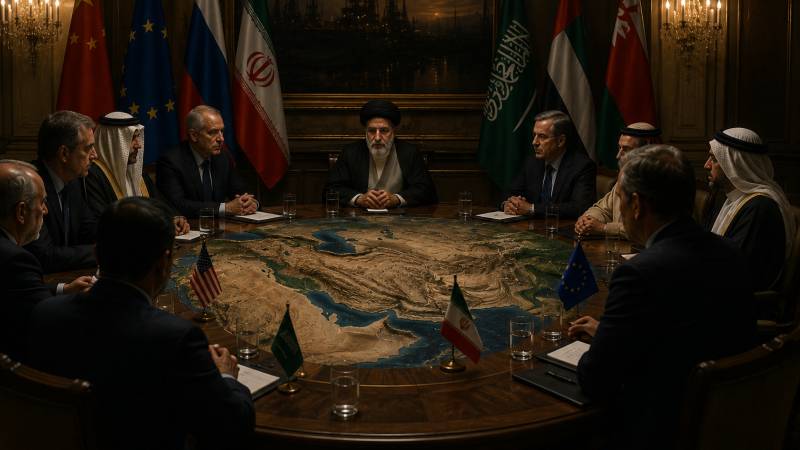
The war on Iran has stopped as diplomacy takes the front seat. For the Americans except Trump and his loyalists in the White House, the invasion on Iran brought them serious embarrassment. The US and Iran have been discussing to find a reasonable solution to a foolish war that helped no one except the greedy military industrial complex. The talks have been arranged, discussed and mediated by Qatar and Pakistan finding the middle path. Trump has finally understood that Iran is not Venezuela. Trump’s outreach and doublespeak might go hand in hand but he has understood that Iranians have exposed their hard power, ill-strategy and narrow world view. The war was never logical, Iranians never threatened the US except the perception built around Iran’s nuclear status and its impact. The war also reminded the world, the influence of Israel on the US foreign policy in the Middle East.
The Israeli government, particularly the reign of Netanyahu and his mad game, has been trying to convince the past US governments to find a military solution. Trump's arrival in the White House was Netanyahu’s cherished dream. First, shifting the US embassy to Jerusalem, then unilateral withdrawal from the UN sanctioned JCPOA agreement in 2018 and then last year 12 days war as a sign of warning and finally invading Iran. The common thread was undermining international law, hard power centric foreign policy and allowing Israel to shape their strategic thinking against Iran but it didn’t work out. Perhaps Trump would have learnt some lessons from previous presidents that overt and covert operations seldom work.
Mediation often fails to asymmetrical power structures and always misused in the absence of trust and respect among powers. Intentions are always unclearing in ana anarchic order, and if there is an elephant in the room (Israel) then chances are high that the Iran war might find a new front. The US didn’t achieve anything except killing Iranian leaders and bombing its infrastructures (energy sources, nuclear and water) but in return it received blood in hand with killing innocent girls in Minab. Iranians now tactically place it to embarrass them everywhere. Ironically, they have used it as a moral currency that resonated well with the world more than her own poor record of human rights inside Iran.
Fact is the fall out will be a defining line of bilateral crisis in Iran vs Gulf countries. There will be crack in the OIC, the return of sectarianism and a new phase of Abraham accord.
Israel wanted the US to safeguard its national interest as it has always been the case. Ironically, national interest seldom aligns even if they are so called natural allies. Finally, under pressure from all corners (domestic and oil price) Trump didn’t surrender to Netanyahu’s political game. Israel has now been left as a troublemaker in Lebanon; another flash point that could endanger the fragile peace between the US and Iran. Furthermore, the five GCC states (Saudi, UAE, Qatar, Bahrain, Kuwait) except Oman remain as a reluctant player in this chaos but they have suffered the most. Iranians have said they won’t back down until Israel stops bombing Lebanon. They are perfectly placed to bargain it against the Hormuz crisis (one of the most critical trade routes for the supply chain) for a possible peace. The dawn is yet to arrive for Tehran but the most significant question now is what did it really achieve?
If there is anything that Iran has really achieved, it is challenging the US hegemony. The ‘Pax -Americana’ is a story of the post second world war order based on liberal institutions, military, economy and alliance system. The Iran war exposed the struggling US hegemony. It fractured its military, economic and even her alliance system. The day of American exceptionalism seems dead after the Iran war. The ideological force used to give the US exceptional power has ended with Trump’s hyper nationalism and chaotic foreign policies. The last decade was a reminiscent of its slow death. The rise of China as an economic power, the loss of war and later retreat from Afghanistan, the trust deficit among NATO allies, US persistent rebuke of global institutions, liberal hegemony, ridiculing allies from Europe, Canada to India and weaponization of tariff. The Iranians knew that chicken has come home to roost and Trump’s eccentric behavior won’t fetch him much support and even Europeans, including the UK, didn't support the war. Europeans and other closer allies were furious as they were not even consulted. It was Trump’s own drumbeat. The Iran war came with serious strategic implications. The strategy of regime change, destruction of military capabilities and the rise of Persian streets. Nothing happened as Trump and his incompetent strategists expected. Iran survived all; the coercive diplomacy, sanction regime and even naval blockade. Iranians have now understood the currency of Hormuz for future game. They have weaponized the most critical trade route as an insurance policy for their survival. Before the war, Hormuz was not even a part of consideration, now it has given the Iranian an upper hand against everyone. Their rationale argues another strategy, claiming the war was illegal and forced upon and they have the legitimate right to response. Iranians have more insurance plans for survival now than before the war. It reflects that the future of the Persian Gulf will be on their terms and conditions. The US unfortunately gave the Hormuz to Iranians on a platter.
In the age of total war, nobody is a clear winner but everyone loses something. The modern war is literally suggesting this is not the era of war. Although for Iranians even if survival is winning, it won’t fetch them much when the dust settles and they look within Iran. Its economic strength, the water crisis, the age of anger on streets won’t go away because they ridiculed Pax-Americana. Their real burden is to salvage bilateral relations with the Gulf countries. The UAE in particular was most targeted by Iranians even more than Israel. It won’t be easy for Iranians to bring the crisis to a permanent halt. Fact is the fall out will be a defining line of bilateral crisis in Iran vs Gulf countries. There will be crack in the OIC, the return of sectarianism and a new phase of Abraham accord. The Lebanese government's recent diatribe on Iran won’t be a footnote in this crisis, it will have its own implications. On the contrary, the US has lost both its hegemony and legitimacy. Trump’s own domestic constituencies are opposing him. The US-Israel relation has a massive hit. Israel has no reputation left even within the US and it would shape the future of Israel-US relation.
For, Iranians the post war reconstruction will expose their ability to handle their own affairs and most critically the trust deficit with the gulf powers. The Middle Eastern security framework will be revisited. The crisis might have halted for now, the war might not return to its intensity, the US might come out from their deep slumber of exceptionalism, Israel might see the obituary of Netanyahu’s mad politics, the Hormuz might see the return of smooth navigation but for Iranians it will be a new cusp. It won’t be a zero-sum game. The war calms down many troubled waters but when it stops, the roots of trouble come out in branches. For Iran, the question would be how and where to go from here. They have won and achieved many purposes but they have invited many challenges as well. For the Iranian regime, survival was everything the rest can wait but for the common Iranian, it's always the case before and after the war.