

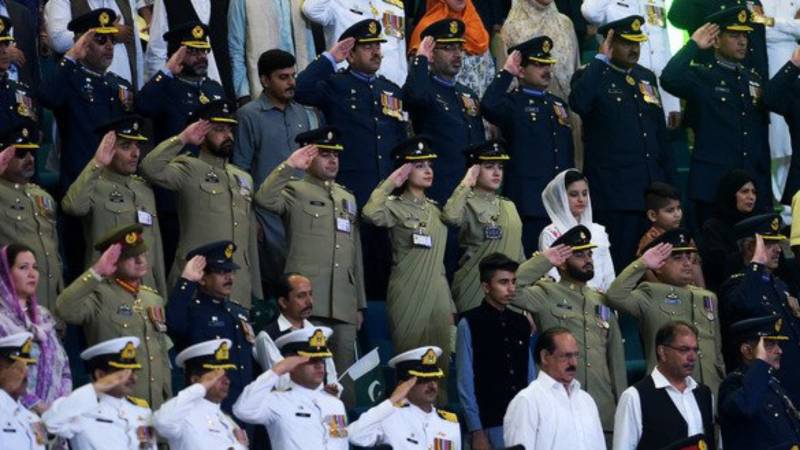
14 August is more than a day of celebration; it is a candid reminder of the sacrifices made for Pakistan’s freedom and also a call for national reflection. Amid the festivities, we must pause for honest introspection: have we lived up to the ideals that inspired our independence? Acknowledging our achievements is important, but so is confronting our failures. Only through sincere self-assessment can we address our shortcomings, learn from the past, and move towards a more united, just, safer and inclusive Pakistan. Let this day inspire not just pride, but purpose.
Due to its location along global fault lines, both geo-strategically and in terms of security dynamics, Pakistan has consistently occupied a prominent position on the international stage. Since its inception, the country has faced persistent two-front challenges. Inherited internal fault lines, combined with newly emerging vulnerabilities, many rooted in past policy decisions, have repeatedly been exploited by external adversaries aiming to destabilise the nation. This convergence of internal instabilities and external pressures has fuelled a sustained campaign against Pakistan’s sovereignty, resulting in the complex strategic dilemma the country faces today.
Tragically, we have consistently failed to address the deep-rooted fault lines in our societal framework and governance structures. This ongoing neglect has led to persistent political instability, recurring military involvement in governance, a fragile economy, and deeply entrenched social issues. While the country professes a commitment to democracy, its success is hindered by a societal framework misaligned with the prevailing democratic structure. Entrenched power dynamics, sustained by crafted narratives and covert tactics, continue to dominate. As political power struggles and self-interest prevail, public disillusionment deepens, reflecting a cycle of repeated failures.
This neglect is not accidental; it reflects a troubling pattern that has repeated itself throughout our history. Time and again, the same mistakes have pushed us closer to the challenges we face today. If we are to move forward, we must finally break this cycle and commit to a meaningful and lasting change.
Pakistan’s strategic interests have been repeatedly undermined by both internal and external forces, leaving the nation vulnerable, even as of 2025
Some argue that a system more attuned to Pakistan’s social realities could offer greater long-term stability. Yet, meaningful reform remains unlikely in the face of entrenched interests resistant to change. Nevertheless, an increasing number of thoughtful voices are calling for a strategic reorientation. Firefighting is no longer an option. We need a clear, sustained vision for structural transformation.
As geopolitical dynamics evolve across the region, Pakistan’s narrative must be grounded in real-time realities and informed strategic understanding. While working in the private security industry in Dubai and engaging with international security experts, I have personally observed a significant shift in the global security landscape over the past year or so, which seems to notably impact Pakistan. However, the full cost of this shift remains unclear. To respond effectively, we must first understand the nature of the emerging threats, reform our internal systems, and move beyond short-term fixes towards strategic, long-term planning.
They say ignorance is bliss, and sometimes that feels true. But once you gain access to the ground realities, the bigger picture can seem quite grim. During my four decades of service with the Pakistan Army and the Inter-Services Intelligence (ISI), I had the privilege of closely observing and responding to the nation’s complex security challenges. My subsequent diplomatic posting abroad for over three years further expanded my understanding of regional and global developments and their direct impact on Pakistan’s national security.
Drawing on my extensive experience, I have authored a book that provides an insider’s perspective on Pakistan’s national security architecture. It bridges the country’s historical context with its current security challenges and explores potential future trajectories. The aim is to offer readers a clear and realistic understanding of Pakistan’s strategic imperatives, grounded not in speculation but in first-hand insight and experience.
Titled Caught in the Crossfire: The Inside Story of Pakistan’s Secret Services, this book offers a first-hand account of over 23 years inside Pakistan’s ISI. It spans key events from the Soviet–Afghan war to the aftermath of 9/11, ongoing tensions with India, and the shifting global terror landscape, badly impacting Pakistan.
One of the central themes is Pakistan’s internal instability, which has been the most persistent security challenge over the decades. The book candidly exposes how Pakistan’s strategic interests have been repeatedly undermined by both internal and external forces, leaving the nation vulnerable, even as of 2025.
Published by Pen and Sword Books (UK), the book was formally launched in Dubai in August 2024 and featured at the Emirates Books Festival 2025. It is available across Europe, the USA, the Far East (including China), with the Pakistani edition reprinted by Vanguard Books and now available nationwide.