


Tucked between the winding Soan River and the Qavala Nullah, Markhal is one of the most remote and underdeveloped villages in Talagang Tehsil. Located about 42 kilometres northwest of Talagang town, this isolated community remains far from the reach of basic infrastructure and development.
I travelled to Markhal with the initial aim of documenting the village’s cultural heritage, focusing on its material traditions and collective memory. However, during my interactions and interviews with community members, a different dimension of village life came to the forefront. The conversations revealed accounts of everyday hardship, social change, and aspirations shaped by economic and infrastructural constraints. As a result, I decided to focus on the village's issues in this article rather than discussing its cultural heritage. Markhal mirrors the fate of most villages scattered along the Soan River, where basic facilities are scarce, development is uneven, and daily life unfolds amid persistent neglect. Only a few villages break this pattern; the rest paint a bleak portrait of rural hardship.
As an anthropologist, I believe every story begins with listening. In Markhal, I listened to the community's voices. I was accompanied by my old friend, Tariq Mehmood Malik, a historian and author who is well-versed in the history and heritage of various villages, many of which face significant economic challenges. Aware of the difficulty of traveling to town for basic necessities, the villagers rely on just a handful of local shops, only four in total, two of which are small kiryana stores that serve as the lifeline of daily supplies.
During my conversations with the people of Markhal, I was struck by one revelation: electricity only reached the village after 2010. It was a reminder of how recently modern conveniences entered their lives, and how much had to be endured before that change. Yet, while electricity has illuminated homes and lives, some shadows remain. The villagers spoke about two pressing concerns: the urgent need for a high school for girls and the absence of basic healthcare facilities.

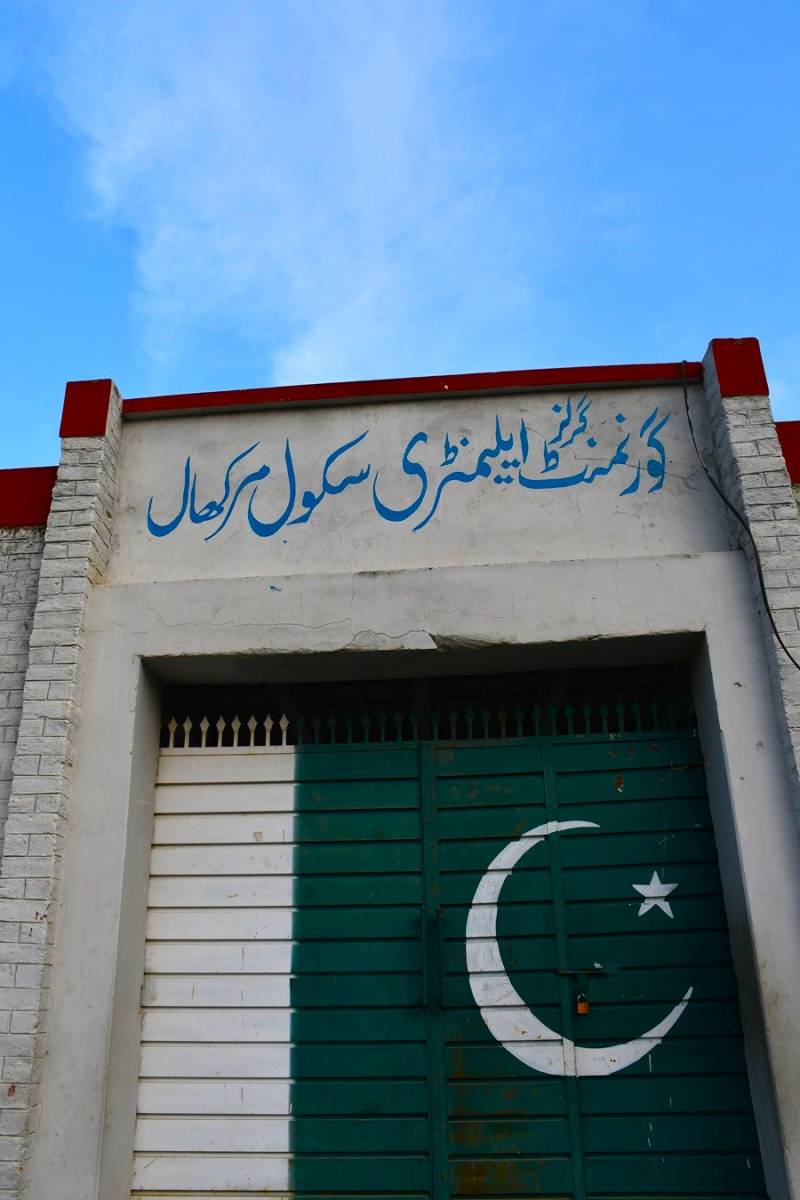
In Markhal village, there are two elementary schools: one for boys and one for girls. After finishing middle school, girls face significant challenges in continuing their education because there is no high school for girls. The village also lacks a high school for boys, so they attend Dhoke Ikhlas Government High School. Sadly, many girls who want to pursue further education cannot do so because their families cannot afford to send them outside the village.

During my conversations with the people of Markhal, I was struck by one revelation: electricity only reached the village after 2010. It was a reminder of how recently modern conveniences entered their lives
Countless young girls dream of continuing their education. The community of Markhal demands a high school for girls. Even upgrading their existing elementary school to a high school would open doors to educational opportunities that are currently out of reach for the girls who stop their schooling after 8th grade. The future of the daughters of Markhal village depends on swift action to provide them with the chance to learn, grow, and contribute to society. One of the respondents informed me that a few families have migrated to towns and cities for better educational opportunities for their children. Moreover, from the discussions with community members, I learned that one of the girls who passed CSS in 2024, now based in Lahore, was originally from Markhal village.
Compounding this crisis is the severe health situation faced by the people of Markhal, particularly women. The absence of a Basic Health Unit (BHU) or even a dispensary puts their lives at risk. Pregnant women are forced to travel through hilly terrain to reach the nearest healthcare facility. Establishing a dispensary or maternity ward in Markhal is critically urgent for the village. Healthcare facilities are also lacking in nearby villages such as Phathar, Dhoke Abakki, Dhoke Doodhandi, Datwal, and others. Residents of Markhal face significant challenges in accessing even basic healthcare services. For medical attention, they have to travel either to Patwali village or to Talagang town. Although healthcare facilities exist in Patwali, their inaccessibility due to transportation constraints and associated costs creates serious challenges, especially during medical emergencies.

Due to healthcare problems, a lack of higher secondary education facilities, and job opportunities, many families migrated, improving their socio-economic condition after settling in urban centres. This transformation brought promising change to the lives of those who left the village. Over the past few decades, Markhal has experienced significant migration. A persistent lack of basic facilities has gradually driven residents to seek better lives elsewhere. This trend has affected not only the Awan families but also those from other castes. According to Qari Umer Bilal Awan Mairvi, the Pesh Imam of Jamia Masjid Markhal, the Lohar caste stands out for having undergone a complete migration, with not a single family left in the village today. The families of the Nai and Mochi castes also migrated to urban centres.
The initial phases of migration saw a small number of families leaving Markhal for nearby towns like Talagang and Pindigheb, as well as larger cities such as Lahore. The young residents also sought jobs at the Sheikhupura textile mill to earn a livelihood and support their families financially back home in Markhal. Those who could not continue their education often navigate limited options within and beyond the village. Some migrate to nearby towns in search of employment, while others remain in Markhal, engaged in tending livestock or assisting their families in agricultural work. Among the younger generation, helping fathers and brothers with the cultivation of peanuts and wheat, the village’s main cash crops, is an everyday routine.
The affluent Awan families of Markhal have established the 'Awan Welfare Organisation’ to assist the impoverished families in the village.
There are a few success stories for girls of Markhal: one girl passed the CSS in 2024, and her sister is pursuing a PhD in Australia, which is encouraging for the girls' families. The government should provide opportunities for them to grow, prosper, and shine!
To address the urgent issues faced by Markhal village, a coordinated effort is essential. Local authorities, educational NGOs, and healthcare organisations should collaborate to establish a girls' high school, ensuring that resources and trained staff are available. Initiatives like community fundraising and awareness campaigns can rally support and promote local participation. Furthermore, setting up a Basic Health Unit (BHU) would require government backing as well as partnerships with healthcare providers willing to engage in outreach programs. By combining these efforts, one can develop a sustainable plan that empowers Markhal residents, improving educational opportunities for girls and access to basic healthcare services.