

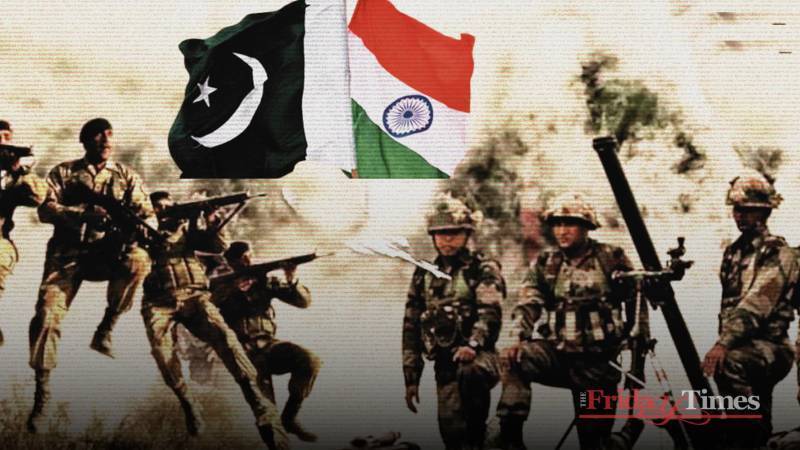
As a result of the four-day Indo-Pak conflict triggered by the Pahalgam attack, a dangerous storm of accusations, threats, and military posturing has once again gripped South Asia. While the world watched two nuclear-armed neighbors exchange fire, neither India nor Pakistan displayed the restraint or responsibility expected from regional leaders. What followed was a diplomatic blame game, with both sides clinging to hardened, one-sided narratives aimed at securing global sympathy while suppressing internal complexities.
Pakistan’s former Foreign Minister Bilawal Bhutto-Zardari spearheaded a global tour portraying Pakistan as a peace-seeking state maligned by Indian propaganda. In press briefings, he underscored Pakistan’s “truth and peace” stance, accused India of exporting terrorism, and referenced past U.S. mediation offers on Kashmir. Echoing his tone, the Foreign Office (FO) dismissed Indian External Affairs Minister S. Jaishankar’s warning of retaliation as “bellicose punchlines” and “sheer frustration” following a failed military venture.
Meanwhile, Jaishankar employed equally forceful language, asserting India’s right to act militarily against perceived threats emanating from Pakistan. His remarks, following the Pahalgam attack, served both as a justification for past action and a warning of future retaliation. India maintains that Pakistan harbors anti-India militants and thus warrants stern countermeasures. Coincidentally, this stance bears a striking resemblance to Pakistan’s own behavior: in April and May 2024, Islamabad carried out two cross-border airstrikes into Afghanistan, claiming the Afghan Taliban was sheltering TTP militants who had killed Pakistani soldiers. The mirror image is unmistakable. When under threat, both countries justify similar actions, invoke moral clarity, and frame themselves as victims while casting the other as the aggressor.
The objective should not be to win international sympathy through louder accusations, but to secure lasting peace through mutual understanding
Most discussions on this subject—whether in Islamabad or New Delhi—are inherently defensive. Since independence, both nations have been trapped in a vicious cycle of hatred. Unless they confront the ugliness of this animosity and actively work toward mutual respect and harmony, these conflicts will persist. The media, too, has played a damaging role in perpetuating the divide. Indian outlets increasingly amplify Baloch separatists, while Pakistani media glorifies insurgents in Kashmir. This tit-for-tat narrative erodes space for reasoned dialogue and entrenches a destructive, zero-sum mindset—failing to work together to identify and neutralise the culprits who led them to this crisis.
To further complicate the picture, a new and troubling actor has emerged. On May 25, 2025, the Islamic State Khorasan Province (ISKP) declared war on Baloch nationalist groups—the Baloch Liberation Army (BLA) and Balochistan Liberation Front (BLF). In a 36-minute video, ISKP accused these groups of attacking its fighters in Mastung District and promised a brutal response. The video also claimed that ISKP runs training camps in Balochistan—a point previously echoed by Taliban sources. In turn, the BLA accused Pakistan’s military of fabricating the ISIS-K narrative to delegitimise secular nationalist movements by cloaking conflict in religious extremism.
This murky overlap between ideology, insurgency, and counterterrorism propaganda reveals a broader regional crisis. If India and Pakistan, continues using decades-old patterns of leveraging armed proxies to gain strategic depth or discredit each other, then the line between national defense and political theater will collapse. This is not only dangerous—it is self-defeating.
Perhaps the most alarming aspect is that the perpetrators of the Pahalgam attack remain unidentified. As both countries trade accusations and flex military muscles, those truly responsible continue to operate in the shadows—reaping the rewards of the chaos they engineered. Regional leaders should be uniting to hunt down these outlaws, not weaponising their crimes to further nationalist agendas.
The objective should not be to win international sympathy through louder accusations, but to secure lasting peace through mutual understanding. That requires leaders to move beyond performative outrage and engage in transparent, evidence-based dialogue. It requires the courage to confront internal contradictions while seeking accountability from the other.
If regional stability and peace are truly the goals, then politicians on all sides must abandon self-serving narratives and work together to dismantle the outlaw networks and extremist ideologies that feed on division. True moral authority is not earned through louder rhetoric or choreographed media campaigns—it comes from confronting the roots of violence, acknowledging shared failures, and prioritising dialogue over destruction. During the four-day conflict following the Pahalgam attack, much of the Indian media adopted an aggressively nationalistic tone, amplifying unverified claims and calls for retaliation without credible evidence. This attempt to shape global perception ultimately backfired, as international observers began to question the credibility and motives behind the narrative. History will not remember who shouted the loudest—but who acted with the greatest wisdom.