

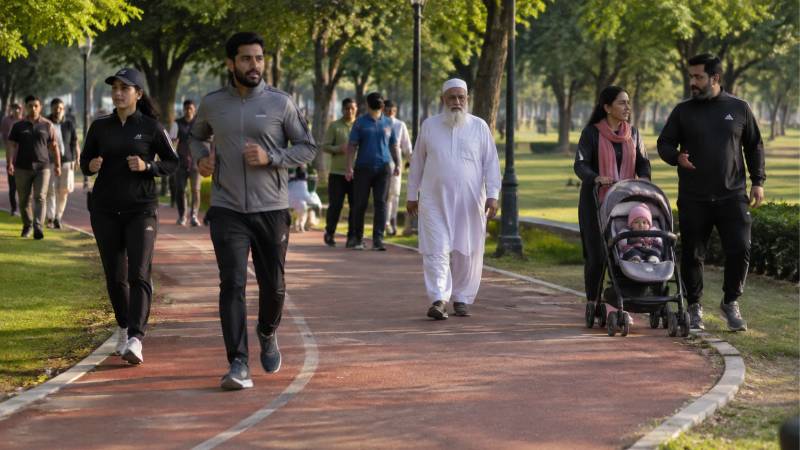
One recent morning in a neighbourhood park, I watched a familiar scene unfold. A group of office workers in mismatched tracksuits shuffled along the track, some still checking their phones, others already breathing harder as the sun climbed. An elderly man in a white shalwar kameez walked with steady purpose. A young mother pushed a stroller while trying to keep pace with her jogging companion. In that ordinary half-hour, something quietly radical was happening: people were reclaiming their bodies from the grip of desks, screens and traffic.
In a world that prizes speed, complexity and constant connectivity, the simplest forms of movement—walking and jogging have become almost revolutionary. They require no expensive membership, no specialised equipment, and no perfect weather. Yet their importance has never been greater. Sedentary lifestyles, rising rates of diabetes, heart disease and anxiety, and the relentless pressure of modern work have turned these basic activities into essential medicine. Decades of research confirm what many of us feel after a brisk walk: the body responds. Regular walking or light jogging lowers blood pressure, improves cholesterol profiles, strengthens the heart and helps regulate blood sugar.
In countries like Pakistan, where urban congestion, long working hours and limited access to gyms are everyday realities, the accessibility of walking is its greatest strength. A 30-minute walk after dinner does more than burn calories; it interrupts the long stretches of sitting that have become the silent epidemic of the desk-bound age. The largest health gains, research consistently shows, come from moving from inactivity to moderate activity not from perfection. Perhaps the most underrated benefit is psychological. Walking and jogging reduce symptoms of anxiety and depression, improve sleep, and create mental space that screens relentlessly crowd out. Nature walks, in particular, have been shown to lower anxiety and heart rate more effectively than urban routes. Even a short loop around a local park can function as a pressure valve.
Walking and jogging are not nostalgic pastimes; they are practical, democratic tools for reclaiming our physical and mental health in an age that constantly keeps us still. Ten minutes is better than none, a slower pace is still progress, and consistency matters more than intensity.
I recall a conversation with a mid-level manager in Islamabad who had begun walking every evening after a period of burnout. “The problems are still there when I return,” he said, “but they no longer feel quite so large.” That modest shift in perspective is not trivial. In a society where mental health conversations remain stigmatised, a pair of walking shoes can become a private form of therapy. The implications extend beyond individual health. Societies that walk and move more reduce the burden on overstretched healthcare systems. They also foster safer, more vibrant public spaces. When parks are used, streets feel less hostile, and communities regain a sense of shared rhythm. In dense cities where cars dominate and sidewalks are often neglected, encouraging walking is both a health policy and an urban design challenge.
Yet barriers remain real: poorly maintained paths, air pollution, safety concerns after dark, and cultural habits that treat exercise as optional rather than essential. Acknowledging these obstacles is not an excuse for inaction; it is a call for better planning and collective priority. The beauty of walking and jogging is that they meet people at almost any level of fitness. Ten minutes is better than none. A slower pace is still progress. Consistency matters more than intensity. Governments and workplaces can help by protecting green spaces, improving pedestrian infrastructure and treating active lifestyles as public goods rather than private hobbies.
In the end, the argument is simple. We have engineered lives that keep us still, then wonder why our bodies and minds protest. Walking and jogging are not nostalgic pastimes; they are practical, democratic tools for reclaiming health in an age that constantly tries to take it away. The next step—literally—is ours to take.