

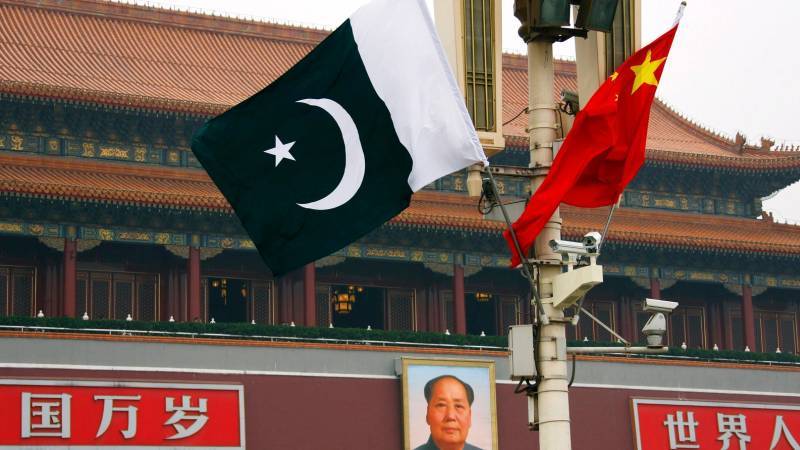
A century ago, China was a nation humiliated and fragmented. Its people had endured decades of foreign domination, civil strife, and poverty. When revolutionary leaders spoke of national salvation, they were not simply seeking power—they were speaking to a deeply human desire: to reclaim dignity, to create a life where families could live with hope, not fear. Today, China’s rise is often measured in GDP figures or military strength, but it is worth remembering that the revolution was also about ordinary people imagining a better future. The question for Pakistan is whether we can ignite the same sense of purpose in our own society, not by copying others, but by finding the ideals that resonate with our own history and needs.
At its heart, China’s revolution was a declaration of self-reliance. It rejected dependence on foreign powers and built a disciplined state capable of mobilising its people towards long-term goals. Pakistan’s story has been different: we have relied on Cold War alliances, foreign loans, and international bailouts. The lesson from China is not that we should isolate ourselves, but that true independence begins at home. It starts with investing in our children’s education, creating opportunities for entrepreneurs, strengthening public institutions, and cultivating trust in governance. Without that foundation, appeals to nationalism ring hollow.
Equally important was China’s sense of collective will. Millions of people, often from peasant families like those who still till fields in rural Punjab or Sindh today, were asked to work together to survive and modernise. Pakistan, by contrast, remains mired in elite rivalry, fragmented institutions, and regional divisions. We call for unity in speeches, but rarely does it translate into collective action. Without a unifying idea, something bigger than political parties, personalities, or sectarian identities, our society struggles to move forward together. Ordinary citizens bear the cost of this fragmentation: roads remain incomplete, schools are underfunded, and hospitals are ill-equipped.
Mao Zedong, in his 1940 essay On New Democracy, wrote that “the principal demands of the nation today are for independence and democracy.” Yet by 1949, his idea of democracy had shifted into what he called a “people’s democratic dictatorship”, a democracy for revolutionary masses, dictatorship for their enemies. This evolution shows a paradox that any country faces: ideals can inspire collective action, but without strong institutions and civic culture, they can also be used to justify centralised control. For ordinary people, this meant both hope and constraint: a chance to participate in society, but only under tightly defined rules.
The goal is not mimicry but adaptation: learning the lessons of discipline, continuity, and strategic patience, while maintaining openness, debate, and pluralism
Pakistan faces its own delicate balancing act today. The proposed 27th Amendment to the Constitution has raised concerns about centralising power, weakening judicial independence, and redefining the role of the military. While the country still holds elections, has multiple parties, and maintains spaces for debate, these changes suggest a drift towards concentrating authority. The implications are personal: a teacher in Karachi may feel less empowered to challenge local corruption, a small business owner in Peshawar may worry that rules can shift unpredictably, and citizens may feel that their voices are only partially heard. The challenge is to strengthen the state without silencing society, to guide the country without closing off participation.
China’s experience offers a nuanced lesson. Its revolution restored national pride not through nostalgia or empty slogans, but through tangible improvements: literacy campaigns, industrial development, and a sense that ordinary people were part of the nation’s rebirth. Pakistan, too, once carried a moral vision: the creation of a just, modern Muslim democracy. Over time, that vision has been diluted by populism, militarism, and ideological confusion. A renewed national narrative must restore dignity through competence, productivity, and civic integrity—through public services that work, fair institutions, and opportunities that reach every citizen. Pride comes not from slogans but from living in a country that delivers.
Of course, Pakistan cannot and should not replicate China’s one-party model or authoritarian methods. The Chinese system is deeply rooted in decades of revolution, mass mobilisation, and a party-state apparatus that permeates everyday life. Pakistan’s democratic institutions, civil society, and diverse political voices are different, and those differences are strengths. The goal is not mimicry but adaptation: learning the lessons of discipline, continuity, and strategic patience, while maintaining openness, debate, and pluralism.
Ultimately, Pakistan’s challenge is not a lack of potential but a lack of will. We have teachers, engineers, farmers, doctors, and entrepreneurs capable of extraordinary things. What we lack is a shared vision, the discipline to carry it out, and the civic culture to sustain it. The ideals that propelled China’s revival, independence, unity, and renewal could guide us, too, if we turn them into action, not slogans.
Imagine a country where a young girl in a village school knows she can study without fear of disruption, where her brother in the city can open a small business knowing that rules are fair and transparent, and where citizens trust that their leaders will honour the public good over private gain. That is the Pakistan that is possible—not by copying another country, but by learning from others, finding our own unity, and acting with purpose. The question remains: will we summon the discipline, courage, and collective will to make it happen, or continue to stumble under the weight of fragmented governance and fleeting political promises?