

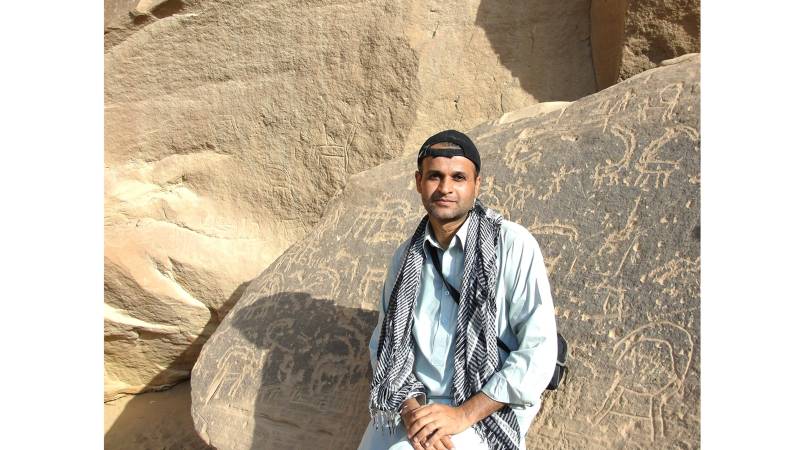
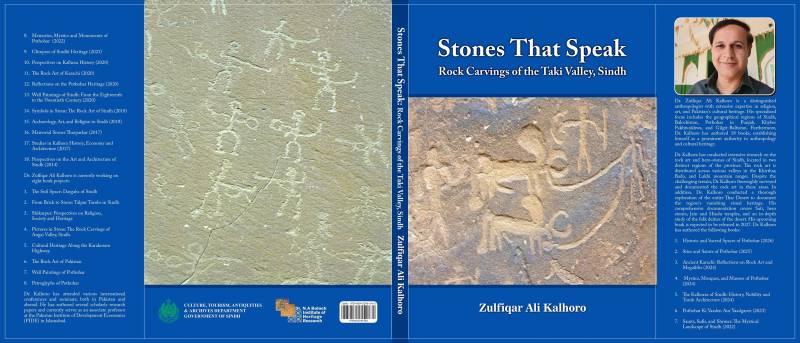
My latest book on the rock carvings of Sindh's Taki Valley is a new addition to the growing body of scholarship on Pakistan's rock art heritage in general, and Sindh in particular. Titled Stones That Speak: Rock Carvings of the Taki Valley, Sindh, it has been published by the Dr NA Baloch Institute of Heritage Research, Jamshoro. Spanning 184 pages, the volume comprises five chapters, along with a glossary, references, and an index. Richly illustrated with photographs, the book brings the rock carvings to life while supporting the narrative and analysis presented in the text. Above all, it is the culmination of many years of fieldwork across the Khirthar mountain range of Sindh.
The Khirthar mountain range in Sindh is home to thousands of petroglyphs. Traversing the mountains of Sindh reveals a landscape where both past and present are inscribed in stone, transforming the terrain into a living archive of human history and experience. On these rugged terrains, one sees Sindh's cultural heritage unfold, particularly its rock art. For centuries, people inscribed their beliefs, rituals, journeys, and worldview onto the rocks. Rock art is distributed across many of Sindh's mountain ranges.
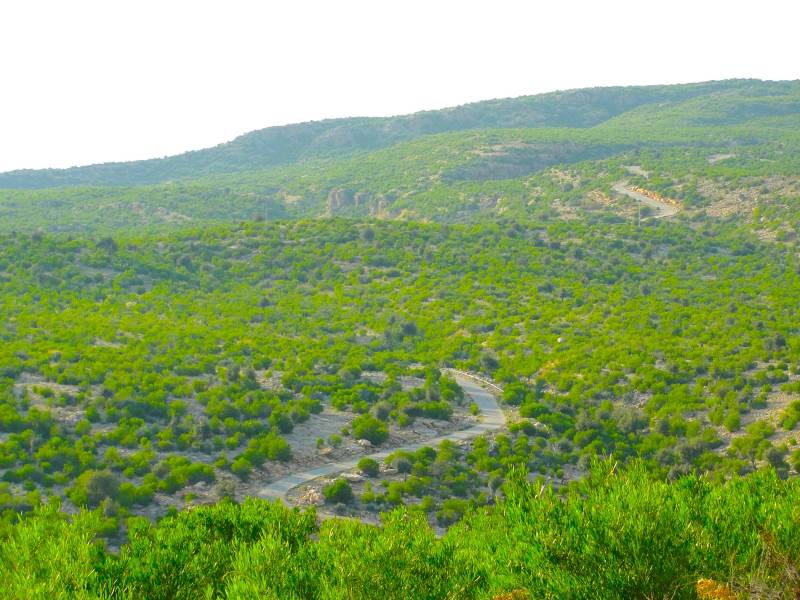
Since 1998, I have been travelling to these mountains to document rock art, aiming to share personal discoveries that highlight Sindh's rich cultural heritage and engage readers in its significance. The most notable valleys, referred to as nais, where I discovered rock art sites, include Seeta, Mazarani, Keharji, Radh, Buri, Khurbi, Makhi, Sallari, Gaj, Nari/Nali, Kukrani, Angai, Thado, Mol, Baran, and many others.
Each of these rock art sites offers a window into Sindh's diverse cultural history, with artwork ranging from prehistoric hunting scenes to modern engravings of choppers and aircraft, inspiring admiration and appreciation for local culture.
By weaving together ethnographic insights and landscape phenomenology, this study seeks to unravel the complex web of meanings embedded in the rock art
During my more than two decades of fieldwork in Khirthar, I discovered and documented thousands of petroglyphs and numerous rock paintings. The themes found in Sindh's rock art are diverse, including hunting and warfare scenes. Most magnificent are the engravings of bull domestication, a subject not seen in any other rock art region in Pakistan. The rock art of Sindh features a diverse range of animals, including bulls, bison, camels, horses, goats, deer, cats, leopards, and wolves. Additionally, birds and plants are depicted in the rock art of Sindh, alongside human figures and geometric patterns, which remain among the most common themes. Particularly fascinating are the representations of Buddhist stupas, Zoroastrian fire altars, temples, symbolic motifs, and various shrines.
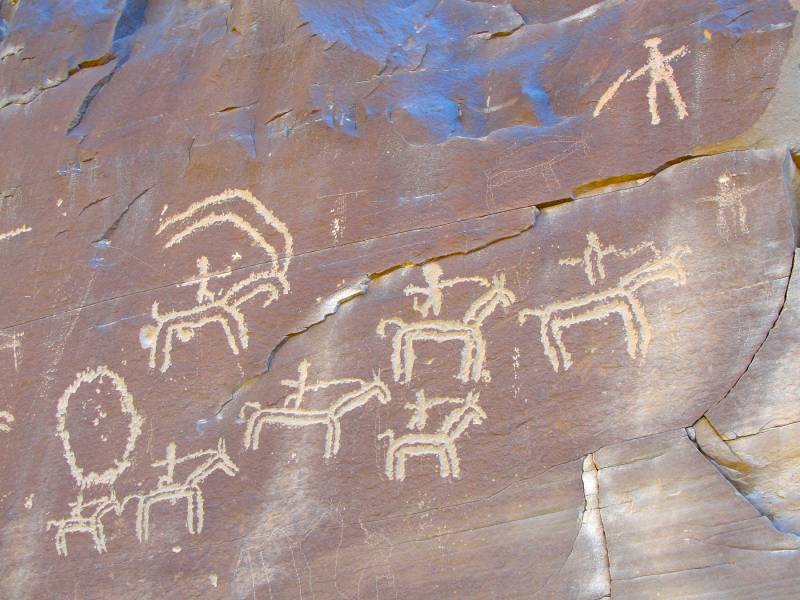
Rock art in Sindh is not confined to a single site or a narrow valley. It is distributed across the province's mountain ranges, hidden within the deep fissures of the hills and adorning the cliff faces of the numerous nais (hill streams) or various dhoras and dhoris (tributaries of nais). These valleys, often dry for much of the year, come alive during the monsoons. Yet, the stones they shelter retain their memories long after the waters have receded.
I travelled to remote parts of Sindh, where I discovered many previously unknown sites. I found a rich and diverse collection of carvings that reflect the region's cultural history.
What is striking about this corpus of rock art is its immense temporal and thematic breadth. It is a continuous tradition that spans thousands of years. On the same rock face, one might encounter a prehistoric hunting scene showing an ibex pursued by a bow-and-arrow hunter, placed inches away from a modern engraving of a helicopter or an automobile. This juxtaposition is not merely anachronistic; it is evidence of a vibrant, enduring artistic tradition that has adapted to the region's changing realities. The early inhabitants of these valleys engraved the animals they hunted and the rituals that sustained them. Later generations recorded the arrival of new technologies, the shifting dynamics of power, and the evolving symbols of their identity.
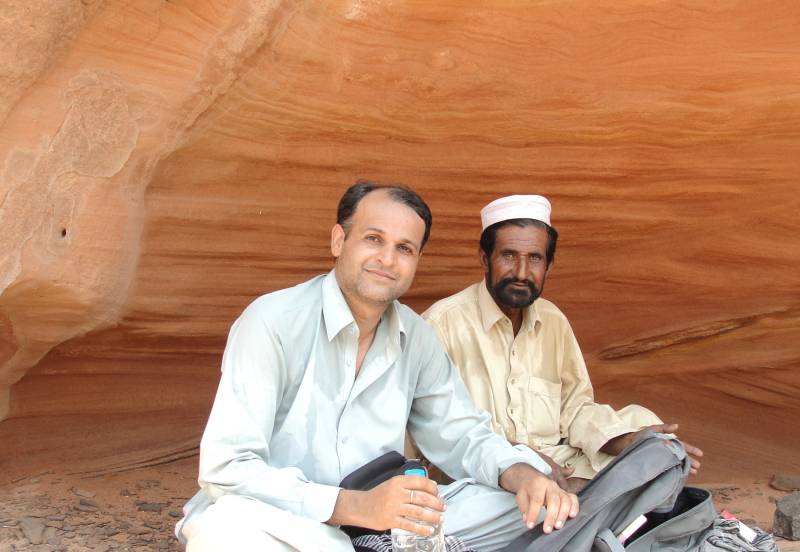
This book is the culmination of these explorations. While I have walked many valleys, this book focuses specifically on the rock art landscapes of Khashani, Mamani, Heengan, and Loondo, all tributaries of Taki Valley. Taki Valley is located in the Dadu District. It is located in the west of Johi Taluka. One has to cross this valley on the way to Gorakh Hill. Around Gorakh, numerous valleys preserve a rich corpus of rock art, attesting to a long history of human movement and engagement with this mountainous landscape.
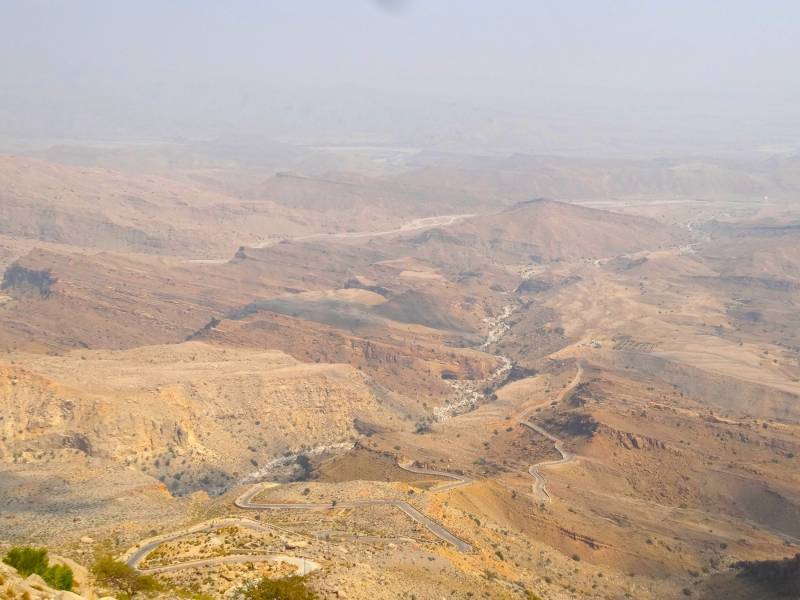
In the past, multiple routes led to Gorakh, used by pastoral nomads, travellers, and seasonal migrants who traversed these hills as part of their lived geography. As the region's highest peak, Gorakh offered a cooler refuge during the intense summer months, making it an important seasonal destination for pastoral communities. It was not merely a place of passage but also a site of gathering, rest, and interaction, as reflected in the engravings scattered across the surrounding valleys. This enduring significance continues into the present, as Gorakh remains a major tourist attraction in Dadu District, drawing visitors who, like those before them, are drawn to its landscape, climate, and commanding views.
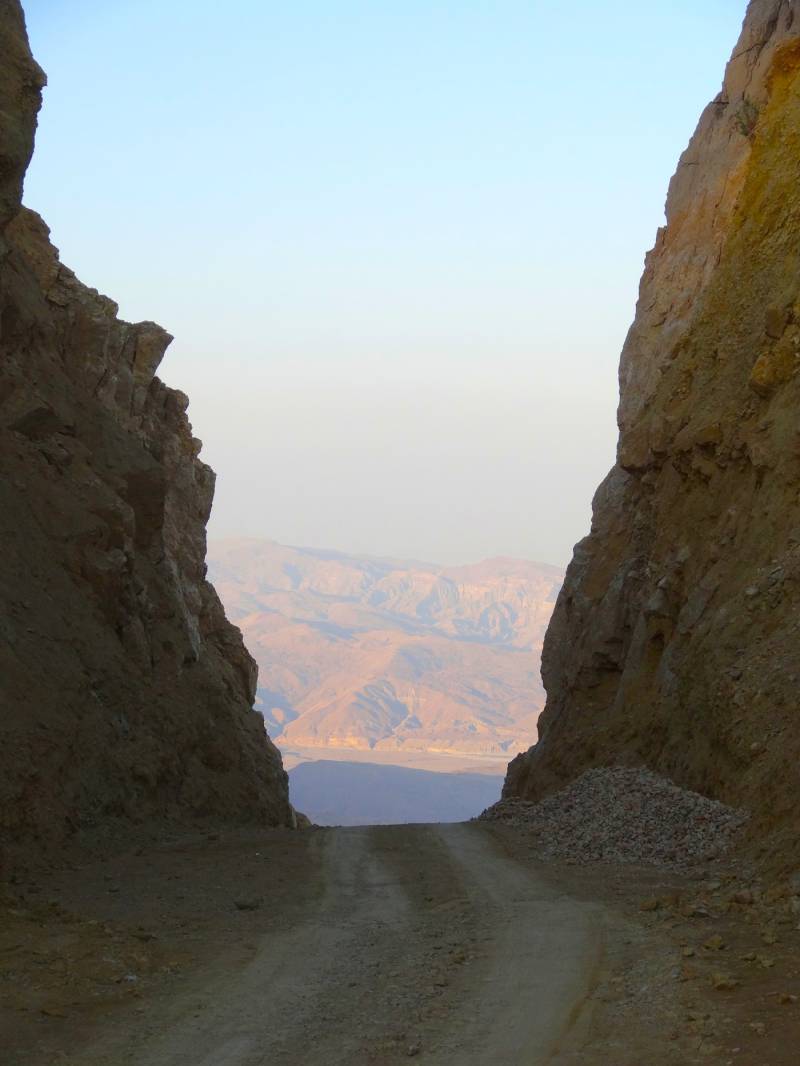
On the way to Gorakh, Khaval Lak offers an expansive panoramic view of the surrounding valleys and hills. Across these four valleys, I have documented and analysed 15 rock art sites.
Each of these sites is discussed in detail in five chapters of the book. This book is the outcome of a journey that began in 1998—one shaped as much by the physical act of walking the land as by sustained academic inquiry. It is, in essence, an effort to give voice to the silent stones of Sindh.
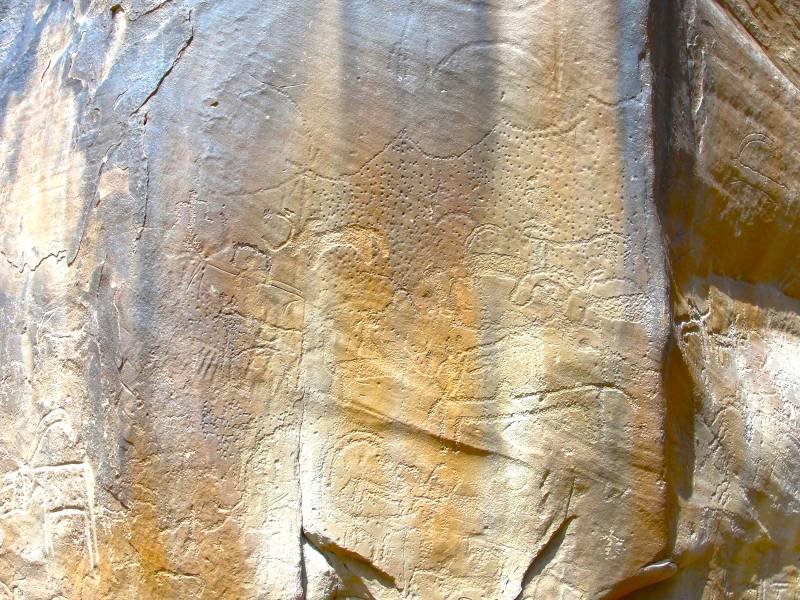
By weaving together ethnographic insights and landscape phenomenology, this study seeks to unravel the complex web of meanings embedded in the rock art of the Taki Valley, while remaining attentive to the limitations of both approaches. Such an integrated perspective enables us to move beyond viewing these images as mere curiosities and instead recognise them as vital elements of a living cultural landscape.
In the chapters, I describe and discuss the rock art sites of Khashani Dhoro, Mamani Dhoro, Heengan Dhoro, and Loondo Dhoro. I study the images engraved on stone: the ibex with exaggerated horns, warriors with raised swords, enigmatic symbols, bulls with elongated bodies, stupas, and the modern signatures of the Buzdar tribesmen.
Broadly speaking, the petroglyphs of Nai Taki can be divided into prehistoric and historic periods. The historic phase is further subdivided into ethnographic or modern petroglyphs. This latter category offers valuable insights into authorship, intention, and meaning, allowing us to understand who created these images and for what purposes. Such interpretations are informed by ethnographic fieldwork, including interviews with herders and other local people who continue to engrave the landscape.
Ultimately, this book is an invitation: to see the mountains of Sindh not as empty wilderness, but as a manuscript written by thousands of hands over millennia. It encourages us to walk gently, to look closely, and to listen to the enduring whispers of the stones. These stones speak—carrying stories from the distant past into the present.