

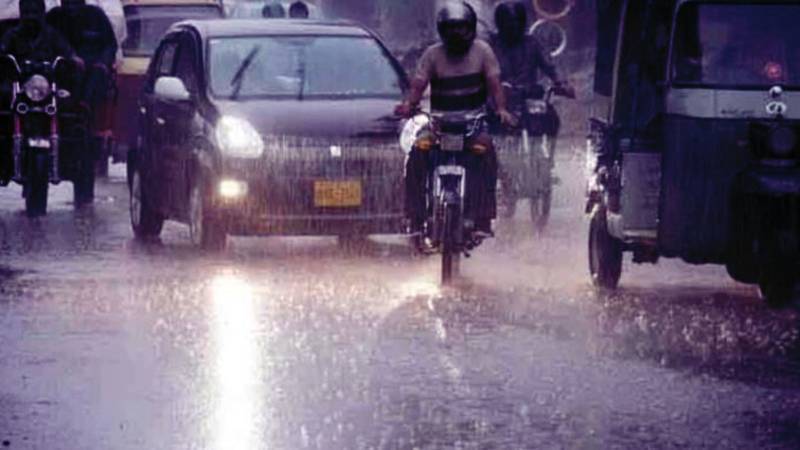
While experiencing the last rainfall on 1–2 April, I saw liquefaction of many asphalt road pieces in DHA and other localities of Karachi. Many of these roads were even recently asphalted. I ponder why it happens whenever there is moderate rain. Though most of the answers are technical, many are related to management and governance.
If you live in any of Pakistan’s big cities—Karachi, Lahore, or others—you know the scene all too well. A moderate shower of just 20 to 40 millimetres, the kind of rain that barely registers in most big cities around the world, and suddenly our roads look like they have melted. The smooth black surface breaks apart, turns into a slurry, and potholes appear almost overnight. Even brand-new roads suffer the same fate. Why?
The truth is a mix of poor materials, bad design, outdated ways of working, and deep governance problems that no one seems in a hurry to fix.
When rain hits fresh asphalt, the top layer often separates. The sticky black bitumen that holds everything together lets go of the stone chips underneath. This is called stripping. Locally available stones in Pakistan are often high in silica; they love water more than they love bitumen. So when even a little rain seeps in through tiny cracks, the water pushes the tar away.
The stones float loose, traffic turns them into a muddy soup, and within hours, you see that liquefied look everyone complains about. The type of bitumen used makes things worse. Softer grades that are common here become too runny in the heat and too brittle in the cold. Heat softens the road, rain gets in easily, and the damage is done.
Many roads are laid with too many air gaps because of old machines or rushed work. When rain fills those gaps and heavy trucks roll over them, the trapped water pushes the stones apart like a mini explosion inside the road. Worse still, the soil under our roads—the alluvial plains of Sindh and Punjab—turns soft and weak the moment it gets wet. The road loses its foundation, the layers separate, and the surface collapses from the bottom up.
Here is the bigger problem: in most parts of Karachi and Lahore, there is almost no proper stormwater drainage system. The roads themselves have to act as the drains. In Lahore, the city relies on its sewer lines, over 3,610 kilometres long, to carry rainwater, but it has only 180 kilometres of actual storm drains.
When heavy rain comes, sewers overflow, dirty water mixed with silt erupts from manholes, and the roads become chemical baths that eat away at the asphalt. In Karachi, the famous nalas are choked with plastic bags, garbage and construction waste. A 40-millimetre rain turns major roads into long bathtubs. Water sits there for 6 to 24 hours, long enough to destroy any road.
Road-related agencies and drainage departments work separately, so no one checks whether the new road level still matches the drains
One of the strangest and most damaging practices is how we repair roads. Instead of grinding out the old damaged layers, a process called milling, contractors simply lay new asphalt straight on top of the old one (of course, the engineer has also designed it like that). It is cheaper and faster. Over 10 to 15 years, the road surface rises 1.5 to 2 metres, or 5 to 6 feet, higher than it used to be.
The houses, shops and, most importantly, the drain openings stay at the old lower level. Now imagine this: the road is physically higher than everything around it, yet for rainwater, it has become the lowest point. Water cannot flow sideways into the drains because the drains are now too low. So the rain stays on the road and flows along it like a river in a canal.
The road has turned into an artificial canal; that is why we call it the Elevation Trap. Road-related agencies and drainage departments work separately, so no one checks whether the new road level still matches the drains. The result is that even a moderate shower floods the roads for hours and finishes off the asphalt.
The real issue goes far beyond any single contractor. The entire system, from the moment a work order is issued until the last security deposit is released, puts contractors under huge pressure. To survive delayed payments, hidden costs, multiple demands at every stage, and the need to keep the project financially viable, many are forced to cut corners on materials and workmanship just to break even. Bitumen content gets quietly reduced, stones go unwashed, and specifications are adjusted under the weight of these systemic demands. It is less about individual wrongdoing and more about a broken procurement and payment chain that leaves almost no room for doing things the right way.
The good news is that engineers already know the solutions. We can use polymer-modified bitumen, a special, upgraded tar that sticks much better to stones and can handle our extreme heat and rain. It lasts far longer. In badly flood-prone areas, we can switch to concrete roads. They cost more upfront but last 20 to 30 years instead of 10, and they do not get destroyed by water.
We can also adopt the sponge city idea: build permeable pavements that let water soak into the ground, create rain gardens in parks, and plan roads and drains together from the start. We need simple but firm rules: stop the just-pour-another-layer habit, make milling compulsory for resurfacing, and force road and drainage departments to work together. Most importantly, we must reform the way contracts are awarded and payments are made so that doing the job properly becomes the easiest and most profitable choice for everyone involved.
The monsoon is not the enemy. Moderate rain should not destroy our cities. The real problem is the choices we have made at the system level: choices about materials, shortcuts, and poor coordination. If we fix the governance and use the right technology, Karachi, Lahore and other Pakistani cities can have roads that actually survive the rain. The next time you see a road melting after a shower, remember: it is not bad luck. It is the result of decisions. And those decisions can be changed.