

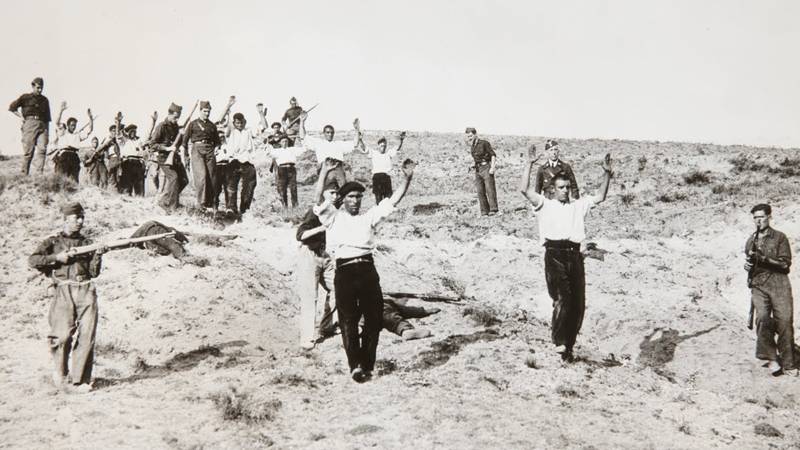
The year 2026 marks the 90th anniversary of the start of the Spanish Civil War. It is often described as one of the most brutal conflicts since the battles against the Muslims ended in 1492, which led to the expulsion of Muslims and Jews. Yet even after nine decades, the civil war's legacy of bitterness and acrimony endures.
I have been interested in Spain's history since my school days. As a graduate student in England, I visited Spain for the first time during my summer vacation in 1962. In those days, unlike now, few people travelled across Europe for holidays because it was too expensive. And Europeans recovering from the devastation of the Second World War were far from prosperous.
However, the National Union of Students, a continent-wide students’ organisation, promoted an ingenious way to make travel to Europe affordable for students who were perpetually short on money. Many European countries offered students work opportunities during the summer months. They were required to do unskilled work, such as apple picking in orchards or helping with construction projects. In return, they received free lodging in a hostel and three simple meals a day.
The idea was to enable students from various European countries to work and live together for a few weeks. Europe had undergone two horrific wars, and it was hoped that interactions among young people would foster goodwill across cultures and nationalities, making it less likely that the continent would undergo such a nightmarish experience again.
Experiencing Spain Under Franco
I opted to work on a construction project in a small town in Andalucía, near Gibraltar, not far from Morocco across the Mediterranean Sea. Being so close to the medieval Islamic sites, I figured, would give me an excellent opportunity to visit them. Under a project funded by the Spanish government, we helped to pave a dirt country road; however, the work was neither arduous nor labour-intensive.
We worked only a few hours early in the morning, before the Andalusian summer sun rose high in the sky. Afternoons and evenings were free, giving us plenty of time to meet local people at the village tea house and the local pub. After spending a couple of weeks on the project, I left the camp to travel on my own to see the Islamic monuments of Andalucía that evoke nostalgia among South Asian Muslims. The experience was both enjoyable and educational.
A significant number of Spaniards on the far right still fervently believe that Franco saved Spain from communism and revere him as a national saviour
I have been to Spain more recently, and it is hard to imagine how different the country is from what I saw on my first visit. Then, it was still in the firm grip of the military dictator General Francisco Franco, who ruled Spain from 1939 to 1975 with an iron hand. Spain was in bad shape, and signs of poverty and deprivation were evident everywhere, from the capital city, Madrid, to the small provincial town of Cordoba. The Catholic clergy was very powerful, and most people were reluctant to talk freely for fear of the secret police.
The Trajectory of the Conflict
One of the taboo topics was the fratricidal civil war that had torn the nation apart, lasting from 1936 to 1939. Nobody talked about it. Spanish society had been polarised for a long time, with fascists, conservatives, the clergy, and the army on one side, and progressive liberals and socialists on the other. In 1931, King Alfonso XIII (1886–1931) authorised a referendum to decide the form of government, and Spaniards voted to abolish the monarchy and establish a republic. The pacifist king abdicated and left the country.
In the 1936 elections, a socialist-liberal government elected by a majority of the people came to power, sparking rebellion among sections of the military. General Franco, stationed in Spanish Morocco, took command and, with the help of Moroccan troops, led the insurgency against the Federal Government. A fierce and bloody civil war ensued, costing thousands of lives. It is estimated that between half a million and a million people perished as a result of the conflict, and another half million were driven from their homes as refugees, including the famed painter and sculptor, Pablo Picasso.
The conflict drew international involvement, with Hitler’s Germany and Mussolini’s Italy supporting the rebels with weapons, while Russia sided with the Republicans. Most countries remained officially neutral. Some have suggested that if Britain and France had helped Spain’s democratic government, the civil war's worst ravages could have been avoided. Nevertheless, many intellectuals around the world sympathised with and identified with the Republican cause. Some 40,000 idealistic volunteers came to Spain to fight on the side of its beleaguered government.
Even in India, amid its own freedom struggle, many sympathised with the Republicans. Six Indians, including the famous author Mulk Raj Anand and the doctor Ayub Ahmad Khan Nakshbandi, are known to have joined the Spanish International Brigade. India’s first Prime Minister, Jawaharlal Nehru, a liberal socialist, travelled to Spain in 1938 to express his solidarity with the Republican Government. His long stay as a student in England influenced him with the ideals of democracy and liberty. The brutality and viciousness of the Spanish war were observed by a number of correspondents. The Nobel Prize-winning American author, Ernest Hemingway, was among them and documented his experiences in one of his most memorable novels, For Whom the Bell Tolls.
Enduring Fractures and Historical Memory
After three bloodstained years, the civil war ended in 1939 with the victory of General Franco’s Nationalist army, which gave him absolute authority to rule the country until his death in 1975. Before his death, Franco restored the monarchy, naming the grandson of King Alfonso XIII, Juan Carlos, as the monarch. After Franco's death, King Carlos helped restore and safeguard democracy in the country. He abdicated in favour of his son, Felipe VI, in June 2014. Since August 2020, Juan Carlos has lived abroad in self-imposed exile from Spain.
Several generations have passed since the Spanish Civil War ended, but the wounds and fissures it created have been so deep and enduring that they still haven’t healed. The civil war is seared in the collective memory of Spaniards like no other event. Even now, political parties accuse opponents of using civil war tactics to express strong disapproval.
In an attempt to bring closure to the past bitterness, the Spanish Government in 2007 passed a law, designated as the Historical Memory Law, that condemned the Franco regime, recognised the sufferings of those who were victimised, and called for the removal of all symbols of the fascist regime. The socialist Prime Minister of Spain, Pedro Sanchez, decided to exhume and remove the remains of General Franco from the underground crypt of a basilica near Madrid, where they have been lying in repose since his death. Known as Valle de los Caídos, the memorial building also houses the remains of about 33,000 soldiers and civilians and was built to honour their memory.
The proposal sparked fierce protest from the descendants of those who fought alongside Franco in the civil war. A significant number of Spaniards on the far right still fervently believe that Franco saved Spain from communism and revere him as a national saviour. Consequently, the tragedy of the civil war, which should have been consigned to history books, remains very much alive and unlikely to be forgotten anytime soon.