

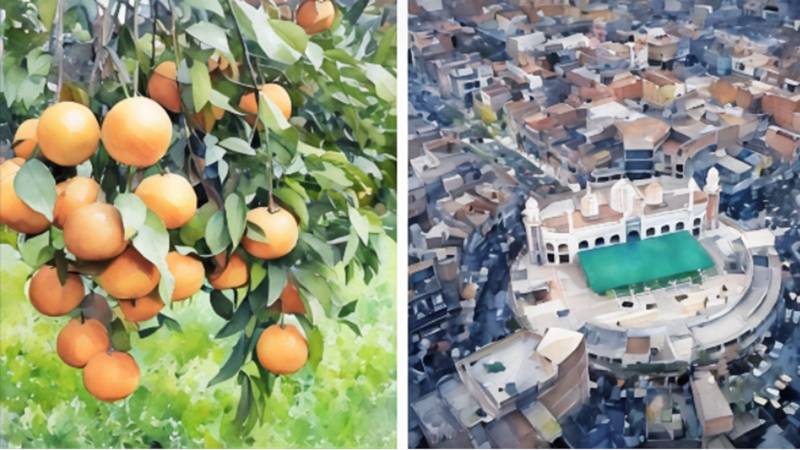
Nestled in the fertile plains of Punjab, Pakistan, lies the city of Sargodha, a region synonymous with a citrus delight—the kinnow fruit. The juicy, tangy wonder has not only captured the taste buds of people but has also become a symbol of Sargodha’s agricultural prowess and economic strength.
The city was once associated with literary giants like writer Ahmed Nadeem Qasmi, who treated the city as his home. This scribe also witnessed Sargodha district growing into the kinnow farm of Punjab and becoming the export hub of Pakistani citrus. It is the biggest kinnow locale in the world and is called the “California of Pakistan.”
The Citrus Research Institute Director states, “So far, our agricultural scientists have developed about 10 different varieties of citrus.” He adds, “Over 50% of the cultivation area alone belongs to Sargodha and adjacent areas.”
Known as the “City of Citrus,” Sargodha produces 96% of the total kinnow yield in Pakistan. It is the largest kinnow-producing district in the world. The cultivation process is a meticulous dance between nature and human expertise. The golden fruit, with its signature sweetness, is the lifeblood of Sargodha’s economy.
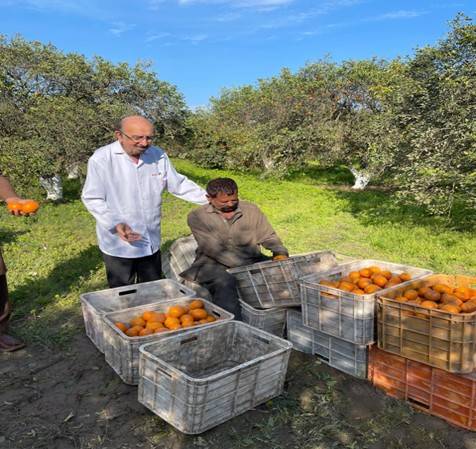
Kinnow is not just for the taste buds; it is packed with essential vitamins and minerals. The citrus wonder is a rich source of Vitamin C, a potent antioxidant that helps fend off infections. Kinnow contains Vitamin A, essential for healthy vision and skin. Its dietary fiber aids digestion. Kinnow juice is not only hydrating but also detoxifying, improving gut health. Even the kinnow peel, often discarded, is used as a natural zest in culinary applications.
City of Eagles
Sargodha holds great significance due to its strategic location. Its name means “Godha” or “Abode of the Fighter.” It is no coincidence that Sargodha earned its name by fighting valiantly against the Indian Air Force during the two wars of 1965 and 1971, thus winning the title of the “City of Eagles.”
Sargodha hosts the headquarters of the Pakistan Air Force Operational Central Command Air Base. The title of Nishan-e-Istiqlal was awarded to three cities of Punjab for showing severe resilience during the 1965 Pakistan-India War. The citizens of Sargodha supported the Pakistan Army against the advancing Indian Army. MM Alam flew his fighter plane from the Sargodha base and destroyed nearly 12 Indian fighter jets during the air war.
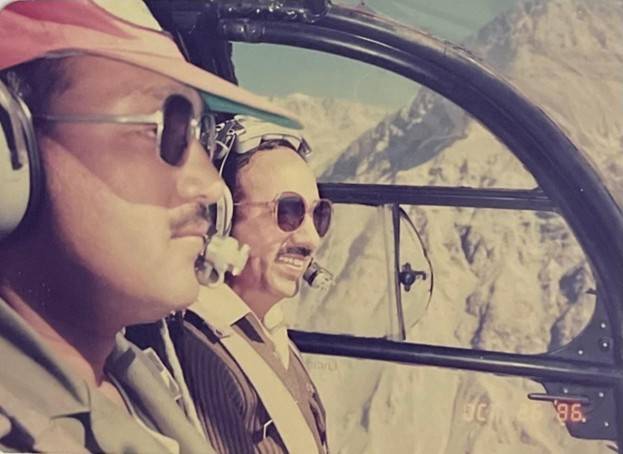
MM Alam remains the top-scoring fighter pilot of the PAF. In the 1965 war, at Sargodha, he shot down nine Indian planes. On 6 September 1965, MM Alam, in an F-86 Sabre jet, shot down two enemy Hunter aircraft and damaged three others. For his exceptional flying skills and valour, he was awarded the Sitara-i-Jurat (The Star of Courage). On 7 September 1965, MM Alam is said to have destroyed five more Hunter aircraft in less than a minute, a record that stands to this day. Overall, he had nine kills and two damages to his credit. For its miraculous defence against superior enemy air power, the city of Sargodha was awarded the name “City of Eagles.”
Heer and Ranjha: the epic love story
In Takht Hazara, Sargodha, the story of Heer Ranjha has transcended time and boundaries, captivating the hearts of generations. The tale of sacrifice, passion, and love has made Heer Ranjha a universal story.
Ranjha, the epitome of passion, determination, and rebellion, unites with Heer in a long-lasting union that touches the very essence of human sentiments. Their love journey navigates through an ocean of hurdles, societal and family restrictions, yet it remains determined and unfaltering.
As we dive into the enchanting world of Heer Ranjha, we are reminded of the eternal power of true love, even in the face of the worst adversity. Beyond the poetic verses of Sufi poet Waris Shah in 1766, Heer Ranjha stands as a mesmerising tale that has captivated hearts for generations. It is not just a love story of two lovers; it is a tapestry of symbolism and deep meanings.