

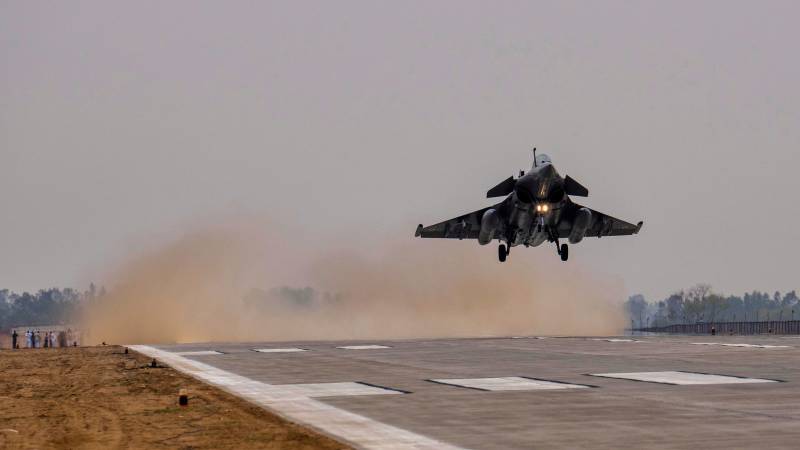
Since the Kargil conflict of 1999, India has been trying to figure out how to punish Pakistan through conventional means without escalating to the nuclear level.
Immediately after the geographically confined conflict in Kargil, India began conceptualising a limited conflict with Pakistan where it could take punitive action without fear of escalation. Yet, when India mobilised after the 2001 attack on its parliament, it fell back on the Sundarji doctrine — full mobilisation and massive response. The strategy proved inadequate because Operation Parakaram’s lumbering, month-long military mobilisation found Pakistan already mobilised and prepared.
In the process, without an active shooting war with Pakistan, India suffered over 1800 casualties with nearly 800 killed in various incidents and accidents.
Post-2001-02, Indian military planners went back to the drawing board. The question: how to speed up mobilisation. The answer: Cold Start. The CSD envisaged rapid response Integrated Battle Groups (IBGs) poised to strike within hours, not weeks, seizing slices of territory to force negotiations before Pakistan could react or escalate. But turning the doctrine into operational reality proved difficult. Despite multiple exercises to validate the doctrine for rapid deployment and break-out operations inside Pakistan, India never acquired the logistical and platform capabilities to operationalise the concept.
Even in 2016, the so-called surgical strikes in Azad Kashmir relied on shallow incursions meant to be sold politically at home. This was to change by 2019. After an attack on a security forces convoy, India decided to use air power as the primary instrument of coercion. The punitive strikes post-Pulwama (2019) marked the ascendancy of the Air-Led Cold Start Doctrine. However, the significant operational setback suffered during the May 2025 conflict, where punitive air strikes triggered a fierce Pakistani response resulting in substantial aircraft losses, underscores the acute vulnerability of this evolution and would force India into a critical reassessment amidst emerging strategic threats.
The potential arrival of the J-35 and PL-17 represents not merely another challenge, but an existential threat to the doctrine's foundational emphasis on delivering non-escalatory punishment
The May 2025 Crucible: Testing the Doctrine's Limits
The May 2025 conflict served as a devastating stress test for the Air-Led Cold Start Doctrine. India's opening move reflected inherent caution: Its strike package, led by the French Rafale fighters, launched standoff missiles at targets across the international borders (Muridke, Bahawalpur), while long-range artillery struck locations in Azad Kashmir.
This initial phase, relying on standoff capabilities, avoided deep manned aerial penetration to avoid a counter-air operation by the Pakistan Air Force. However, little did the IAF know that PAF had picked up the build-up and was awaiting to ambush the IAF package. The Pakistan Air Force (PAF) proactively engaged IAF fighters at ultra-long ranges deep inside India, and way beyond the Line of Control (LoC) in Kashmir. The outcome was stark: Pakistan claimed six downed Indian aircraft, including three Rafale fighters.
While India has refused to give a number, India’s Chief of Defence Staff General Anil Chauhan, in an interview with Bloomberg, admitted losing aircraft in the initial stages of the conflict. A prominent BJP politician Subramanian Swamy in a separate interview has admitted to losing five aircraft.
This devastating attrition rate inflicted upon IAF fighters—the very instruments of the air-led strategy—by Pakistan's current generation fighters (J-10C/PL-15) demonstrated a critical failure to achieve air dominance or protect high-value assets in the opening phase. India's subsequent escalation—launching air-launched BrahMos missiles against Pakistani airfields and aviation assets—triggered significant Pakistani retaliation, including strikes with short-range missiles like Fatah-I/II on targets across the LoC and crucially, an air-launched missile attack on the S-400 battery at Adampur airbase.
The Doctrinal Failure: May 25 exposed a fatal flaw in the Air-Led CSD. The Indian military assumed that air dominance over its skies was guaranteed. When that assumption collapsed, the doctrine, showing a lack of resilience, collapsed with it, forcing India into reckless escalation. BrahMos strike as a "plan B" was the key failure—not just that the initial plan failed, but that the fallback option escalated the conflict uncontrollably, provoking Pakistani counterstrikes. Losing air dominance in its skies forced the Indian military to abandon its planned strategy. Moreover, the loss of advanced fighters, particularly the Rafale, the symbol of the air-centric strategy, represented not just a tactical defeat but a profound loss of prestige.
J-35 and PL-17 Combination: An Existential Threat
Pakistan’s prospective acquisition of the Shenyang J-35 stealth fighter and the PL-17 ultra-long-range air-to-air missile presents an order-of-magnitude greater threat than the capabilities that inflicted the May 2025 setback. This combination doesn't just challenge the doctrine; it threatens to render its core tenets operationally untenable.
The J-35's low observability makes detection by Indian ground-based radars and AEW&C/AWAC platforms vastly harder. PL-17 missile, designed explicitly for area denial, represents a major threat to high-value targets like AEW&C and aerial refuelling tankers at ranges up to 400km. It creates a systemic existential risk for high-value assets deep inside Indian airspace from relative safety. The J-35/PL-17 combo holds the promise to transform this vulnerability into a potential rout, fundamentally undermining the credibility of the air-led punitive response envisioned since 2016.
The Adaptation Imperative
The loss of prestige in the Four-Day War has only sharpened domestic political pressure, making it more difficult for Indian decision-makers to exercise restraint in future crises. Despite the setback in May, a major future provocation—coupled with public demands for resolve—could still drive New Delhi to pursue a kinetic response. A rapidly shifting battlefield calculus (due J-35/PL-17) makes limited retaliation riskier and less attractive. The elevated risk, instead of restraining, might push India towards bolder and more escalatory options, such as the May Brahmos strikes, to achieve visible results. That enduring compulsion to act makes it clear that the Cold Start Doctrine must evolve. Future iterations will require not just doctrinal refinement but a fundamental restructuring around New Delhi’s next-generation platforms and acquisitions, ensuring it remains flexible under the nuclear overhang.
Conclusion
The Air-Led Cold Start Doctrine emerged as a necessary evolution from its ground-bound predecessor. The May 2025 conflict, however, delivered a severe operational setback, exposing critical vulnerabilities in its execution against current threats and resulting in significant losses and escalation. The potential arrival of the J-35 and PL-17 represents not merely another challenge, but an existential threat to the doctrine's foundational emphasis on delivering non-escalatory punishment. The setback is profound, the strategic challenge is severe, and the imperative for the next, more resilient evolution of India's military doctrine is undeniable and urgent.