

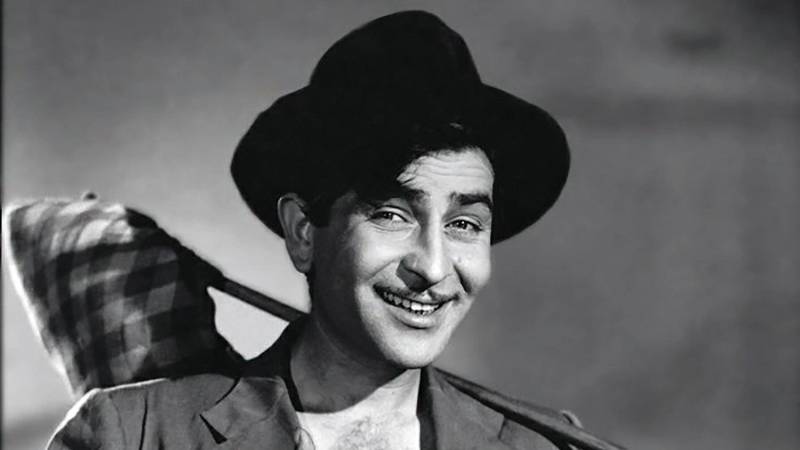
They say Peshawar is not merely a city; it is a civilisation, a culture, a cradle of stories. From its soil, many stars have risen to shine in distant skies. Among them was Prithviraj Kapoor, a pioneer of Indian theatre and cinema, whose legacy laid the foundation for what would become Bollywood.
His home was located in the historic Qissa Khwani Bazaar, a place rich with stories and history. Nearby lived Agha Ji, a close friend. Their connection extended beyond just their homes and spanned generations. Prithviraj’s sons, Raj Kapoor, Shammi Kapoor, and Shashi Kapoor, would go on to shape Indian cinema, just as Agha Ji’s son, the legendary Dilip Kumar, did. The streets of Qissa Khwani Bazaar thus echoed with the early footsteps of giants.
Around 1930, Prithviraj Kapoor moved to Bombay, driven by his passion for acting. The stage was his calling, and his journey took him across cities – Dehradun, Calcutta, Bombay – dragging his family and young son Raj along. Raj Kapoor grew up amid scripts and spotlights, absorbing stories of stagecraft at the dinner table. His father wasn’t just his parent; he was his first teacher, his guiding star.
Raj’s desire to act bloomed early. At just ten, he made his screen debut in the film Inqilab. No one then imagined this child would one day be hailed as India’s greatest showman, the “Charlie Chaplin of India.”
In 1947, Raj Kapoor starred in three significant films, including Neel Kamal, Jail Yatra, and Delhi Ki Rani. The next year, he took a bold step by launching his film as producer, director, and lead actor. Aag (1948) marked his first work behind the camera. However, it was Barsaat (1949) that changed everything. Featuring Nargis and introducing Nimmi, with memorable music by Shankar–Jaikishan, Barsaat was a huge hit, surpassing even Mehboob Khan’s Andaaz. It established Raj Kapoor not only as a heart-throb but also as a visionary. That same year, he founded his banner: RK Films.
He was married to Krishna Malhotra, with whom he had five children – Randhir, Rishi, Rajiv, Ritu, and Rima – each of whom carried forward the family’s film legacy in their own way
Then came 1951 and Awara. A landmark in every sense, Awara starred Raj Kapoor and Nargis, with a story by Khwaja Ahmad Abbas. It featured three generations of the Kapoor family on screen: Raj’s grandfather, Bishweshwarnath; his father, Prithviraj; and his younger brother, Shashi. With its haunting melody, Awara Hoon, the film touched hearts from Moscow to Cairo. It broke barriers and became a global phenomenon, earning acclaim at Cannes and a spot on Time magazine’s list of the 100 greatest films of all time.
Success followed success for him. Boot Polish, Shree 420, Jagte Raho, Chori Chori, Jis Desh Mein Ganga Behti Hai, Sangam, Teesri Kasam, Mera Naam Joker, Bobby, Satyam Shivam Sundaram, and Ram Teri Ganga Maili each added a new chapter to his cinematic legacy. In Kal Aaj Aur Kal, three generations – Prithviraj, Raj, and Randhir Kapoor – appeared together, symbolising the passing of the torch.
Raj Kapoor was fearless in experimenting. He effortlessly transitioned between social dramas and light-hearted films such as Do Jasoos and Gopichand Jasoos. He won three Filmfare Best Actor Awards and served on the jury at the Moscow International Film Festival. His final film was Vakil Babu in 1982. His last project, Henna, was completed after his death by his son, Randhir.
He was married to Krishna Malhotra, with whom he had five children – Randhir, Rishi, Rajiv, Ritu, and Rima – each of whom carried forward the family’s film legacy in their way.
In his later years, Raj Kapoor battled asthma. In 1988, on the very day he was to receive the Dadasaheb Phalke Award in Delhi, he collapsed. Despite the doctors’ best efforts, he died at 63. The light that had illuminated countless screens had faded.
Today, his memory lives on at Raj Bagh, where a museum dedicated to him stands, filled with photographs and memorabilia. Visitors come from all over the world to pay tribute, not just to a man, but to an era he helped define.
This is the story of the boy from Qissa Khwani Bazaar in Peshawar, who dreamed in reels and spoke in songs – the man who transformed Bombay into a canvas and cinema into poetry.