

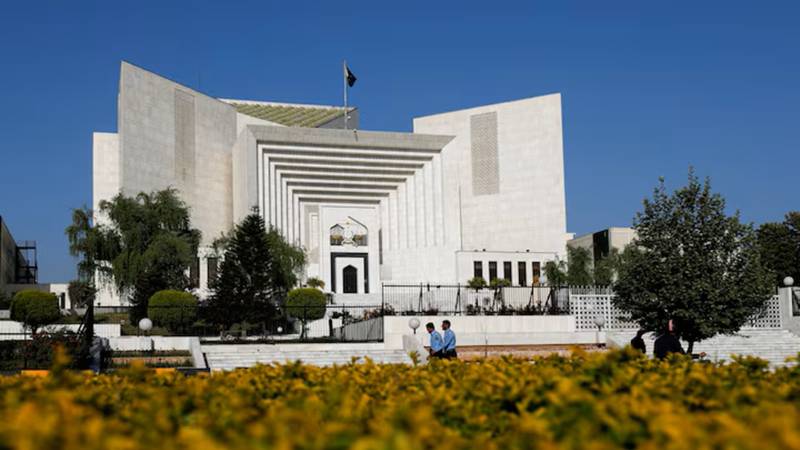
Judicial independence is the foundation of any successful democracy. It guarantees that justice is administered without bias, irrespective of outside influences, especially political or executive interference. Judicial independence is guaranteed by the Constitution of Pakistan, but it seems to be a dream, not a reality. Political meddling, questionable judicial appointments, and selective adjudication have created serious reservations about whether judicial independence in Pakistan is a reality we live by or a dream we share.
The Pakistani Constitution unequivocally establishes the judiciary as a distinct branch of the state. Articles 175 to 212 define the organization and jurisdiction of the courts, ensuring their independence from the executive and legislative branches of the government. Despite these constitutional provisions, the reality has frequently contradicted the constitutional promise. Political rivals, both military and civilian, have always exploited the judiciary. From the infamous "doctrine of necessity" employed to justify military coups to pressure being exerted on judges through coercive resignations and character assassination, the record is dismal.
One of the worst instances of undermining judicial independence was the dismissal and restoration of Chief Justice Iftikhar Muhammad Chaudhry in 2007. The subsequent judicial movement emphasized the desire of the people for an independent judiciary but also illustrated how deeply politicized the judiciary had become. Even though the movement successfully restored Chaudhry, it also ushered in a new phase of politicization in which the judiciary engaged more actively and provocatively in national politics.
Over the last decade, the judiciary has been more active in its approach, frequently encroaching on policy issues that have traditionally remained the domain of the executive. Judicial activism may be a means of protecting the public interest and holding the powerful accountable, but it becomes improper when it is abused and contradicts its constitutional function. The use of the judiciary to oust elected officials or disqualify politicians has been accused of selectivity in justice and has served to erode public confidence.
Even though the institutional machinery exists to facilitate an independent judiciary, the dominant political culture, systemic inefficiency, and absence of accountability have rendered it largely illusory
Another core problem undermining judicial independence is the judicial appointment process. The Judicial Commission of Pakistan (JCP), which nominates judges, is criticized for being opaque and politicized. Merit and integrity are compromised for political allegiance or personal connections. This lack of transparency is not just harmful to the quality of justice but also to the reputation of the judiciary as a fair umpire.
Apart from this, the Pakistani lower courts are plagued by delays, inefficiency, and corruption. While the higher judiciary is under the limelight, most of the population grapples with the judiciary at the district level. The courts lack resources and are vulnerable to local political pressure, leaving no judicial independence available to the common man. The distance between constitutional assurances and the reality on the ground is immense and desolate.
The media is also a multi-dimensional force behind the shaping of attitudes towards the independence of the judiciary. Though it can be a watchdog, keeping the judiciary in line, it can also be employed as a tool to pressure or spread disinformation. Sensational cases are most likely to be tried in the court of public opinion long before a verdict is delivered, undermining the dignity of the judicial process.
Despite all these issues, there are glimmers of hope. Instances where judges have ruled against entrenched interests, upheld the Constitution, or advanced civil liberties indicate that there are pockets of integrity in the system. These are exceptions, however, and not the rule.
To translate judicial independence from theory to practice, certain measures must be initiated. The judicial appointment process must be made merit-based and transparent. There must be a proper demarcation of functions among the three organs of the government with mutual respect and responsibility. Reforms at the lower judiciary need to be initiated to provide speedy and equal justice to all citizens. Last but not least, civil society and media must continue playing a constructive role in promoting judicial reform without giving in to sensationalism or political opportunism.
In short, judicial independence in Pakistan is a contested terrain, caught between constitutional idealism and political pragmatism. Though institutional machinery exists to facilitate an independent judiciary, the dominant political culture, systemic inefficiency, and absence of accountability have rendered it largely illusory. For achieving actual judicial independence, institutional reform would not suffice, but the commitment of all sections of society to democratic values would be necessary. Until that day arrives, judicial independence in Pakistan will remain more a chimera than an ideal.