

The Buddhist legend of Kunāla, first preserved in the Divyāvadāna (c. 2nd–4th century AD), recounts how the son of Emperor Ashoka was blinded through palace intrigue while serving as governor of Taxila. The narrative became one of the most enduring moral parables of the Gandhāran world, symbolising injustice, impermanence, and the ethical endurance of the afflicted. Over subsequent centuries, Taxila and the wider region of Gandhāra acquired renown not only as a centre of Buddhist learning but also for medical knowledge and healing traditions. In modern Pakistan, this historical geography of suffering and care has acquired a new resonance through the emergence of Taxila as one of the country’s principal centres of ophthalmology. The life and work of Dr Pramila Lall (1932–2024) embody this symbolic continuity between ancient narratives of lost sight and contemporary practices of restored vision.
The Christian Mission Hospital at Taxila was established in 1922 as a general medical and surgical institution under Dr Gregory Martin of the United Presbyterian Church (USA). From its inception it was conceived as part of a wider Protestant medical mission that sought to combine evangelical service with the provision of clinical care in regions underserved by colonial and later national health infrastructures. Following the creation of Pakistan in 1947, the scale of preventable blindness in northern Punjab and the frontier regions became increasingly visible, driven by poverty, limited access to surgery, and endemic eye disease. The development of structured ophthalmic services at Taxila under American missionary physicians Dr A Karsgaard and Dr Norval E. Christy marked the hospital’s first systematic response to this crisis, laying the institutional foundations for what would later become a nationally significant centre for eye care.
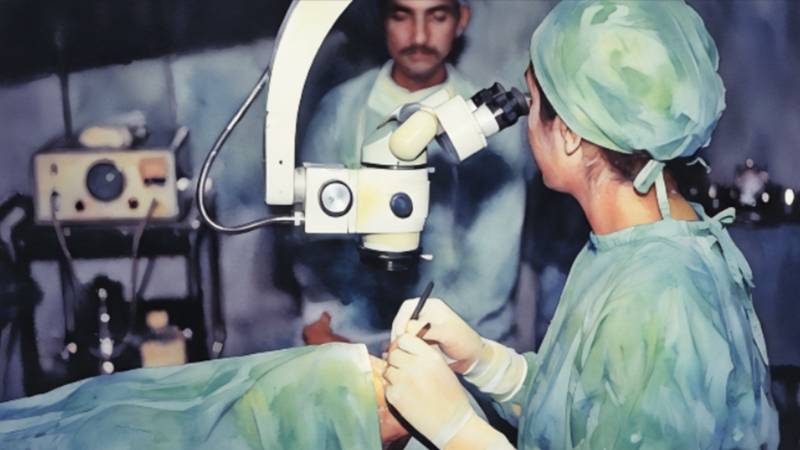
Estimates say she performed more than half a million operations in her career, which may be the largest surgical output achieved by any woman ophthalmologist in Asia
The transformation of Taxila into a high-volume, technologically progressive ophthalmic institution, however, is inseparable from the arrival of Dr Pramila Lall in 1957. Born in Kerala into the ancient Christian community known as the Thomas Christians, Lall graduated from the Christian Medical College, Vellore, one of South Asia’s most influential centres for missionary and postcolonial medical training. Her move to Pakistan followed her marriage to Dr Ernest Lall, a Pakistani national, and coincided with the fragile first decade of the new state. Crossing the border at a time when memories of Partition violence were still raw, she entered a society marked by political uncertainty but acute medical need. She later recalled being told by an immigration officer, “Welcome to Pakistan. We need doctors in this country,” a remark that she came to regard as defining her vocation.
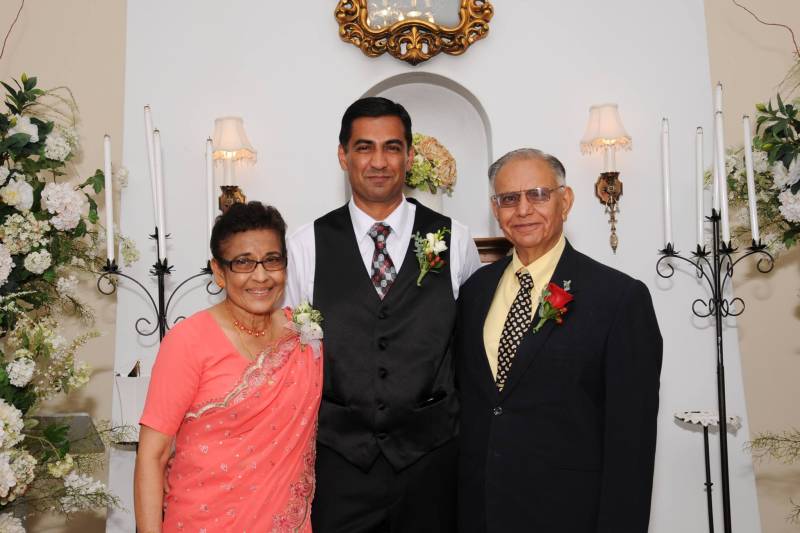
In 1964 Lall obtained a Diploma in Ophthalmology from London, becoming Pakistan’s first formally qualified woman specialist in the field. Her subsequent career was marked by continuous professional engagement with international ophthalmology, including Fellowship of the Royal College of Ophthalmologists in 1980 and nomination as an international member of the American Academy of Ophthalmology in 1987. These affiliations were not merely honorary: they facilitated the transfer of new surgical techniques and clinical standards to a rural mission hospital operating with limited resources, thereby integrating Taxila into transnational circuits of medical knowledge.
Her most consequential intervention occurred in 1976, when she became the first woman in Pakistan to perform intra‑ocular lens implantation for cataract patients. At a time when most cataract surgery in the country resulted in aphakia and lifelong dependence on thick corrective lenses, this procedure marked a decisive shift toward modern restorative ophthalmology. Under her leadership, the eye department at Taxila expanded into a high-volume surgical service catering to patients from across Punjab and the North-West Frontier (now Khyber Pakhtunkhwa). Conservative estimates attribute more than half a million operations to her career, a figure that may represent the largest surgical output achieved by any woman ophthalmologist in Asia. The scale of this practice reshaped regional patterns of health-seeking behaviour, establishing Taxila as a destination for affordable and reliable eye care among populations otherwise excluded from tertiary medical facilities.
Equally significant was her role in medical education and institutional formation. Lall oversaw the development of postgraduate training in ophthalmology at Taxila, mentored successive generations of Pakistani and international doctors, and contributed to the professionalisation of the field through the establishment of the Rawalpindi chapter of the Ophthalmological Society of Pakistan. Her service on the National Steering Committee for the Prevention of Blindness further positioned her at the intersection of missionary medicine and state public health policy, illustrating how faith-based institutions were incorporated into national strategies for disease control in the late twentieth century.
Her professional authority was achieved in the context of personal and political vulnerability. As an Indian-born Christian woman working in Pakistan during the wars of 1965 and 1971, she faced periodic suspicion and administrative scrutiny. At moments of exhaustion she considered emigrating to Canada, a trajectory common among South Asian physicians of her generation. A letter from her father reportedly persuaded her otherwise: “Once you put your hand to the plow, you don’t turn back. Stick to your job and have faith in God.” She subsequently adopted Pakistani nationality, grounding her identity less in origin than in sustained service to a community of patients.
Lall’s understanding of medicine was explicitly theological as well as clinical. As a member of the Thomas Christian tradition, she interpreted healing as vocation, emphasising endurance, humility, and proximity to the poor. These commitments shaped her everyday practice more than her public honours, although the latter were substantial: the Paul Harrison Award in 1983, the Tamgha‑i‑Imtiaz in 2002, and later the Sitara‑i‑Imtiaz. Notably, she used award ceremonies and public platforms to speak on behalf of marginalised communities and religious minorities, framing access to health care as a matter of dignity rather than charity.
She died peacefully on 3 January 2026 at the age of ninety‑three, in the Christian Hospital at Taxila where she had worked for almost seven decades. Official tributes, including from the Prime Minister of Pakistan, emphasised her contribution to affordable eye care and to the alleviation of avoidable blindness on a mass scale. Yet her historical significance extends beyond individual achievement. Her career illuminates the role of missionary hospitals in the postcolonial medical landscape, the gendered dimensions of professional authority in South Asian medicine, and the ways in which global clinical innovations were localised within resource‑poor settings.
In a longer temporal perspective, her life acquires an additional symbolic dimension. In the same landscape where the legend of Kunāla once narrated the tragedy of unjust blindness, modern patients recovered their sight through surgical techniques introduced and institutionalised by a woman whose own life was shaped by displacement, faith, and endurance. The continuity is not one of doctrine but of place and meaning: Taxila, from a site of legendary loss to a centre of practical restoration. Dr Pramila Lall stands as the principal human agent of that transformation, a figure through whom ancient moral narrative and modern medical history converge.