

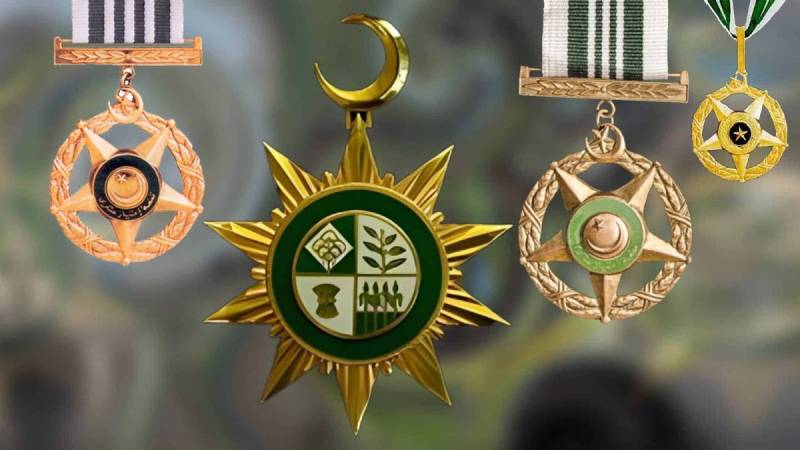
You know that sinking feeling when you see the annual awards list and immediately spot three names that make you go, "Seriously? Him?" That's become our national reaction every time the Sitara-e-Imtiaz recipients are announced. What was meant to be our version of the Nobel Prize has turned into something closer to a government employee retirement bonus.
Let me paint you a picture. In one corner, you've got Dr. Ayesha Khalid, who's spent 20 years developing drought-resistant crops that could save our agricultural heartland. On the other, there's Mr. Paper-Pusher, whose greatest achievement was surviving 35 years in the Ministry of X without getting transferred. Guess whose phone rings when awards season comes around? It's enough to make you want to throw your chappal at the TV.
Remember young Shehroz Kashif? Kid scales K2 at 19 - a feat that would make most of us collapse just thinking about it - and what does he get? A pat on the back and a "better luck next year." Meanwhile, some retired secretary who spent his career perfecting the art of delaying files gets the nod. It's like giving Michelin stars to a roadside dhaba because the owner plays golf with the food critic.
Our neighbours aren't perfect, but credit where it's due - India's Padma Awards system makes sense. Your chai-wala can nominate your physics-wala if he thinks they deserve it. Their selection panels include real experts, not just the same 70-year-old bureaucrats who still think "Google" is a typo. And get this - they tell you why someone won! A revolutionary concept, I know.
This isn't about medals and ceremonies. It's about whether we value actual achievement or just good connections
The damage this does is worse than we think. Meet this bright young robotics engineer in Karachi. "Why bother inventing anything? I should've joined Customs like my uncle." When our best minds are saying things like that, we've got a crisis on our hands. We're basically training our youth that success comes not from what you know, but from who you know in the right ministry.
But here's the kicker - fixing this mess wouldn't even be that hard:
- Let any Pakistani nominate candidates through a simple website (we put a man in space, we can handle an online form)
- Ditch the bureaucratic old boys' club and bring in actual experts to judge
- Explain the choices like adults ("We gave it to X because she cured y disease" - see? Not hard)
- Add a recall clause for when honorees turn out to be frauds (looking at you, Mr. Fake-Degree)
I can hear the cynics now: "This is Pakistan - that's how things work." Well, newsflash - things work that way because we keep accepting it. Our national honors should make us swell with pride, not cringe with embarrassment. They should highlight the Pakistan that makes us hopeful, not the one that makes us facepalm.
At its core, this isn't about medals and ceremonies. It's about whether we value actual achievement or just good connections. Whether we want to inspire our kids to cure cancer or to cozy up to some joint secretary. The Sitara-e-Imtiaz could be our nation's highest honour, but right now it's just another reminder of how broken our priorities are.
So next time that awards list drops and you spot another questionable name, don't just groan and change the channel. Get mad. Ask why. Demand better. Because Pakistan deserves a recognition system that recognises something worth celebrating. And frankly, so do we.