

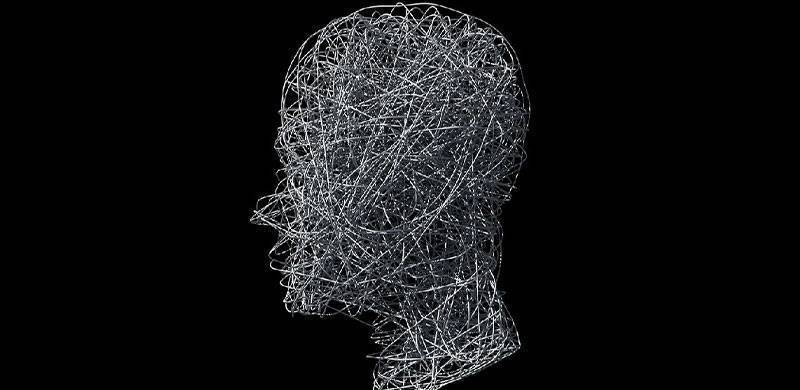
Metaphor is not a figure of speech; it is the figure of thought itself. Long before language discovered the rhetoric of beauty, it found the necessity of correspondence: the pulse of being seeking its echo in the world. To say that metaphor adorns language is a mistake of the intellect; metaphor does not embellish, it incarnates. Every act of naming is already an act of transference: a crossing from the seen to the unseen, from the immediate to the imaginable. The word tree, before it becomes a botanical sign, is already an event in the mind’s effort to translate sap into syllables.
From the earliest utterance to the most elaborate poem, metaphor marks that trembling instant when consciousness acknowledges its otherness and yet insists on unity. As Ricoeur wrote, the metaphor is not merely decorative substitution but semantic innovation: a rediscovery of reality through the act of saying otherwise. Derrida, with his deliberate paradoxes, pushed the argument further: all language, he suggested, is tropological drift, a ceaseless play of substitutions that undoes the illusion of literal meaning.
To inhabit language, then, is to inhabit metaphor. What we call thought is but the slow unfolding of this metaphoric energy, the mind’s way of binding the inexpressible to the expressed. Literature, in turn, becomes the highest ceremony of this binding: the place where metaphor, aware of itself, begins to dream. And it is precisely at this point that civilisations show their secret metaphysical temper, whether they embrace metaphor as the signature of divine play, or fear it as the symptom of irrationality.
Askari and the Fear of Metaphor
It is this fear that Muhammad Hasan Askari (1919–1978) diagnosed, with unsparing precision, in his essay The Fear of Metaphor, written sometime in the early 1950s. For him, the crisis of modern Urdu literature was not simply aesthetic but ontological. A civilisation that had once breathed through the rhythms of Persian imagination, where the rose and the nightingale were not symbols but states of being, had, under the disciplining hand of colonial modernity, lost faith in its metaphoric self. What Askari confronted was not merely a shift in literary taste, but the internalisation of a new metaphysics: the substitution of reason for imagination, utility for revelation.
To banish metaphor is to mistrust the very processes by which consciousness engages with life
In the nineteenth century, as he reminds us, the reformist impulse of figures such as Sir Syed Ahmad Khan and Maulana Hali sought to remake literature in the image of rational clarity. The colonised mind, dazzled by the intellect of its conqueror, came to believe that thought must be useful, style transparent, and emotion disciplined. Language was to be tamed into instrumentality. The ornate imagery of classical Urdu, its intoxicated metaphors, and its audacious play of correspondences were denounced as extravagance. The poetic became a riddle, the riddle a sin.
Askari reads this transformation not as the evolution of taste but as a psychic contraction. To banish metaphor is to mistrust the very processes by which consciousness engages with life. Behind the new creed of clarity, he saw a deeper fear, a fear of the irrational, of the unconscious, of the untamed energies that bind the human to the cosmic. The rationalist writer, he argues, builds “a fortress of intellect” to protect himself from the turbulence of instinct. But metaphor is precisely that turbulence made luminous; to fear it is to fear life.
Modernity and the Return of the Image
There is something hauntingly modern in Askari’s lament, for his argument echoes across cultures, the predicament of modernity itself. The Enlightenment’s demand for reason, clarity, and utility, once a heroic liberation, turned, in its excess, into a disavowal of the imaginative faculties that make experience whole. The same ailment that afflicted Urdu literature haunted the West’s own canon: the suspicion of the figurative, the mistrust of excess. In its drive for clarity, language forgot its original mystery.
Yet metaphor, like desire, returns precisely where it is forbidden. The modernist revolution in Europe, Flaubert’s obsessive precision, Joyce’s stream of consciousness, and Proust’s reverent metaphors of time were, in their essence, a rebellion of metaphor against literalism. The novel became once again a site of metamorphosis: objects were suffused with memory, gestures with cosmic significance. When Proust compared a tablecloth to an altar cloth, he was not being ornamental; he was restoring to the ordinary the aura of sacrament. The hotel, lit by the setting sun, became a metaphor for the secular religion of modern life, the holiness of the fleeting.
Askari’s insistence that metaphor fuses the inner and the outer, the conscious and the unconscious, places him curiously close to the European modernists he never sought to imitate. For him, metaphor is born from the same process that produces dreams: a reconciliation of opposing impulses, a transformation of experience into symbol. The writer who fears metaphor, therefore, is like one who refuses to dream, condemned to repeat, not to create.
Language as Metaphysical Body
But Askari’s claim reaches further than aesthetics. Beneath his literary polemic lies a profound anthropology of language. “Every phrase we speak,” he writes, “is, in fact, a metaphor. There is no such thing as language separate from metaphor, for language itself is metaphor.” Here he touches the deepest philosophical chord: that language does not represent the world; it recreates it. The so-called “literal” is merely a metaphor grown cold — the fossil of a once-living image.
To speak, then, is to reawaken what history has petrified. This insight aligns Askari not with the rationalist critics of his age but with the visionary linguists of both East and West. Likewise, in Heidegger’s sense, poetic language is the “house of Being”: it does not describe being, it allows it to appear. Askari’s genius was to intuit this metaphysical dignity of metaphor within the heart of Urdu literature, long before post-structuralism made similar claims in European theory.
Those who shrink from metaphor are, in truth, afraid of the forces of life
For him, metaphor is the site where the human reconciles with the cosmos — where love, humility, and imagination conspire to overcome the solitude of self. “Only one who can love truly,” he writes, “can use metaphor truly.” In this single aphorism, Askari fuses aesthetics with ethics, epistemology with eros. To write metaphorically is to love the world enough to find oneself reflected in its multiplicity. To fear metaphor is to recoil from that love, to prefer the safety of one’s rational cell over the perilous embrace of being.
The Decolonial Gesture
It is tempting to see Askari’s essay merely as a defence of the classical against the modern, of imagination against reform. But such a reading misses the philosophical daring of his position. Askari was not nostalgic; he was diagnostic. He understood that modernity’s crisis was not a matter of form but of perception — that we had mistaken clarity for truth, information for wisdom. His target was not Western literature itself (which he admired in its depths), but the colonial mimicry that reduced it to moral utility.
In this, his critique anticipates much of what postcolonial theory would later articulate: that cultural domination works not only through power but through epistemology, through the redefinition of what counts as “rational”, “useful”, or “true.” The Urdu reformers, by importing these categories uncritically, performed a kind of linguistic colonisation upon themselves. They translated not Western literature but Western consciousness, exiling their own.
Askari’s recovery of metaphor, then, is a decolonial act avant la lettre. It reclaims for Urdu and by extension for all languages of the “periphery” the right to opacity, to mystery, to the splendour of the irrational. His insistence that metaphor fuses thought and emotion, self and world, body and spirit, restores to literature its primordial vocation: to make experience whole.
The Courage to Dream
To understand the full audacity of Askari’s argument, one must recall his intellectual solitude. Writing in a time when literary criticism was turning into social commentary, Askari dared to write as if language were still sacred. His peers spoke of reform, progress, nationalism; he spoke of metaphor as the measure of life itself. In the midst of ideologies, he sought ontology. His tone, at once ascetic and impassioned, recalls a line of thinkers who believed that literature is not an ornament to civilisation but its conscience: a means of knowing what cannot be known otherwise.
His essay ends not with a plea for style but with a metaphysical warning: “Those who shrink from metaphor are, in truth, afraid of the forces of life.” The statement could have come from Nietzsche, had it not been so suffused with moral tenderness. For Askari, the fear of metaphor is the fear of transformation, of allowing the self to be remade by what it perceives. To live metaphorically is to accept permeability, to allow the world to enter one’s being.
In this sense, metaphor becomes both an artistic and a spiritual discipline. It requires, as he says, “two kinds of courage: the courage to face one’s unconscious, and the courage to step out of the cell of the self.” These are not literary virtues alone; they are existential imperatives. The poet, the mystic, and the lover all share this courage to cross thresholds without assurance, to let meaning exceed control.
Metaphor and the Fate of Civilisation
What makes Askari’s vision enduring is that it reclaims metaphor not as ornament but as ontology. In a world increasingly governed by algorithms and literalism, where even language strains toward transparency and speed, Askari reminds us that the health of a culture depends on its metaphors. A civilisation that ceases to imagine ceases to exist in any profound sense; it becomes mechanical, functional, dead.
Today, when the literary imagination is again threatened by the utilitarian logic of the market and the moralism of ideology, Askari’s voice returns with uncanny relevance. His “fear of metaphor” is no longer confined to colonial modernity; it has become our planetary condition. We have taught ourselves to mistrust ambiguity, to read everything as information, to measure language by its efficiency. Against this backdrop, Askari’s essay stands as a hymn to inefficiency to the luxurious, perilous play of imagination that keeps language alive.
Perhaps that is why his final invocation of love feels less moral than ontological. For love, too, is a metaphor that became flesh, the binding of self and other into mutual transformation. To love the world, in Askari’s sense, is to speak it metaphorically: to see in its contradictions a secret correspondence, to live within its multiplicity without fear.
To Live Metaphorically
If metaphor is, as Askari claims, the medium through which “man and universe dissolve into each other”, then to recover metaphor is to recover metaphysics itself, the courage to live within the symbolic order of being. The poet, in this view, is not a mere fabricator of images but a restorer of cosmic balance. He reconciles what philosophy divides: intellect and instinct, clarity and darkness, self and world.
The beauty of Askari’s insight is that it does not demand the rejection of reason but its transformation. Reason must be folded back into imagination, as form into substance. Only then can thought regain its humanity. In this, Askari stands as the Eastern counterpart of those Western thinkers who, in the ruins of positivism, sought a poetics of being from Heidegger’s meditations on poetry to Ricoeur’s hermeneutics of the symbol. But unlike them, Askari’s recovery of metaphor is inseparable from a cultural memory: from the long Persianate inheritance where metaphor was not a deviation from meaning but its most radiant form.
Thus, his defence of metaphor becomes, ultimately, a defence of civilisation of that subtle interweaving of reason and revelation, intellect and ecstasy, through which a culture speaks itself into being.
Askari’s Final Question
In the end, Askari’s essay asks us a question that extends beyond literature: What does it mean to live metaphorically? To answer is to admit that our very consciousness depends on the courage to inhabit likeness, to find in the other in language, in nature, in love a reflection of the self that is not self. The literalist lives in fear because he cannot bear this mirror. The poet, by contrast, lives in joy because he knows that to see metaphorically is to participate in creation.
Perhaps that is why, even as he wrote in prose, Askari remained a poet in thought. His sentences do not analyse metaphor; they enact it. They move between intellect and rapture, clarity and mystery as if language itself were seeking to remember its origin.
To read Askari now is to encounter not a critic but a metaphysician of imagination: a thinker who understood that literature, at its deepest, is the soul’s resistance to reduction. Against the tyranny of the literal, against the sterility of reformist reason, Askari affirms the oldest truth of all: that to speak is already to imagine, and to imagine is already to live.