

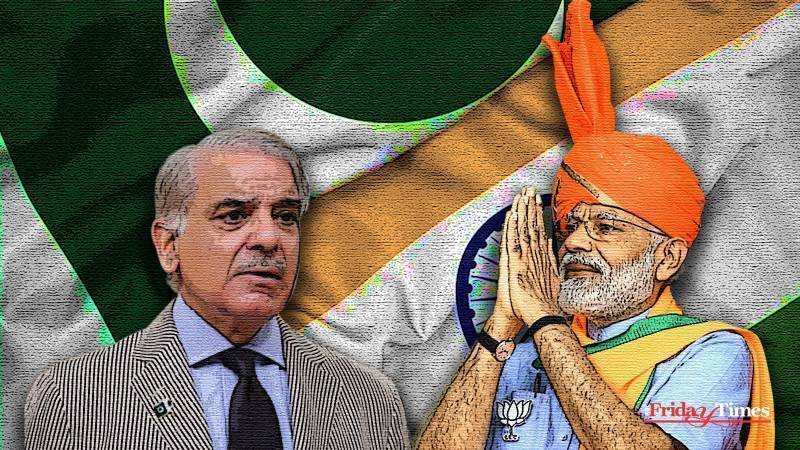
With nearly two billion people, South Asia stands at a historic crossroads. Rich in culture, resources, and a rising youth population, the region holds extraordinary potential. But that promise remains stifled by a persistent threat: the politics of religious division. Communalism—the weaponisation of religious identity for political gain—has become not just a symptom of dysfunction but a central feature of power in countries like India and Pakistan.
A recent deadly attack on tourists in Indian-controlled Kashmir has again brought the subcontinent to the brink, highlighting just how fragile peace can be. India retaliated with a series of airstrikes, dubbed "Operation Sindoor," targeting what it described as terrorist infrastructure in Pakistan-administered Kashmir and parts of Pakistan's Punjab province. Pakistan condemned the attacks as a "flagrant act of war," reporting at least 26 civilian casualties, including women and children, across various locations. Pakistan also claimed to have downed five Indian jets in response to the airstrikes.
When President Donald Trump misspoke that India and Pakistan have been at odds for “1,500 years,” he misstated history—but not entirely the mood. Though modern India and Pakistan were born from the 1947 Partition of British India, the seeds of division were sown earlier by colonial strategies like Britain’s infamous “divide and rule” policy. Today, however, it is homegrown political leaders who keep the divisions alive—for votes, for control, for power.
In a world increasingly defined by polarisation, South Asia has the chance to chart a different course. It must bury the politics of hate and build a future rooted in shared humanity
In India, the rise of Hindu nationalism, or Hindutva, has redefined national identity. Under the Bharatiya Janata Party (BJP), in power since 2014, religious polarisation has intensified. Muslims—India’s largest minority—have been subjected to discriminatory laws, mob violence, and inflammatory media rhetoric. Policies such as the revocation of Article 370 in Kashmir and the Citizenship Amendment Act (CAA) have sent a chilling message to India’s secular foundations.
The media, once a pillar of Indian democracy, often now acts as an echo chamber for majoritarian sentiment. Prime-time debates stoke religious paranoia, hate speech goes unchecked, and fringe voices dominate the public discourse. This isn’t just a journalistic lapse—it’s a strategy to erode democratic dialogue.
Pakistan, too, is ensnared by its own form of religious nationalism. Founded as a homeland for Muslims, the country has long struggled with defining who qualifies as one. Over decades, successive governments and military regimes have empowered hardline religious elements, often at the expense of minority groups. Blasphemy laws are used to persecute Christians, Hindus, and even fellow Muslims, while school textbooks often promote narrow, exclusionary interpretations of religion and history.
In both countries, communalism is not just a byproduct of democracy—it is a deliberate tactic for political survival. When unemployment rises or governance fails, religious scapegoating provides an easy distraction and a rallying cry. This has fostered a climate in which hate crimes and sectarian violence are no longer anomalies but the predictable outcomes of long-running ideological conditioning.
This climate of division also fuels the broader India-Pakistan rivalry, a decades-long source of instability in the region. Nowhere is this more evident than in Kashmir—a region claimed in full by both nations but controlled in parts. Since Partition, Kashmir has sparked three wars and countless military standoffs. India often blames Pakistan-based militant groups for cross-border attacks, while Pakistan denies involvement—further deepening mistrust.
Beyond military posturing, the Kashmir conflict represents something even more dangerous: the threat of nuclear confrontation. Both India and Pakistan have spent decades building up their nuclear arsenals and modernising their armies, making the stakes of every escalation potentially catastrophic. The people of Kashmir, caught between these two nuclear-armed neighbors, continue to pay the highest price—enduring militarisation, human rights abuses, and political disenfranchisement.
Yet history offers glimpses of a different path. Agreements like the 1966 Tashkent Declaration, the 1972 Simla Agreement, and the 1999 Lahore Declaration showed that diplomacy could triumph even after war. More recently, the 2019 opening of the Kartarpur Corridor—a visa-free route for Indian Sikhs to visit a sacred shrine in Pakistan—offered a hopeful moment of cross-border cooperation. These initiatives suggest that the people of South Asia are not inherently divided; they are divided by design.
What stands in the way of lasting peace is not culture or religion—it is the politics of fear. Peace requires compromise, and nationalist leaders often paint compromise as weakness. As long as hate delivers votes, peace will remain elusive.
But that future is not inevitable. South Asia needs not stronger militaries, but stronger democracies—ones that uphold pluralism, justice, and the rule of law. That means rejecting laws and media narratives that vilify minorities. It means reforming education systems that promote intolerance. And it means empowering youth to push back against the politics of division.
The next generation must demand more than peace as the absence of war; they must demand justice, dignity, and mutual respect. As Dr. Martin Luther King Jr. once said, “Peace is not merely a distant goal… but a means by which we arrive at that goal.”
In a world increasingly defined by polarisation, South Asia has the chance to chart a different course. It must bury the politics of hate and build a future rooted in shared humanity.