

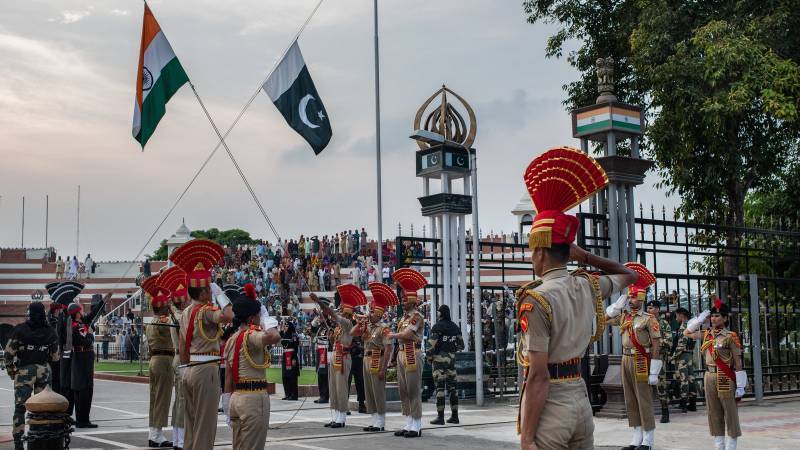
South Asia, one of the world’s most volatile fault lines, is once again engulfed in open military conflict. India and Pakistan—two nuclear-armed neighbors bound by contested borders and unresolved history—have moved beyond the Line of Control. What was once limited to diplomatic warnings and border skirmishes has become a dangerous military entanglement. This is no longer posturing. It is war.
The stakes of this war, however, stretch far beyond Kashmir or national pride. The geography of South Asia has never been passive. It is a pivotal junction in the global political economy—home to energy transit routes, emerging trade corridors, and critical food distribution networks. Any sustained disruption here risks ripple effects that will shake regional stability and reverberate across the world.
India and Pakistan sit at the crossroads of the Indian Ocean and Central Asia, flanked by the Gulf’s oil routes, China’s supply chains, and the agrarian heartlands of the subcontinent. Here, war threatens not only bilateral peace but the continuity of commercial flows vital to global markets. Tankers, trade vessels, and food supply chains traverse these maritime and land corridors. Instability here isn’t contained—it multiplies. This military entanglement has highlighted the unspoken historical, cultural, and traditional baggage of the past—unresolved and very much present and unhealed.
The war beyond the Line of Control is a symptom of deeper structural dysfunction: unresolved borders, weaponised memory, and the erosion of democratic debate
To understand this moment, we must confront the region’s inherited fault lines—those born of colonial partition and deepened by the politics of identity and exclusion. South Asia’s post-colonial journey has been marked by uneven development, contested nationalisms, and struggles over representation. The political identity of citizens—shaped by religion, ethnicity, language, and class—remains entangled in the trauma of 1947. The promise of democratic representation has often been subordinated to securitised narratives, border politics, and populist nationalism.
As curated nationalism takes center stage, it suppresses dissent, celebrates confrontation, and reframes calls for dialogue as betrayal. Both nations have fed generations on siege narratives that now fuel the fire. National identity has become inseparable from conflict, and the region’s wounds continue to be managed through military means rather than political healing.
And yet, amid this escalation, there is a concerning silence—from regional peacebuilders, civil society, and most deafeningly, from women advocates and feminist peace networks. This silence underscores the shrinking space for pluralist thought in the face of hyper-patriotic fervor.
Diplomacy remains the only viable off-ramp from this crisis. Leadership in both countries must recognise that this is not a winnable war. South Asia is home to nearly two billion people, major shipping lanes, and fragile political architectures. A continued military trajectory could collapse already stressed economies, displace millions, and ignite a broader confrontation.
The war beyond the Line of Control is a symptom of deeper structural dysfunction: unresolved borders, weaponised memory, and the erosion of democratic debate. Without a recommitment to dialogue—backed by real political will—the region risks sacrificing its future at the altar of historical grievance.
It is time to pause, reflect, and recalibrate. South Asia must not wait for the world to intervene in order to build peace. The global winds are shifting toward regionalism, and the region must rise to meet this moment with clarity and courage. The responsibility to pull back from the brink—and reimagine coexistence—rests with South Asia’s own political, civic, and intellectual leadership.
The region must exercise its agency for a collective future rooted in peace, not retaliation. Historical trauma must be navigated not through war, but through dialogue, cooperation, and memory that heals rather than divides. The world will not save South Asia. It must save itself. The road to peace, however difficult, remains the only path that does not end in ruin.