

Every year, the arrival of the monsoon completely changes Pakistan. Dry hills turn a vibrant green, seasonal streams come alive, and the smell of rain-soaked earth reminds us of nature's annual offer to rebuild what has been lost. Yet, in recent decades, this beautiful season has become a source of deep anxiety.
Across the country, climate change is making heavy downpours more frequent and intense, drastically increasing the risk of devastating flash floods for mountain communities like those in the Swat Valley.
The monsoon should not be viewed merely as an unavoidable natural danger; it is a season of shared responsibility. Every drop of rain presents a simple choice: it can become a destructive flood rushing down deforested slopes, or it can be captured by healthy hills to refill underground water supplies and sustain life.
Decades of cutting down trees, poorly planned roads, building too close to riverbanks, and ignoring traditional local wisdom have broken the land's natural ability to handle water. Nature is not taking revenge; it is simply reacting to the conditions we have created.
The Forest as a Natural Sponge
To understand how to fix this, we must look to how nature protects itself. Long before heavy concrete walls were built, healthy forests served as the ultimate flood-control system. The upper canopy cushions heavy rain, slowing the force of the downpour, while vast networks of roots grip the soil tightly, allowing rainwater to soak deep into the ground.
When forests disappear, this natural sponge collapses. Rainwater rushes violently over the hardened ground, washing away fertile topsoil and mud directly into mountain streams. For a mountainous region like Swat, trees are not a luxury; they are a vital life-support system that protects freshwater springs and keeps the valley safe. Prevention on the hillsides is always much cheaper than paying for disaster relief later.
The Innovation of the Seed Ball
Sometimes, the most powerful ideas emerge from the simplest observations. Nearly a century ago, Japanese farmer and natural farming pioneer Masanobu Fukuoka began questioning conventional agricultural practices. He observed that in undisturbed landscapes, forests regenerated themselves without ploughing, chemical fertilisers, or intensive human intervention. Seeds waited patiently in the soil until natural conditions favoured their germination.
Nature is not taking revenge; it is simply reacting to the conditions we have created through decades of cutting down trees, poorly planned roads, and building too close to riverbanks
Inspired by this, Fukuoka developed a simple but innovative technique: mixing seeds with clay and organic material, shaping them into small balls that protected the seeds from birds, insects, and harsh weather until rainfall softened the clay. This "seed ball" became one of the best-known practices of ecological restoration. Through his influential book, The One-Straw Revolution, Fukuoka inspired conservationists across the world to rethink humanity's relationship with nature.
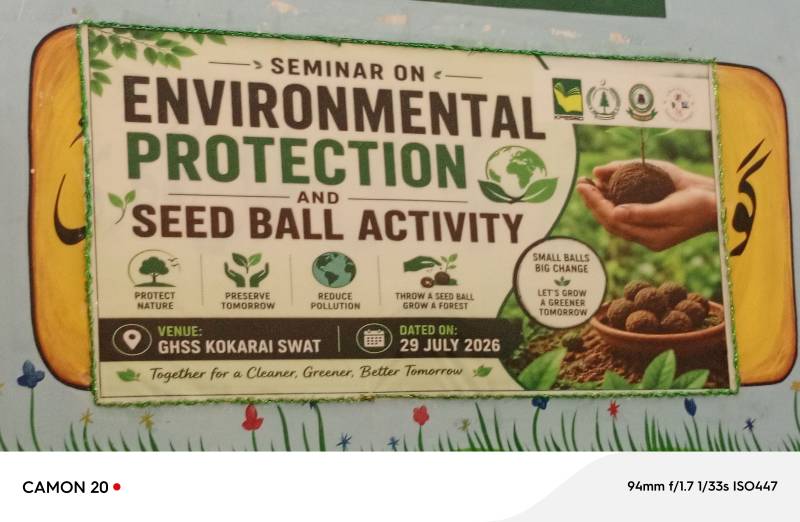
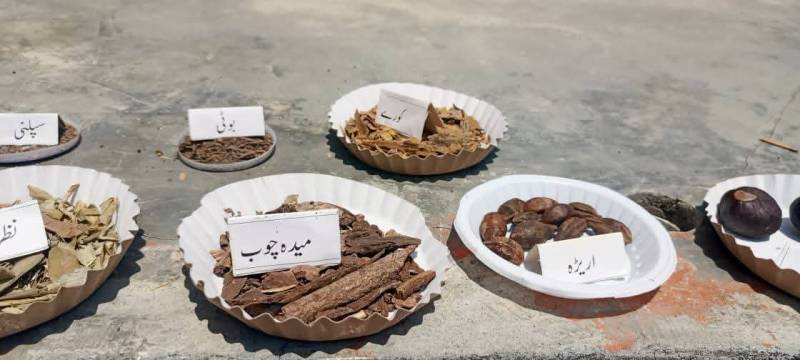
Over the decades, this technique spread worldwide because it is inexpensive, simple, and perfect for areas where conventional planting is difficult. Of course, seed balls are not magic; their success depends entirely on rainfall, soil, and protection from grazing. But the hills of Swat provide an ideal setting for applying this lesson. Many degraded slopes become inaccessible during the monsoon, making conventional plantation difficult and expensive. Carefully prepared seed balls containing indigenous tree and shrub species can help restore vegetation in these hard-to-reach areas.
The Kokarai Campaign
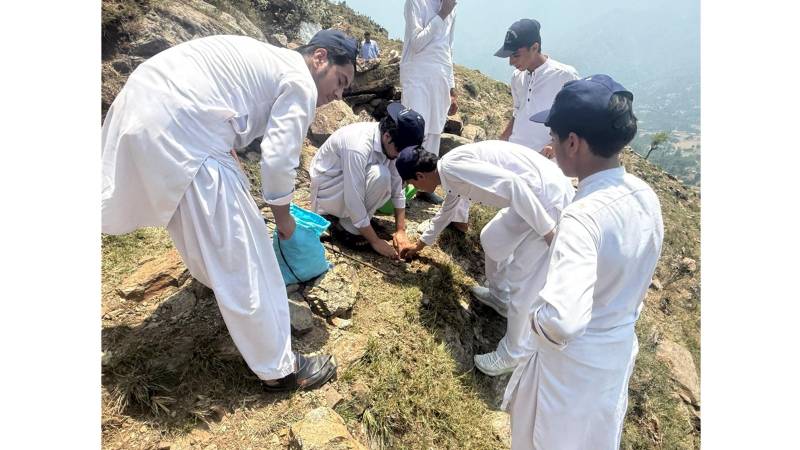
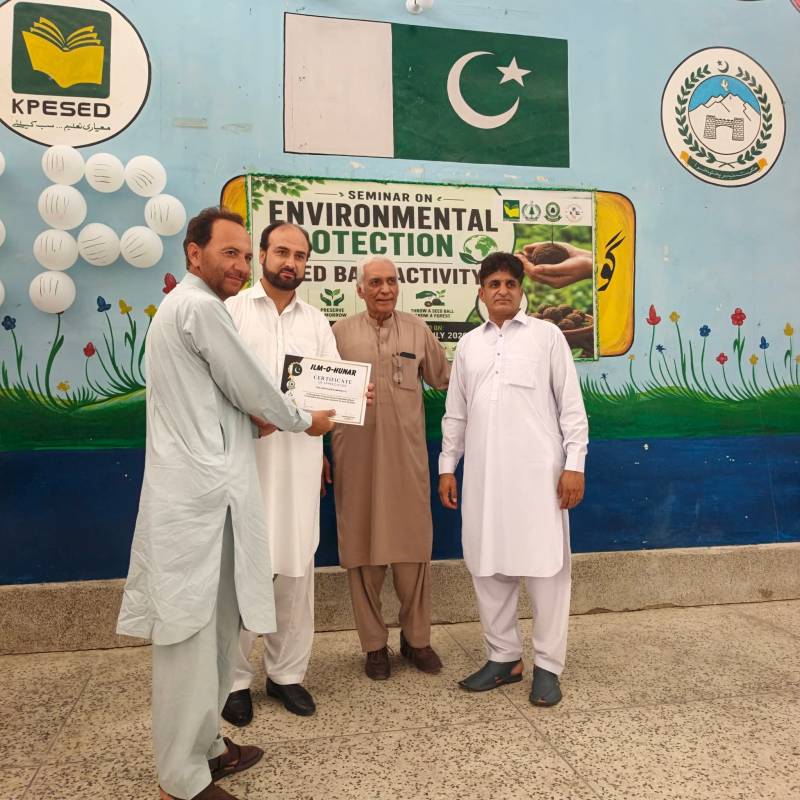
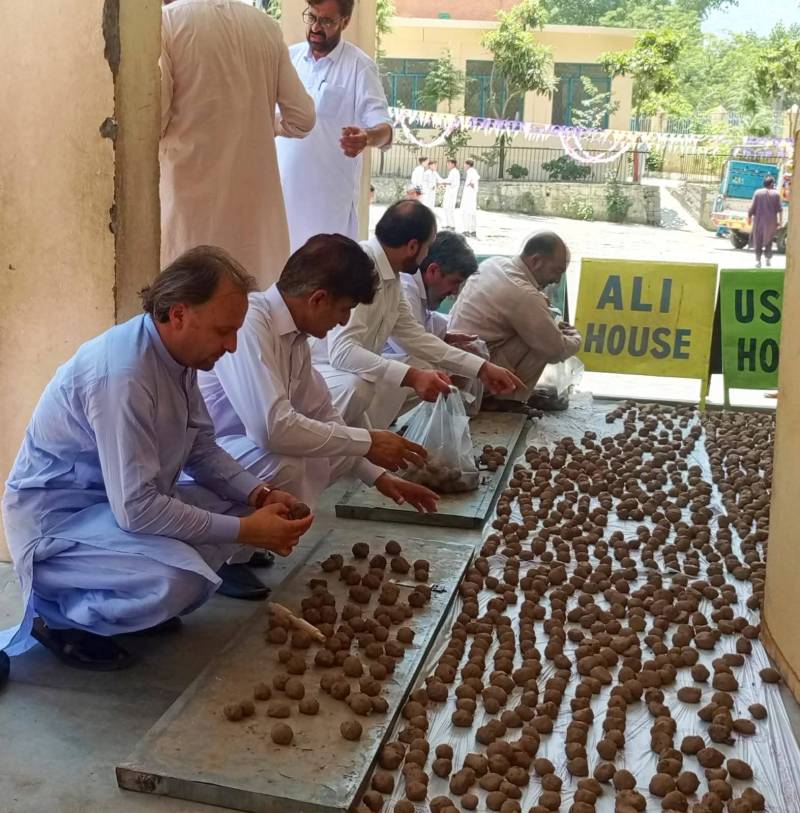
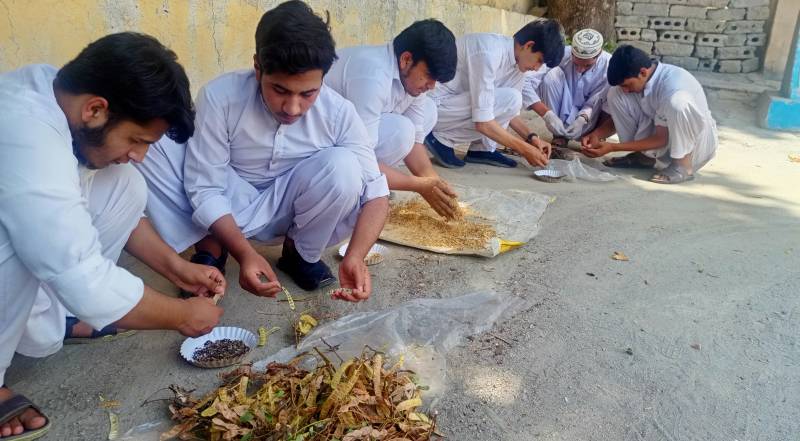
This is exactly what inspired the Community-Based Monsoon Plantation and Seed Ball Campaign at Government Higher Secondary School (GHSS) Kokarai. By distributing approximately 3,000 seed balls among students, teachers, and volunteers, the organisers encouraged young people to see themselves not merely as observers of environmental problems, but as active participants in ecological restoration.
What began as an effort by a handful of local citizens proved that meaningful change does not have to wait for large government budgets or international conferences. Perhaps the greatest lesson of the seed ball is philosophical rather than technical: it teaches patience. A seed does not become a forest overnight. It germinates quietly and grows slowly. Lasting change is achieved not through isolated campaigns, but through sustained commitment across many years.
The Spiritual Significance of Trees
Yet, the importance of trees extends far beyond science and economics. Across many cultures and religions, trees symbolise life, wisdom, generosity, and renewal. Civilisations have gathered beneath their shade to learn, reflect, and pray.
In Islamic tradition, this responsibility is underscored by a profound teaching of the Prophet Muhammad (peace be upon him): "If the Resurrection were established upon one of you while he has a sapling in his hand, then if he is able to plant it before he stands up, let him do so." This timeless wisdom reminds us that greening the earth is a duty of absolute hope, vital until our very last moments on earth.
In Buddhism, Siddhartha Gautama attained enlightenment beneath the Bodhi tree, making it one of the world's most revered symbols of spiritual awakening. In Islam, Christianity, Hinduism, Sikhism, and many other traditions, trees are repeatedly associated with divine blessings, compassion, and humanity's responsibility to care for creation. While these traditions differ in their beliefs, they share a common message: respect for nature is inseparable from respect for life. Perhaps this explains why people instinctively feel peace when walking through forests or sitting beneath a large tree.
Nature restores something within us that modern life often exhausts. A tree asks for little, yet gives generously throughout its lifetime. It offers shade without discrimination, fruit without expectation, and shelter to birds, insects, and people alike. If we begin to see trees in this broader light, plantation campaigns acquire a deeper meaning.
They are no longer about increasing the number of trees alone. They become investments in public health, clean water, biodiversity, economic resilience, cultural heritage, and the quality of life of future generations. The real question, therefore, is not whether we can afford to protect our trees. It is whether we can afford to lose them.
Empowering Young Women
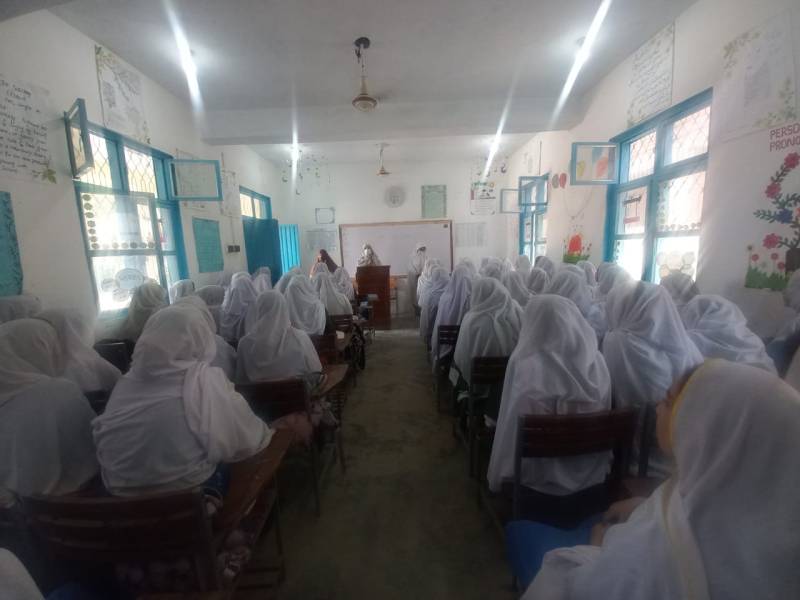
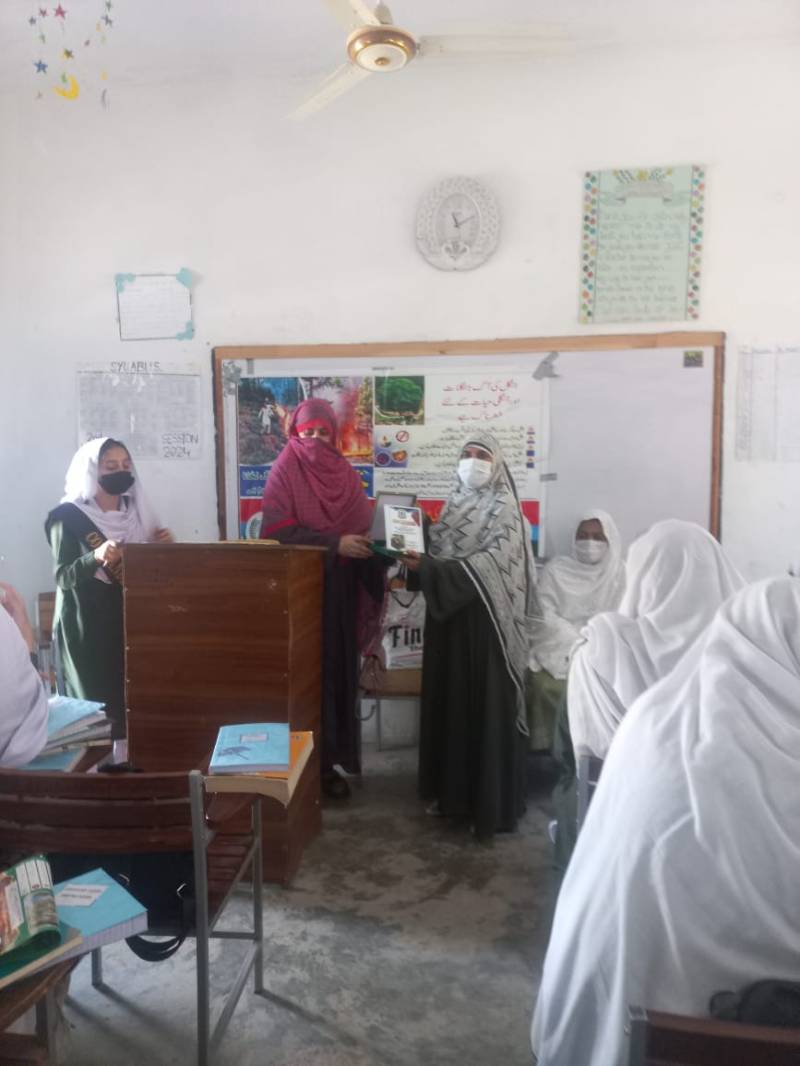
On the very same day, a parallel and equally vibrant campaign took place at the adjacent Government Girls Higher Secondary School (GGHSS) Kokarai. Working hand-in-hand with female mobilisers from the Forest Department, the young students actively engaged in preparing seed balls and learning the finer points of ecological care. This side-by-side effort by both schools demonstrated that environmental resilience is a shared duty, proving that when young women are given the tools to protect their land, the entire community's future becomes more secure.
For a local success like Kokarai to truly protect the region, it needs to spread across every village. This is where a beautiful opportunity opens up for the Malala Fund, an organisation with deep roots in the Swat Valley that understands how closely youth education, female empowerment, and community safety are linked. By supporting targeted environmental leadership programmes specifically for female students across public schools in Swat, the fund could turn a local spark into a valley-wide movement.
Bringing practical environmental training into girls' education is a direct path to a safer, greener valley. Funding could be used to train female students in the skills of raising plant nurseries, creating school-led community seed banks, and leading local conservation awareness. Giving young women these practical skills does something wonderful: it builds confidence and transforms students into the primary guardians of their home ecosystems.
When you teach a young woman how to restore the land, that knowledge stays inside the home and benefits the entire family, ensuring that practical care becomes part of daily life.
The Kokarai Declaration
The ideas discussed at Kokarai deserve to travel beyond the boundaries of one village. They deserve to inspire schools across Khyber Pakhtunkhwa and, ultimately, across Pakistan. Every school can establish a Green Committee. Every community can develop a nursery. Every village can conserve its indigenous seeds. Every student can become the guardian of a tree. Every monsoon can become an opportunity to heal the land.
This vision may well become known as the Kokarai Declaration—not as a formal government document, but as a community pledge to restore the relationship between people and nature. Its principles are simple:
- Treat the monsoon as a season of restoration rather than merely a season of risk.
- Make environmental fieldwork an essential part of education from primary school to university.
- Protect existing forests with the same determination used to plant new ones.
- Restore flood-affected landscapes through scientifically planned plantation.
- Conserve indigenous fruits, seeds, and traditional ecological knowledge before they disappear.
- Establish community nurseries and seed banks in partnership with schools and local communities.
- Encourage every single student to become the lifelong guardian of at least one specific tree.
- Build partnerships among government institutions, universities, civil society organisations, and international environmental networks to share practical experience.
These are not expensive ambitions. They require commitment more than capital, cooperation more than bureaucracy, and vision more than slogans.
History does not remember those who only complained about a crisis; it honours those who met it with courage and action. One village school cannot stop global climate change, and one rainy season cannot fix decades of environmental neglect.
But every great forest begins with a single seed, and every rushing river begins with a tiny mountain spring. Today, the monsoon places a clear choice before us. We can continue to count our losses and damage after every flood, or we can begin counting the hillsides we green, the springs we bring back to life, and the young minds we inspire. When we plant a tree, we are planting clean air, safer villages, better local livelihoods, and a safer future for our children. We are planting life.