

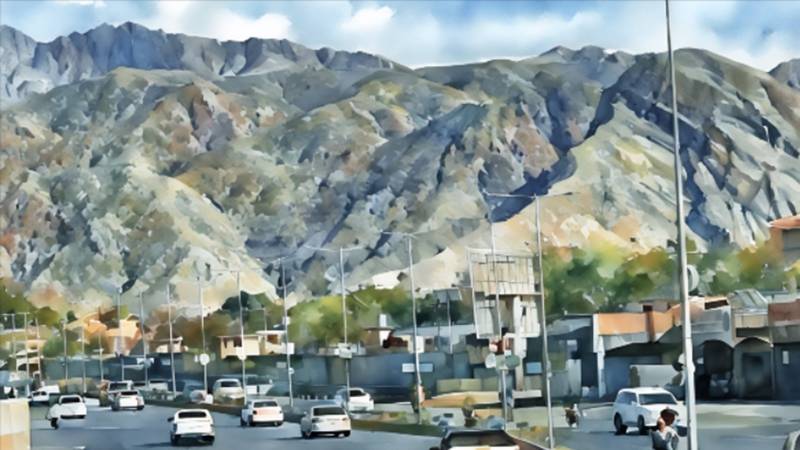
Writing for a major English language periodical, a writer sometimes gets the amazingly satisfying feeling that he has been heard. On the 11th of June, I wrote an article on neglect of Quetta and cited the example of Khaizi Chowk, where it was a daily torture to cross trough due to broken roads and traffic jams. I had mentioned a broken narrow bridge over Houri Nala, a little short of the airport, where only one truck or bus could pass due to a hole in the bridge. While passing through that road a month later, I was happily surprised to find that most of the broken road and the bridge had been adequately repaired. Work was in progress for widening the road and, perhaps, the bridge too. That was very heartening.
The chowk and the bridge had been in neglect for last many years. It is possible that the repair and widening had been in the plans and my article happened to appear at an opportune time. Nevertheless, this development work by the National Highways Authority (NHA) or provincial government, whosoever has undertaken it, needs to be commended here in this space where they had been criticised.
Now, a little about the city of Quetta.
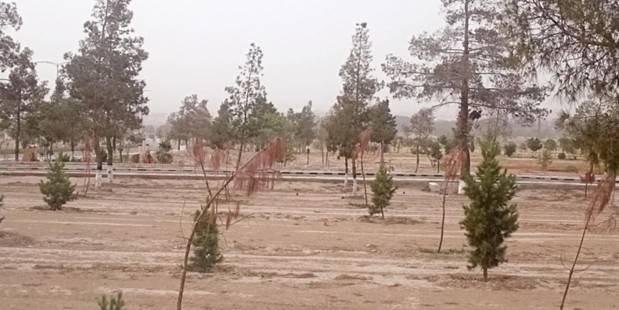
Quetta is a dry city – and it carries those looks. Its overwhelming complexion is light brown. There are light brown mud plastered houses, light brown hills and light brown open fields. Being bone-dry, the city has little natural vegetation, except in the cantonment. The greenery that is visible in isolated places, consists mainly of pine, olive and fruit trees that requires intense care and drip-irrigation. The hills around the region give a gloomy barren look. To use a much maligned idiom, not even a blade of grass grows on them. Even the cockroaches are dry brown. The soil, sucked off its moisture, gives a discouragingly whitish non-alluvial look. In other large cities of the country, a tree, once grown, requires little or no care for it to survive and flourish, but not in Quetta – where even years-old trees turn to dry sticks if not watered, and water is scarce.
The desert-like environment is conducive for scorpions, which abound in large numbers. In his short stay of under three months, this author killed about a dozen of them in the house, met many cases of scorpion bite and nearly became such a case himself. Even minor children learn to shake their clothes before wearing them, and not to walk barefoot in their homes. Luckily, these arachnids have a painful but a non-lethal sting.
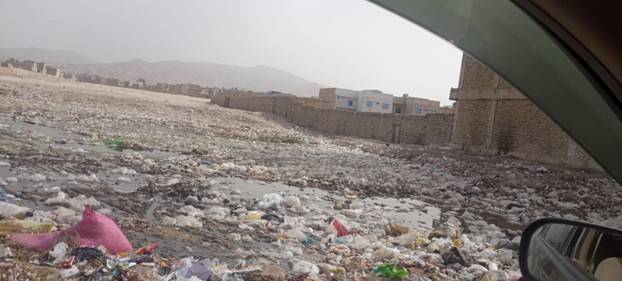
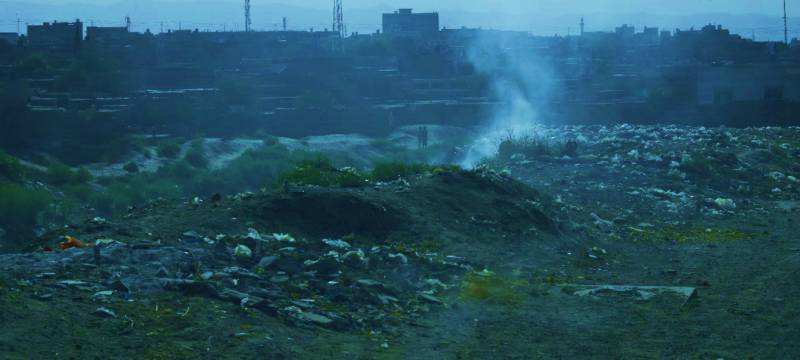
The city gives a gloomy look, accentuated with lack of care by the civic agencies. Its dusty outlook, piles of garbage, poor street cleanliness and broken roads are no compliment to the government. The difference with Peshawar, Lahore, Islamabad and parts of Karachi is very striking – and reflective of apathy on the part of federal and provincial agencies. Any Baloch youngster travelling from any of these cities to Quetta is bound to feel alienated. And such alienation gives birth to protests and rebellion. It is a neglected province and, therefore, conducive for unrest.
A lot has been done in the province by the federal government, especially through the armed forces, in the field of education. Thousands of Baloch boys and girls are studying in various educational institutions of country on fully paid scholarships. Balochistan has 12 cadet colleges, including one for girls in Turbat. It compares well with 9 such institutions in KP, 15 in Punjab, 14 in Sindh and just 12 in Bangladesh.
Even minor children learn to shake their clothes before wearing them, and not to walk barefoot in their homes. Luckily, these arachnids have a painful but a non-lethal sting
The province lags behind other parts of the country in higher education. It has ten public universities for its population of 12.5 million, as against AJK, which has an equal number of universities with less than half of this population.
It may be supposed by some that education opportunities should generate goodwill towards the state. However, education doesn't create loyalty. It empowers a person to ask questions. Some of these questions have difficult answers, if any at all. Education makes one cognizant of shackles on one’s physical and intellectual freedom. A classic example would be that of the Indian independence movement. The British began establishing schools and colleges in the 1870s. The products of these institutions didn't display loyalty to the British Crown. On the contrary, they started asking questions on the legitimacy of colonial rule, and these very students formed the vanguard of the independence movement.
In the early 1950s and 1970s, the Baloch insurgency was led by tribal elders. The current unrest is fuelled by the educated middle class, whose prime grievance if lack of economic opportunities. The names that snap headlines and the wrath of the state are medical doctors, PhDs, graduates and lawyers. The main troubled areas in recent news have been Khuzdar, Kharan, Kalat, Awaran, Turbat, etc, and along the RCD highway through Naushki, Dalbadin and Naukundi. The traditional disturbance-prone Mengal, Marri and Bugti tribes have been quiet. Some of these tribal leaders, in fact, have been trying to ride the bandwagon of protest movements to retain relevancy.
Hostile foreign powers are bound to take advantage of this dissatisfaction. This author recalls writing in 2006 about the then newly coined concept of CPEC and mentioning that foreign powers opposed to this project will never let the corridor become a reality, even if they have to bath Pakistan in its own blood. This prognosis still holds water. Disillusioned youth is fodder for foreign conspiracies.
To avoid unrest in Balochistan, the state has to provide a representative government in the province, develop infrastructure, provide education facilities, create occupational opportunities and enter into a dialogue with our youth. The issue of missing persons is very tricky that only a dialogue can resolve.
The division of Balochistan in category A, B and C areas is a continuation of colonial policies introduced by Sir Robert Sandeman. With only 10% of the province in category “A” areas where police has jurisdiction and 90% in “B” or “C” areas, where the Levies exercise control, the absence of government is evident. A huge amount of the budget is expanded on the Levies, whose performance, to say the least, is pathetic. The British had a system of carrot and stick in regulating the Levies force. Now it is only division of financial patronage with practically no responsibility. It is no wonder that in the aftermath of the Jaffer Express tragedy between Mach and Sibi, one of the first resolutions passed by the Balochistan Assembly was for the continuation of Levies system.
The Hori Nala passes through the city as an open sewerage channel. A similar nala in Lahore along Link Ferozepur Road has been covered and turned into part of the road a long time ago. In Karachi too, the Lyari and Malir rivers have been transformed into signal-free roads. Had it not been politicised, the Layye Nala in Rawalpindi would have been remodelled as a signal-free corridor connecting Ammar Chowk near the Chief of Joint Staff HQ in the city with the new GHQ in Islamabad. That project will, therefore, one day be materialised to the immense joy of this author as the final northerly section of the road passes a mere hundred yards from his house in G-10/3 Islamabad.
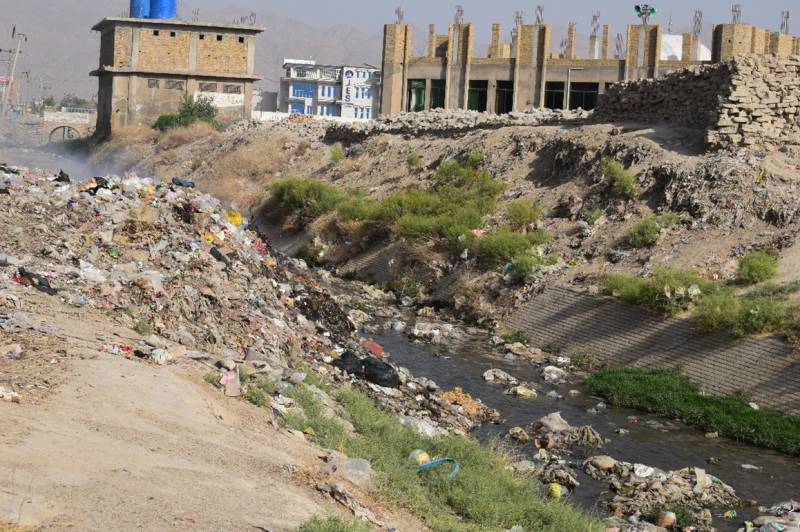
The Balochistan government needs to take ownership of the city and cover the Hori Nala by turning it to a much-needed road connectivity, besides improving the aesthetics of the area. There is also a dire need to decongest traffic.
Corruption is a serious issue here. Recently, the Chief Minister too counted corruption and (poor) governance as two of the biggest issues in the province. Common people are ill-served by poor governance. They have few economic opportunities. The border towns rely on smuggling of goods from Iran and Afghanistan. Most people that this author spoke to in the bazaars and markets, blame various agencies for extortion on the smuggling routes. Such perceptions, perhaps wrong, do not create harmony.
The timeline and extent of the Baloch insurgency has been narrated in detail here. Unfortunately, the recent Baloch militancy started to simmer in 2000 and gradually turned difficult since August 2006 when a clash resulted in the death of Nawab Akbar Bugti, some officers of law enforcement agencies, scores of tribesmen and soldiers. This is the longest phase of militancy in Baloch history, resulting in suffering by the common people. Workers from Punjab including labourers, tailors, auto workers, shopkeepers, teachers, etc have been fatally targeted by Baloch terrorists.
Terrorists deserve no leniency and must be pursued with vigour, but attempts must seriously be pursued for a negotiated settlement. Designating activists as terrorists is problematic. There is no denying that people here have genuine grievances and those who espouse these resentments must be heard. Nationalism has often been labelled, crudely and rudely, as treason. Unfortunate and wrong as that practice is, that subject needs separate attention.
As mentioned earlier, the city is short of water. The following paragraphs about water supply in the city are mostly referenced from a comprehensive 2022 study, whose contents are in harmony with other studies on the subject. Quetta is a dry city becoming drier by the year. Against a water requirement of about 65 MGD, it receives less than half. Its meagre average rainfall of about 10 inches per year and decreasing, doesn’t justify the building of reservoir dams in the surrounding hills. The study sites poor governance as one of the major causes for water scarcity. It stated that lack of institutional coordination, lack of knowledge, and interest among the political and government machinery on the question of water management issues was yet another reason for water scarcity in Quetta. It added that absence of coordination among the provincial departments including the Environmental Protection Agency (EPA), Public Health and Engineering (PHE), Irrigation, WASA, and Agriculture resulted in the mismanagement of available water resources.
When the British established the city in 1881, they found a rain and spring-fed freshwater stream 20 km in the north of the city. The Urak Valley, close to where the honour killing incident took place recently, is still green along the stream and supports large apple orchards and vegetables. The British directed the excess water to Hanna Lake, a depression within the Zarghun mountains. On a visit to the lake, this author found a decent amount of water where many families were enjoying boat rides and picnics on the shores. A secluded area has well-furnished government rest houses. The water level in the month of May had depleted but was expected to recharge during winter rains. The British harvested about 600,00 gallons of Urak water per day, of which half was allocated to the municipality, 175,000 to the railway and the rest to the cantonment, which was, at that time, much larger than the city that had a small population centred around the Mirri Fort.
In the early years of the city, an excellent karez system supplied water for consumption and agriculture. Karezes are watercourses that were fed water from a spring and took it to the fields and houses through underground channels. This preserved the water against evaporation in this extremely dry city. The tubewells have become commonplace and draw water at a very fast rate. The groundwater level now stands at over 600 feet and is depleting for the last fifteen years at an average rate of 25 feet per year. This depletion is irreversible as the rain is insufficient to recharge underground reservoirs at an equal rate. While construction of several small dams around the city are feasible, their implementation has been slow, and their success uncertain in view of dwindling rainfall. This implies that Quetta, like Kabul and Cape Town, shall run of water unless an innovative solution is implemented to augment water supply.
A much ambitious plan for water supply is to draw water from the Pat Feeder canal that begins at Guddu Barrage, and from Kachchi canal that begins at Taunsa Barrage, and pump part of their water through 3-4 hundred kilometres long pipelines to Hanna Lake storage area. Both projects would lift water from about 800 feet to 5700 feet AMSL through four or five pumping phases. These are technically and financially difficult projects. Pakistan has a poor record at implementing such projects. Relatively easy K4 project for Karachi city is still a work in progress for last several years. The Ghazi-Islamabad water supply scheme for the twin cities of Rawalpindi and Islamabad is still on the drawing boards for the last several decades. With this less than envious record, Quetta cannot hope to get any water from the Indus in near future.
Quetta, and Balochistan in general, needs better governance, fiscal responsibility, and ownership by the concerned quarters. It needs a healing hand. The people here must feel that the state is like a mother; kind, worried, forgiving, praying and always hopeful.