

As the world grapples with overlapping crises—from climate change to conflict and economic instability—a new and unsettling reality is emerging: nations are closing their doors. In recent years, a clear shift toward exclusionary politics, fortified borders, and the rise of unilateralism has been evident across the globe. This shift is not confined to one region; it spans continents, governments, and ideologies. From the deportation of Kashmiri Muslims in India to the return of Afghan refugees in Pakistan, and the militarised U.S.-Mexico border, these actions share a troubling synchronicity. Countries once hailed as champions of humanitarian values are increasingly prioritising sovereignty over solidarity.
India’s evolving treatment of Kashmir and its Muslim population epitomises this trend. The 2019 abrogation of Article 370, which revoked the special status of Jammu and Kashmir, marked a significant political shift. Since then, allegations of human rights violations, demographic manipulation, and the suppression of dissent have mounted. Tensions reached a new high after the April 2025 Pahalgam attack, which triggered a harsh security crackdown on Kashmiri Muslims. Mass detentions, demolitions, and deportations to Pakistan, though limited, raised fears of statelessness.
India’s subsequent suspension of the Indus Waters Treaty with Pakistan marked a further break from diplomatic norms, signalling a shift toward assertive regional control. These developments, coupled with the Citizenship Amendment Act (CAA), point to an increasingly exclusionary narrative—where religion and regional origin are used to define who belongs, and who doesn’t.
What remains urgent is the need to rebuild the narrative of global responsibility—not just for refugees and stateless people but also for the future of pluralism itself
In 2025, during President Donald Trump’s second term, the U.S. initiated a harsh immigration crackdown driven by Project 2025—a policy blueprint aimed at institutionalising Trump-era immigration measures. This included mass deportations, forced migration, and the rapid expansion of detention infrastructure. Executive Order 14159, signed in January 2025, expanded expedited removals and cut federal funding to sanctuary jurisdictions. Operation Safeguard, launched soon after, saw over 500 arrests of undocumented migrants in significant cities. The administration also terminated humanitarian parole for over 500,000 Cubans, Haitians, Nicaraguans and Venezuelans, expanded the Guantanamo detention centre, and pushed for military involvement in immigration enforcement. Additionally, more than 100 Venezuelans were deported without due process, raising alarm over human rights violations and democratic erosion.
Pakistan, a longstanding host to one of the world’s largest refugee populations, faces its own set of challenges. With millions of Afghan refugees living across the country, the strain on resources and changing security dynamics have prompted efforts to encourage repatriation. While Pakistan’s approach is shaped by regional realities and the evolving situation in Afghanistan, recent repatriation waves reflect a broader global pattern: governments tightening control over who belongs and who doesn’t. The effort is not one of cruelty, but one of coping with uncertainty—an uncertainty shared by many nations navigating post-conflict, post-pandemic realities.
These actions signify a departure from the decades-long trend of globalisation, where open markets and multiculturalism were considered the path forward. Instead, economic nationalism, security concerns, and identity politics are now regaining centre stage. The policies of exclusion currently being enacted point to a broader shift toward national retreat, which starkly contrasts the ideals of global cooperation and inclusion that once defined the international order.
At the heart of this global retreat lies a fundamental question: Who gets to belong? Once a stable identity marker, citizenship is now subject to political recalibration. Refugees, migrants, and marginalised groups are increasingly caught in legal and existential limbo.
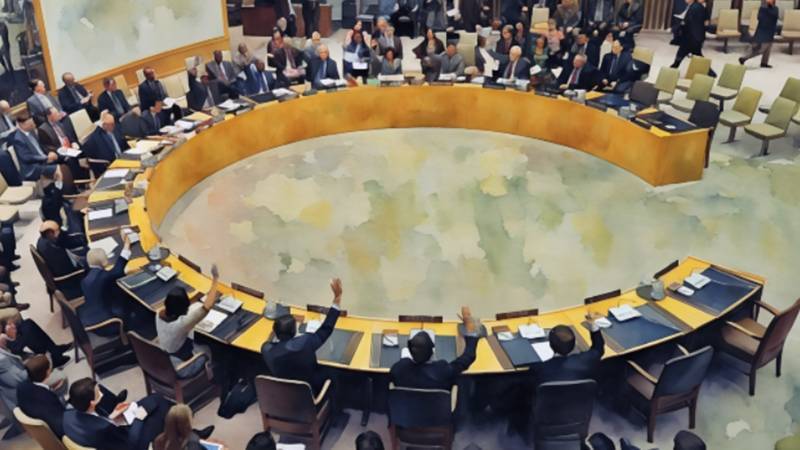
International institutions—from the UN to regional alliances—have struggled to respond effectively. Whether due to political paralysis, funding limitations, or shifting global power dynamics, the protective net for displaced populations is fraying, leaving millions vulnerable to exploitation and dispossession.
Despite this bleak picture, there are signs of resistance. Diaspora communities, human rights defenders, and civil society organisations are fighting back. In South Asia, grassroots movements are shedding light on deportation practices and religious discrimination. In the West, migrant-led advocacy challenges the prevailing narratives of exclusion and pushes for a more inclusive discourse on belonging.
What remains urgent is the need to rebuild the narrative of global responsibility—not just for refugees and stateless people but also for the future of pluralism itself.
The current trajectory points toward a world increasingly divided—not just by geography but also by ideology and identity. As borders rise, empathy recedes. As nationalism grows, multilateralism weakens. And as states unilaterally redraw the lines of citizenship, the fundamental ideals of human rights are under threat.Yet, in this moment of global retreat, we must ask: Will we choose walls or windows? Exclusion or empathy? The answer will define the 21st century—not just for the displaced, but for all of us.