

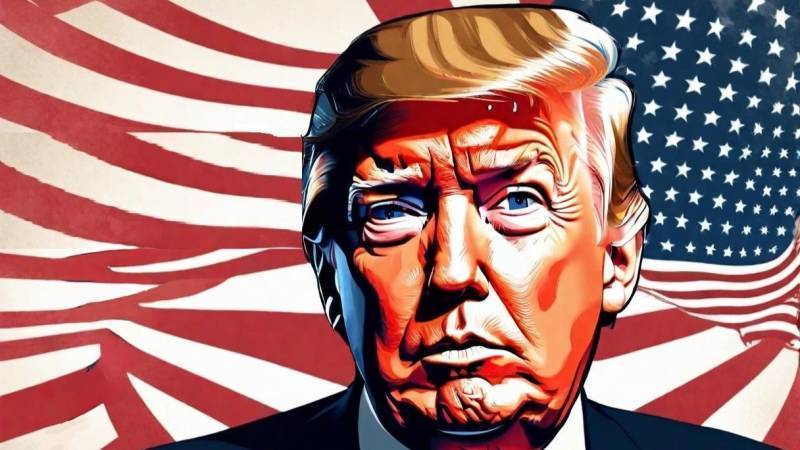
It has become increasingly apparent that the United Nations, once the premier platform for multilateral dialogue, has been overshadowed by the imposing presence of a single figure: Donald Trump. In the realm of international diplomacy, it now feels as if the stage lights have dimmed on the collective chorus and instead spotlight one man delivering his own lines in his signature style.
Israel’s delegation is currently in Qatar to finalise the ceasefire agreement, while Benjamin Netanyahu is travelling to Washington, seemingly just to hear what Donald Trump has to say. Trump wants a ceasefire, and he is likely to get one. How much else he demands, and how far others are willing to go, remains an open and unanswered question.
Now back to Trump’s personality trait. Take, for example, his recent comments addressing the leaders of Iran and Israel and their violations of a ceasefire which was declared by him on his Truth Social platform. While he is well known for his brash, unconventional delivery, his phrasing this time was curiously uncharacteristic. Even amid frustration or tension, one expects Trump’s usual bombastic tone. However, what we witnessed was a departure from his typical rhetoric—not necessarily softer, but oddly restrained, yet profane. This appears to be the end of politics for Netanyahu, as history will remember what the President of the United States said.
Often, people search Trump’s words for hidden intent or strategic ambiguity. But trying to find coded messages in his statements is usually a fruitless task. When questioned about his meeting with Pakistan’s Chief of Army Staff, Field Marshal Syed Asim Munir, Trump offered a simple rationale: he wanted to thank the general for not going to war with India. There was no elaborate justification, no carefully framed narrative—just a straightforward comment that left analysts grasping for deeper context that may not even exist.
Listening to Trump can feel like reading a deceptively unadorned language, lacking poetic restraint yet layered with rhythm, cadence, and deeper intent
Similarly, in response to a question about Iran, Trump remarked that Pakistanis "know Iran very well, better than most," adding that “they’re not happy about anything.” He noted that while their relations with Israel weren’t hostile, they did understand both countries, and Gen. Asim seemed to agree with his assessment. Once again, the words were deceptively plain, yet they hinted at complex geopolitical undercurrents—or perhaps simply revealed a conversational observation with no strategic layers at all.
This pattern underscores one of Trump’s most intriguing characteristics: his ability to speak in ultra-simple terms while conveying a strange depth that either captivates or confounds his audience. He avoids jargon. He rarely veers into diplomatic nuance. Instead, when confronted with difficult or leading questions, he responds with directness—sometimes to the point of sounding almost naïve. And yet, these seemingly unsophisticated replies often carry significant weight.
At the recent G7 Summit in Canada, a journalist asked Trump about a possible trade deal. His reply was classically Trumpian: “I am a tariff man, and tariffs are good.” Such a declaration, bare-bones as it was, encapsulated his economic philosophy and simultaneously sparked economic debates across several nations.
Another striking quality is Trump’s frequent disregard for the conventional advisory apparatus. Where many global leaders retreat behind policy advisors when caught off-guard or challenged in press conferences, Trump marches ahead unaided, relying instead on his instincts and well-worn talking points.
One of his favourite narratives is that he, personally, helped broker a ceasefire between the nuclear-armed neighbours India and Pakistan. This claim has infuriated New Delhi, which vehemently denied that U.S. mediation played any role. Yet Trump has remained unmoved, reiterating that his involvement made the difference.
This simplicity, often brushed off as theatrical or unserious, has nonetheless shifted dynamics in global politics. It resonates with audiences who find traditional diplomacy too opaque and guarded. At times, it has even yielded tangible outcomes. Take the escalating Iran-Israel conflict. Many believed no mediator could pierce the hostility. But some now credit Trump’s unique rapport with the players involved as a catalyst for the latest de-escalation.
Listening to Trump can feel like reading a deceptively unadorned language, lacking poetic restraint yet layered with rhythm, cadence, and deeper intent.
Whether one sees him as a disruptive force or an unorthodox peacemaker, Trump’s communication style continues to demand attention. He has redefined the relationship between message and meaning, presenting the former in soundbites and letting the latter ferment in public discourse. That may not be the way of seasoned statesmen, but it has, somehow, become the new face of diplomacy—or lack thereof.
Looks like he is back to being a contender for the Nobel Peace Prize yet again—if the Gaza ceasefire goes through.