

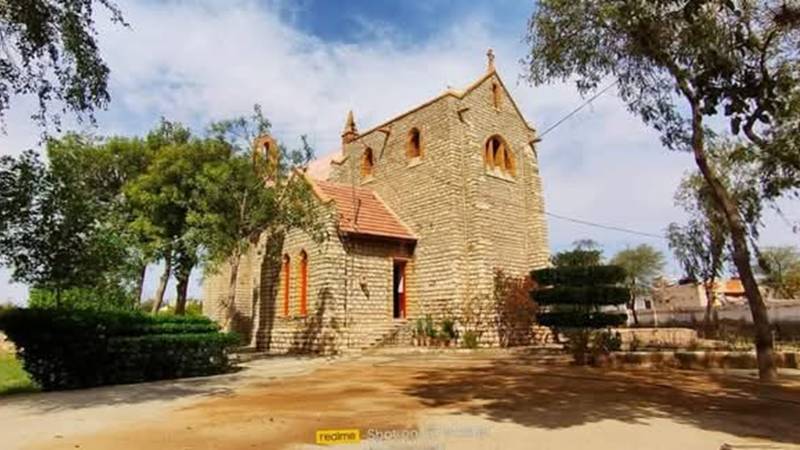
Over the past few years, I have had the opportunity to visit various cities in Sindh for training and workshops. The fragrance of Sindh’s soil and the deep devotion of its people to their land were unique aspects that intrigued me. During my travels in search of life purpose, discovering the city of Kotri was a delightful experience, and visiting Christ Church Kotri was a remarkable adventure.
Built on 22 December 1846, Christ Church is located in Railway Colony, Khanpur Road, Kotri District, Jamshoro, Sindh. It stands as a historical symbol of faith, dedication, and cultural heritage for Christians in Pakistan. Nestled in the small town of Kotri near the Indus River, this church has served as a spiritual centre for generations of local Christians. Its structure is made of stone, while its roof is entirely wooden. Initially, the church was reserved exclusively for British military personnel and European travellers, but later, a pastor opened its doors for the local Christian community.
Built in 1846 for British military and railway personnel, Christ Church Kotri is considered the first Protestant church in Pakistan
At that time, Kotri was a renowned port and trade hub on the banks of the Indus River. The church was built by a British mechanical engineer employed in the railways. It is said that he resigned from his railway job, returned to Britain, and later came back to Sindh as the pastor of Christ Church, learning the Sindhi language. He was known for his famous saying, “The Church is the bride of Christ,” which he translated into Sindhi as “ڪليسياء مسيح جي دلہن آھي”.

The church's design was created by an Irish architect, which is why it resembles Christ Church in New Zealand and Scotland.
Sindh’s First Protestant Church
Initially, railway and port employees used to worship together in this church. Christ Church Kotri is the first Protestant church in the region, and, according to the book History of the Church of Pakistan; it is the first Protestant church in Pakistan. Today, it is under the Diocese of Hyderabad, Church of Pakistan.
The Rt Rev Kaleem John, Bishop of the Diocese, highlighted the church's significance:
“Christ Church Kotri was built in 1846, entirely with stone. It was originally constructed for British officials, employees, and their families working for the Sindh Railway Company and the Indus Steam Flotilla. The church’s design, particularly its prominent Lancet Arch, is believed to be influenced by a church in Aberdeenshire, Scotland.”
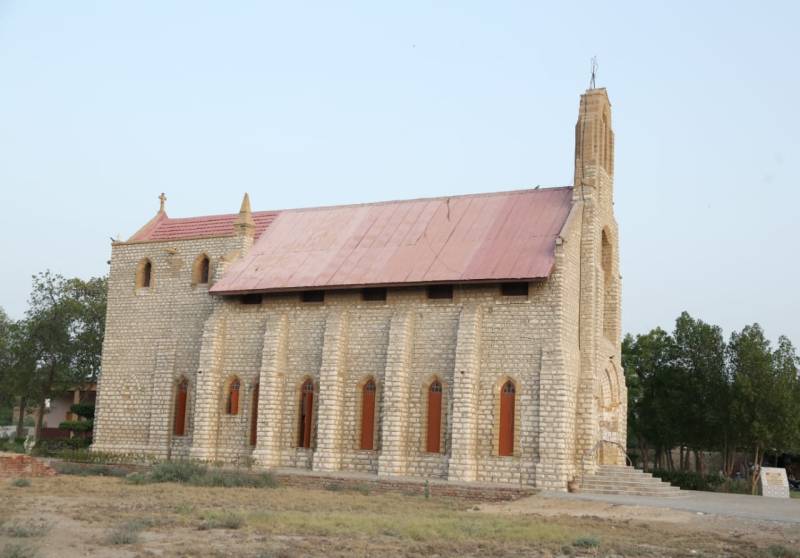
Before the partition of South Asia, Christ Church was under the Diocese of Bombay. After 1947, it came under the Diocese of Hyderabad, Church of Pakistan. The church was renovated in 1987 to maintain its original form. It is not just a place of worship but also a masterpiece of history and architecture. The Department of Archaeology and the Government of Sindh must take adequate steps to preserve its historical significance.
A Legacy of British Architecture
Rev Shoaib Paulos, the presbyter-in-charge of Christ Church Kotri, shared some historical insights:
“In 1843, when General Charles Napier defeated the Amirs of Sindh at Miani and Dadu, he took control of Sindh. In celebration of his victory, he had this church constructed—the first Anglican church of the British Raj in Sindh. British officers and railway employees used to worship here. The church is entirely built from carved stones, and its roof is made entirely of teak wood, still preserved in its original condition today.”
It is appropriate to call Christ Church Kotri Pakistan’s oldest church and Sindh’s first church. It is said that at the time of its construction, Kotri had a population of 8,000, including around 400 British residents. Today, about 70 people still worship here regularly. Completed on 22 December 1846, this 178-year-old church remains a symbol of interfaith harmony and religious tolerance. Visitors from different faiths, including Muslims, Hindus and Christians, come to admire its beauty.
Christ Church Kotri also hosts religious and social programs, welcoming Muslim, Hindu and Christian participants in a spirit of harmony and brotherhood. The church community has played a significant role in Pakistan’s progress and prosperity.
British Architectural Influence
Christ Church is a significant landmark of Sindh’s Christian history, representing the presence of Christianity in the region and its role in Sindh’s cultural fabric. Shamim John, the host of the renowned TV program “Churches of Pakistan”, shared:
“Christ Church Kotri was the first Anglican church built by the British military for worship. It was the first church in this region, constructed in 1846. Its architectural style is Gothic Revival, reflecting British architecture and culture. Through this style, Britain introduced European architecture to the region.”
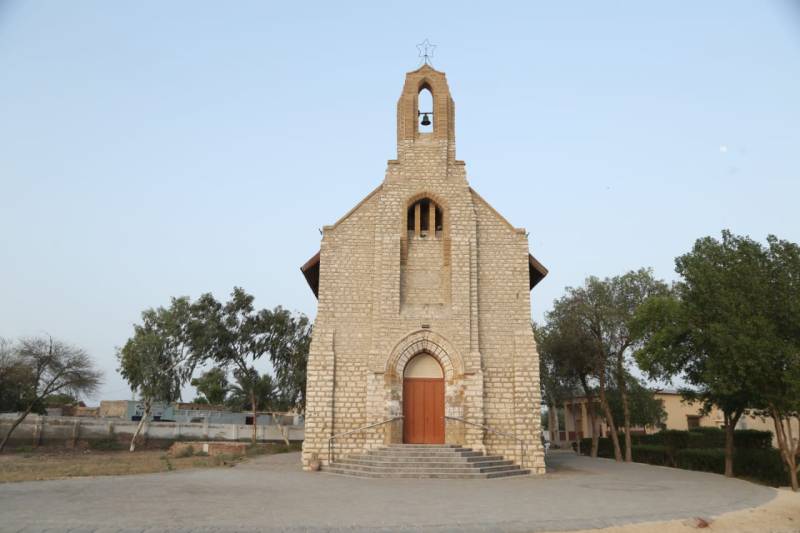
Key features of Gothic Revival architecture in Christ Church include:
- Pointed arches, supported by columns extending outward to strengthen the structure.
- Grey stone, commonly known as Taxila stone, used in churches across Punjab.
- Goldenia sandstone (also known as Guzri stone), used in Sindh’s churches, including Christ Church Kotri.
- Ventilated windows strategically designed to provide natural light and airflow in an era without electricity.
- Tent-like roof structure, a hallmark of British cultural and architectural influence.
Despite its historical importance, Christ Church Kotri faces numerous challenges. The Government of Sindh and relevant authorities have now taken some steps for its preservation. The church’s boundary walls are in a deteriorating condition, and its roof has suffered severe damage. During rainfall, water leaks into the church and its surroundings remain unpaved. Now roof is repaired, the roads leading to the church are still unconstructed. Given its rich heritage, the government must collaborate with the church administration to ensure its preservation. The Christ Church still needs security cameras, a solar system, and a water filtration plant.
As I left the church on a cold January evening, a sense of peace and serenity enveloped me. Standing near the Indus River, I felt as if its soil whispered to my soul:
“You are fortunate to have inherited this rare, unique, and ancient treasure that the world admires. Yet, sadly, due to religious intolerance, social alienation, and collective apathy, we have failed to appreciate its true value.”