

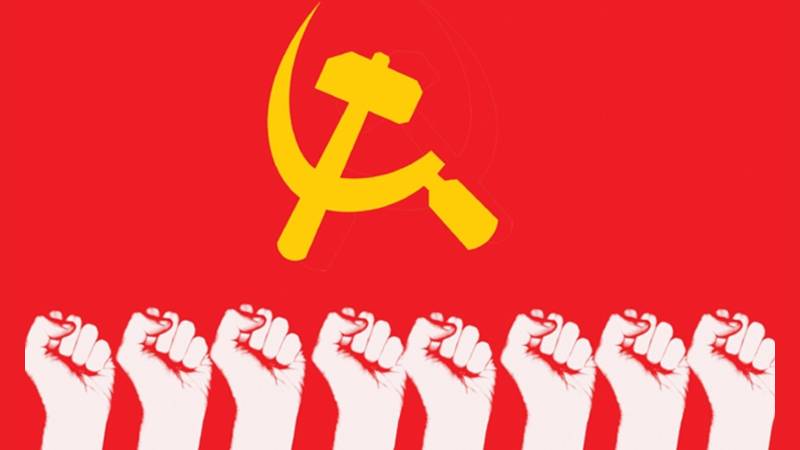
The history of leftist politics in Pakistan is rarely acknowledged and largely forgotten. What remains is a fragmented legacy, scarred by decades of brutal repression. From the country’s earliest days, leftist movements tried to carve out space among intellectuals, students and trade unions, only to face persistent state suspicion and hostility. The Communist Party of Pakistan, founded in 1948, was the first to sound the alarm. Within six years, it was banned, its members hunted, its presence buried. The charge? Conspiracy against the state. The truth? A challenge to elite supremacy. Even under pressure, leftist ideas survived. The Progressive Writers’ Movement became a key outlet, as did student groups like the Democratic Students Federation (DSF) and later the National Students Federation (NSF).
The 1970s offered a brief but hopeful respite. Zulfikar Ali Bhutto’s Pakistan People’s Party (PPP) rose to power on a populist platform centred around the slogan of ‘Roti, Kapra, Makaan’ (Bread, Clothing, Shelter). The PPP postured itself as the voice of the people, but the mask slipped quickly. When confronted with a truly leftist force, the National Awami Party (NAP), which dared to demand socialism, secularism and provincial autonomy, Bhutto and the state did not hesitate. NAP was declared an enemy. Balochistan was militarised. Leaders were jailed.
Then came 1977 and with it the long shadow of General Zia-ul-Haq’s dictatorship. Backed by Cold War dollars, Zia launched a broad campaign against the Left. Islam was weaponised not for spiritual reform but for ideological annihilation. Socialism was declared heresy. Students were silenced. Trade unions dismantled. Education turned into indoctrination. Dissenters were whipped, tortured, and disappeared. An entire generation was raised to despise secularism and socialism. The infrastructure of the Left was methodically dismantled. This era redefined Pakistan’s political and cultural identity for decades.
After Zia’s death and the collapse of the Soviet Union, leftist politics in Pakistan faced an existential crisis. The PPP, now fully integrated into the neoliberal machine, gutted whatever was left of its socialist origins. “Democracy” returned, but it was democracy without dissent, elections without ideology. What remained of the Left was scattered across academia, NGOs and fragile grassroots networks. The rise of identity politics, fractured by ethnic and sectarian fault lines, further eroded class-based movements.
The Left cannot afford to borrow the aesthetics of protest without confronting the machinery of power
By the 2000s, a new order had settled in: neoliberalism disguised as democracy, where IMF diktats replaced people’s needs and privatisation was passed off as reform. The formation of the Awami Workers Party (AWP) in 2012 was less a revival and more a desperate attempt to salvage what was left. Electoral victories were absent, but the party persisted. The Haqooq-e-Khalq Movement (HKM) echoed this energy, advocating for health, education and economic justice. But let us not romanticise these efforts. Though courageous, they remain on the political periphery.
The consequences of the Left’s marginalisation are not abstract. Without strong leftist advocacy, the working class is left voiceless and vulnerable. Trade unions lie hollowed out or co-opted; worker protections have steadily eroded. The working-class resistance is often fragmented, sporadic and easily suppressed. Economic inequality has deepened under successive regimes that have embraced privatisation, deregulation and IMF-mandated austerity. The liberal elite remain smug, self-congratulatory and complicit. Their comfort rests on a system that perpetuates inequality, repression and violence. They quote Faiz but side with the capital. When faced with real demands such as land reform, labour justice or demilitarisation, they recoil.
If there is any future for the Left in Pakistan, it will not emerge from drawing-room debates. It will emerge from the ground, but this will not be quick. What is required is patient, principled and persistent organising; coalition-building that transcends ego and sectarianism. And above all, the courage to confront power even when it comes disguised as democracy. The Left cannot afford to borrow the aesthetics of protest without confronting the machinery of power. It must speak plainly about land and labour, about capital and coercion.
The challenges facing the Left in Pakistan remain formidable. A state that exploits its citizens and a deeply polarised society leave little room for easy victories. Although a broad revival appears distant, steady grassroots efforts and principled opposition could begin to carve out spaces of resistance for those left behind by mainstream politics and the political parties that have consistently failed them. The future may be uncertain, but the struggle for justice remains possible.