

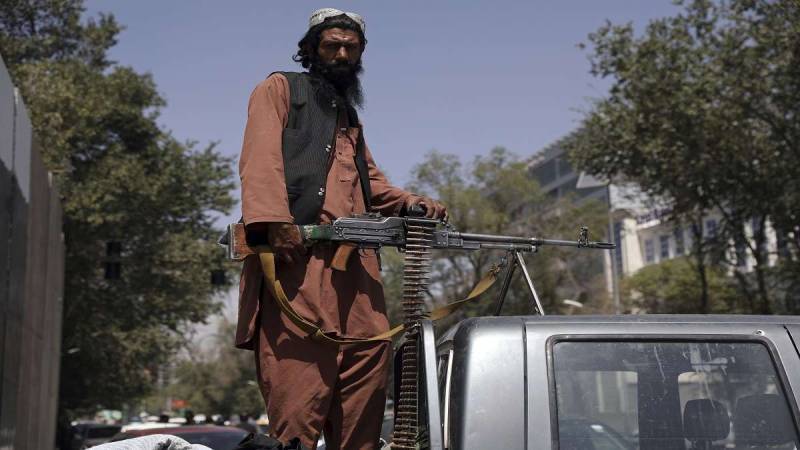
The recent reports of a ceasefire between the Tehrik-i-Taliban Pakistan (TTP) and tribal elders in Bajaur, facilitated by a government-backed "Peace Committee", have raised alarms across Pakistan—not just in the scenic valleys of Khyber Pakhtunkhwa. The so-called Bajaur Amn Jirga—presented as a tribal initiative—has reportedly reached a temporary arrangement with the TTP to evacuate “civilian areas”, while promising further negotiations. But beneath this façade of dialogue lies a troubling pattern of appeasement and abdication.
According to a Dawn report published on August 4, 2025, the third round of negotiations between the Amn Jirga and the TTP concluded with both parties agreeing to a ceasefire. The militants pledged to vacate civilian areas but did not commit to leave Bajaur entirely. With no mention of disarmament or reintegration, the ceasefire appears more a temporary spatial compromise than a path to lasting peace.
More troubling is the government’s silence. There is no clear statement from the state clarifying its role, the terms of the agreement, or any plan for monitoring compliance. What makes this indifference even more perplexing is that Operation “Sarbakaf” is ongoing in Bajaur—an operation that the Khyber Pakhtunkhwa Chief Minister himself initially opposed.
Militancy is not confined to Bajaur—it has engulfed much of Khyber Pakhtunkhwa. By striking a deal solely in Bajaur, the grievances of other affected districts remain unaddressed. If anything, the arrangement reflects a growing willingness on the part of the government to outsource peace to tribal elders, with the state taking a back seat in enforcing law and order. This is not just a tactical retreat; it may well be a strategic surrender.
The High Cost of Being Loyal
To understand the full implications of such a deal, one must revisit the recent past. Since 2007, the Pakistani state has encouraged the formation of Peace Committees or Lashkars—local militias comprising tribal elders and youth tasked with resisting Taliban militants. These Lashkars were hailed as community defenders, propped up with promises of military support and protection. But when the militants retaliated, the state often melted away, leaving these men and their families exposed.
Peace agreements with militants in Swat (2008), South Waziristan (2005), and North Waziristan (2006) temporarily paused violence but ultimately strengthened the TTP
By 2013, most of the Peace Lashkars had been disbanded, their leaders either killed or forced into exile. Their consistent complaint? A lack of protection and sustained support from the military. Given this grim history, one must ask: is the government once again setting up tribal elders as sacrificial intermediaries? Are they destined to be abandoned when violence inevitably returns?
The cost of being part of the Lashkars in the past is still being paid in blood. Even after these community militias were disbanded, former members remained prime targets. Between 2013 and 2024, nearly 369 people were killed and 239 were wounded. In 2024 alone, 18 more have lost their lives, and 23 others have been injured. Most of these attacks occurred in Mohmand (78 fatalities), Khyber (72), Peshawar (36), Bajaur (29), Swat (29), Dera Bugti (26), and Orakzai (24), along with several other districts across Khyber Pakhtunkhwa and Balochistan.
Contradictions Across the Tribal Belt
While these losses have been largely ignored, another contradiction played out in full view. As tribal elders and TTP leaders negotiated a ceasefire in Bajaur, violence was simultaneously erupting in Lower South Waziristan.
On the very day the ceasefire was announced, the Dazha Ghundai area turned into a battlefield. Militants attempted to snatch weapons from the brothers of tribal elder Malik Ashiq Noor as they returned from Wana Bazaar. When they resisted, both sides called in reinforcements. The resulting clash left Malik’s brother Zahid dead, another brother, Mola Noor, critically wounded, and two women hospitalised. Several militants were also reportedly killed, including a key commander.
Yet, this deadly confrontation drew no comment from the Bajaur Peace Jirga, raising serious questions about its scope, authority, and whether it truly represents the broader tribal experience under militant threat.
This incident not only undercuts the narrative of regional stabilisation but also raises an important question: what exactly is being negotiated in Bajaur? If militants are agreeing to vacate civilian areas, are they doing so only in Bajaur? Does this tacitly mean they are free to operate elsewhere in Khyber Pakhtunkhwa or the tribal belt? The government has failed to provide clarity on the scope of these agreements, and the public is left to read between the gunshots.
A Contradictory Peace Process
The latest ceasefire in Bajaur reflects a sharp departure from the earlier Peace Jirga decision held at the Civil Secretariat. That earlier high-level gathering brought together senior Khyber Pakhtunkhwa government officials, police, security forces, political leaders, and tribal elders, and it was explicit in its message: the military would continue operations against militants. There was no mention of dialogue with the TTP at that time—only firm resolve.
Yet, only weeks later, the same state apparatus seems to have abandoned its resolve, opting instead for backchannel negotiations through tribal intermediaries. Now, tribal elders are sitting across from TTP leaders, striking ceasefire deals—a move that not only undermines the earlier consensus but also risks further confusing both the public and the frontline communities.
Is this a calculated strategy, or simply a lack of coherence between the civil and military arms of the state? Either way, the disconnect between policy and practice is glaring, and its consequences are borne most heavily by the very people once encouraged to resist militancy.
Lessons Unlearned
This is not the first time the state has relied on such short-term fixes. Peace agreements with militants in Swat (2008), South Waziristan (2005), and North Waziristan (2006) temporarily paused violence but ultimately strengthened the TTP. Militants regrouped, rearmed, and returned with deadlier force.
What has changed now? The TTP remains ideologically committed to overthrowing the Pakistani state. Its recent activities—targeted killings, extortion, and attacks on security forces—show no signs of abating. If anything, the group seems emboldened. By engaging through intermediaries, the state may claim plausible deniability, but it also loses the ability to enforce the terms or hold violators accountable.
A Fragile Peace or the Quiet Before the Storm?
The ceasefire in Bajaur is being hailed in some quarters as a breakthrough. But history, geography, and recent bloodshed tell a different story. This is not a peace secured through strength or strategy—it is an uneasy truce built on fear and fatigue. Lacking transparency, oversight, and enforceability, these agreements are poised to collapse—just as they have time and again.
For Pakistan to find lasting peace in its tribal regions, it must reassert the writ of the state, disarm militants, and protect those who stand against extremism. Anything less is not a peace deal—it is a pause in a war that never really ended.
The Fallout of Delegated Peace
Outsourcing peace to tribal elders creates an illusion of grassroots legitimacy, but it also fractures the state’s monopoly on violence and justice. It sends a dangerous message: if you’re armed and organised, the state will eventually talk to you. Meanwhile, unarmed civilians—especially those who once stood with the state—are left to fend for themselves.
The families of martyred Lashkar members, the internally displaced, and the residents still living under militant shadow deserve better. Real peace is not negotiated behind closed doors with those who sow terror—it is built through justice, transparency, and the consistent application of law.
The state must ask itself: is it negotiating peace, or merely postponing war?