

Water is the lifeblood of the Indo-Pacific, sustaining billions, fuelling economies, and shaping vibrant cultures across vast and diverse landscapes. Yet in 2025, this precious resource is increasingly caught in the crosshairs of geopolitical rivalry, weaponised as a tool of coercion and leverage, pushing the region perilously close to conflict.
This is not merely an environmental challenge. The weaponisation of water exposes deep fissures in sovereignty, security, and governance, revealing how outdated institutions are struggling to keep pace with an evolving political reality that demands new frameworks rooted in cooperation and shared responsibility.
From a traditional realist viewpoint, states see water as a zero-sum game: control the river, the dam, or the fishery, and you wield power. This lens drives what political scientists call the securitisation of water, framing it as an existential threat that justifies aggressive political and military actions. Dams become weapons, rivers turn into battlegrounds, and resource management becomes an arena for power struggles.
Yet this approach ignores a critical insight from political economy: shared resources like water are vulnerable to depletion and conflict unless managed collectively. As Nobel laureate Elinor Ostrom warned, absent strong, inclusive governance, the “tragedy of the commons” becomes inevitable, a catastrophe for all.
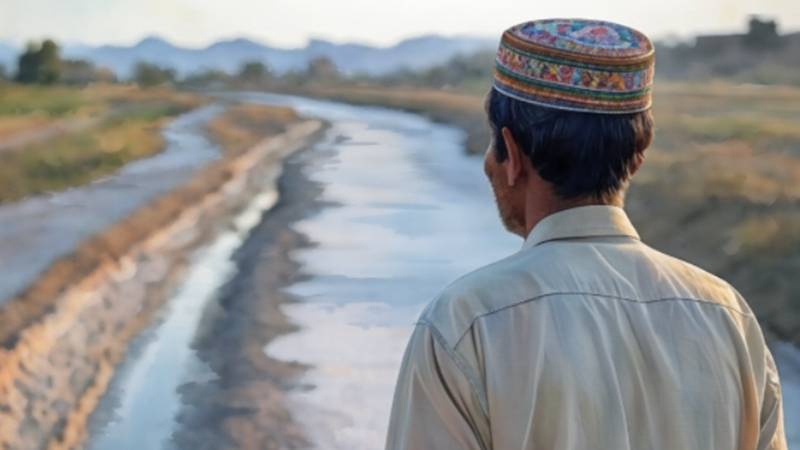
The Indus River, flowing over 3,000 kilometres from the glaciers of Tibet, winding through the majestic mountains of Ladakh, and nourishing the fertile plains of Punjab and Sindh before merging with the Arabian Sea, is more than a river. It is the heart of Pakistan’s landscape and identity, its turquoise waters carving deep canyons and spreading life across vast alluvial plains.
Water is too vital, as the pulse of the Indus plains and the shield of coastal mangroves to be a pawn in geopolitical games
But beneath its life-giving surface, the Indus has become a faultline. Its flow, controlled upstream by India’s dams and diversions, pulses with geopolitical tension. For millions of farmers in Kashmir’s orchards, to the fishermen in the delta’s mangroves, this is not distant politics, it is an existential threat to their survival and livelihoods.
This tension captures the larger Indo-Pacific dilemma: How do we reconcile the rigid notion of absolute sovereignty with the reality that rivers and seas do not heed man-made borders?
Water weaponisation hits those least able to defend themselves, particularly women in riverine communities. They rise before dawn to collect water, tend fields, and adapt to unpredictable seasons wrought by ecological change. Yet despite their essential roles, women are often sidelined in the corridors of power where water policy and peace are negotiated.
Political science research repeatedly shows that sustainable peace and effective resource governance require inclusive institutions that elevate women’s voices; their leadership is not an add-on, but a strategic imperative.
The time has come to rethink sovereignty and security through the lens of interdependence. The concept of Zones of Peace offers a bold alternative: cooperative, institutionalised spaces where countries jointly manage shared waters and marine resources, blending science, traditional knowledge, and diplomacy.
For Pakistan and India, expanding cooperation beyond the Indus Waters Treaty into joint environmental monitoring, transparent data-sharing, and climate adaptation planning could build trust, reduce tensions, and enhance resilience for millions.
Such frameworks challenge the zero-sum logic of power politics, transforming water from a weapon into a bridge for peace and prosperity.
The Indo-Pacific is at a crossroads. The weaponisation of water risks deepening divisions, igniting conflicts, and imperilling human security. But it also offers a rare opportunity to craft innovative governance models that match the interconnected, climate-stressed realities of our time.
States must resist the temptation of zero-sum competition and instead embrace cooperation, inclusive governance, and forward-looking institutions: for the sake of their citizens, their shared environment, and future generations.
Water is too vital, as the pulse of the Indus plains and the shield of coastal mangroves to be a pawn in geopolitical games. The moment to act decisively is now.