

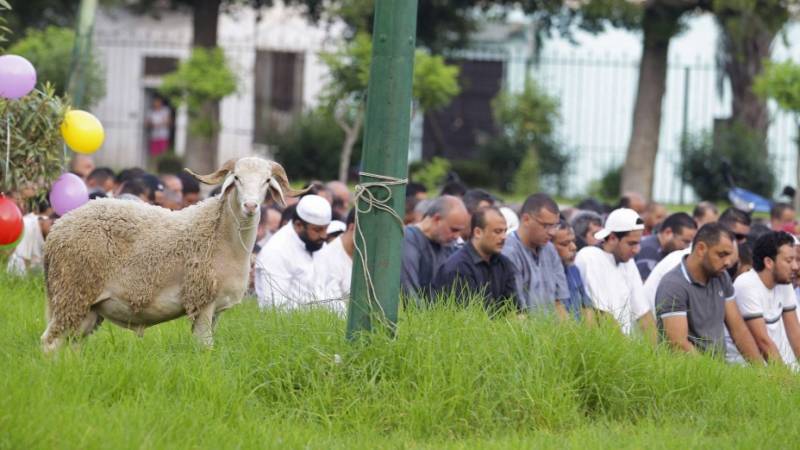
Eid-ul-Adha, often called the Festival of Sacrifice, is one of the most significant holidays in Islam, observed by millions worldwide. Rooted in a profound narrative of faith, it commemorates the willingness of the Prophet Ibrahim (Abraham in Judeo-Christian traditions) to sacrifice his son in obedience to God’s command. From a secular and rational perspective, this holiday offers a lens to explore themes of devotion, community, and ethical reflection, while also prompting questions about tradition, sacrifice, and modern practices. This column delves into the historical and religious origins of Eid-ul-Adha, its contemporary expressions, and its broader human significance, all while maintaining a neutral, reasoned approach.
The story at the heart of Eid-ul-Adha stems from the Quranic account of Ibrahim’s test of faith, paralleled in the Bible’s Book of Genesis. According to Islamic tradition, God commanded Ibrahim to sacrifice his son, widely interpreted as Ismail in Islam (though some Jewish and Christian texts identify Isaac). Ibrahim’s readiness to comply, and God’s subsequent provision of a ram as a substitute, underscores a narrative of trust and divine mercy. Historically, this story likely predates Islam, emerging from ancient Semitic traditions where animal sacrifice symbolized devotion or atonement. Scholars suggest such rituals were common across early civilizations, from Mesopotamia to the Levant, as a way to negotiate humanity’s relationship with the divine or natural forces. Viewed rationally, this tale reflects universal human concerns: the tension between personal loyalty and moral duty, and the search for meaning in suffering or obedience.
Religiously, Eid-ul-Adha is tied to the Islamic lunar calendar, occurring on the 10th day of Dhul-Hijjah, following the culmination of the Hajj pilgrimage to Mecca. Muslims worldwide perform a ritual animal sacrifice—typically a goat, sheep, cow, or camel—emulating Ibrahim’s act. The meat is divided into three parts: one for the family, one for friends or neighbors, and one for the poor, emphasizing charity and communal bonds. The festival also includes prayers, sermons, and gatherings, reinforcing social cohesion. From a secular perspective, these practices highlight values such as generosity and solidarity, which resonate beyond religious boundaries. The act of giving to the less fortunate, for instance, aligns with humanistic principles of empathy and equity, even if one sets aside the theological framing.
It’s a reminder to prioritise community over individualism, a message that resonates whether you’re Muslim or not
In modern contexts, Eid-ul-Adha’s observance varies widely. In Muslim-majority countries like Pakistan or Saudi Arabia, the holiday is a public event, with markets bustling for sacrificial animals and families hosting feasts. In contrast, Muslims in secular or minority settings, like Europe or North America, often adapt to local regulations, using certified abattoirs to comply with animal welfare laws. Interestingly, the festival’s economic impact is significant—global livestock trade spikes annually to meet demand, generating billions in revenue. Yet, this also raises rational critiques: environmental concerns about large-scale animal slaughter, ethical debates over animal welfare, and logistical challenges in urban settings. Some Muslims now opt for charitable donations in lieu of sacrifice, a practice gaining traction in progressive circles, reflecting a shift toward symbolic rather than literal interpretations of the ritual.
One might wonder how a story of near-human sacrifice resonates in a world increasingly guided by reason and science. The narrative can be seen as a metaphor for letting go—of ego, attachments, or material desires—rather than a literal endorsement of violence. Secular observers might appreciate the festival’s focus on community and charity while questioning the necessity of animal sacrifice in an era of industrialized farming and ethical scrutiny. For instance, could the spirit of Eid-ul-Adha—selflessness and sharing—be preserved without the environmental or ethical costs? These are valid questions, not dismissive of tradition but reflective of a world grappling with sustainability and moral complexity.
Consider a hypothetical family in a bustling city like Karachi or Istanbul, preparing for Eid-ul-Adha. The parents, navigating work and tradition, take their children to a market to choose a goat, explaining Ibrahim’s story as a lesson in trust and kindness. They share the meat with neighbors, including a struggling family down the street, fostering a moment of connection. This scene, familiar to millions, illustrates the holiday’s role in building social ties, a value any society can cherish. Yet, the same family might also discuss whether donating to a food bank could achieve the same goal with less environmental strain—an example of tradition evolving through reasoned reflection.
The flow of Eid-ul-Adha’s rituals, from prayer to sacrifice to feasting, creates a rhythm that binds communities. The morning begins with special prayers at the mosque, a moment of collective gratitude. Then comes the sacrifice, often a communal event where neighbors pitch in, followed by meals that spill into laughter and storytelling. This progression isn’t just religious; it’s deeply human, mirroring how societies across cultures use rituals to mark time and meaning. The holiday’s emphasis on giving—whether meat or money—reminds us that generosity can bridge divides, a principle that doesn’t require faith to endorse.
To evade the sterility of overly formal analysis, it’s worth noting that Eid-ul-Adha isn’t just a set of rituals; it’s a lived experience. Picture the chaos of a livestock market, the bleating of goats mingling with vendors’ shouts, or the warmth of a family kitchen as meat is cooked and shared. These moments carry an imperfect, human messiness—someone burns the curry, a child complains about the smell, yet the day feels whole. This organic quality makes the holiday relatable, not as a theological mandate but as a celebration of connection. Still, one can’t ignore the debates it sparks: animal rights advocates might argue for reform, while traditionalists defend the ritual’s sanctity. Both sides have merit, and acknowledging this tension reflects the complexity of human values.
Eid-ul-Adha, at its core, is about sacrifice—not just of an animal, but of self-interest for the sake of others. It’s a reminder to prioritise community over individualism, a message that resonates whether you’re Muslim or not. Arguably, the holiday’s enduring appeal lies in its adaptability: it can be a deeply spiritual act for some, a cultural touchstone for others, or simply an occasion to share a meal. In a world often divided by ideology, there’s something quietly powerful about a tradition that, at its best, brings people together over a shared plate. It’s not perfect—few traditions are—but it’s a chance to reflect on what we’re willing to give up for the greater good. That’s a question worth pondering, no matter where you stand.