

The two major conflicts over the past two months — between India and Pakistan, and between Iran and Israel — have left us with several pressing questions.
Is the United States’ status as the world’s sole superpower truly under threat? Closely linked to this is the perceived supremacy of US and Western weaponry, in contrast with Chinese arms and those developed indigenously by Pakistan and Iran. Observers are also debating the re-emergence of bloc politics, with the world seemingly divided between the so-called Global North and Global South — the former comprising the US and Europe, the latter encompassing nations from Latin America, Africa, and Asia. The Global North, mostly NATO countries, is increasingly viewed as a waning force — militarily and economically — compared to the rising economic and military power of the East, led by China.
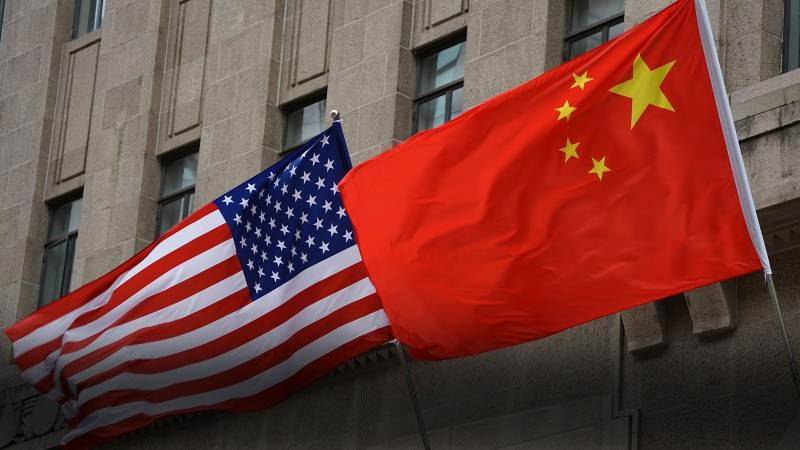
This leads to the critical question: does China genuinely pose a real challenge to US global dominance? Can it protect its strategic and economic interests in the South China Sea, South Asia, and the Middle East, where its Belt and Road Initiative (BRI) projects are heavily invested? Is China ready to confront the United States militarily, having already engaged in a protracted trade war? And perhaps more importantly, is it prepared to bear the burden of a regional hegemon — protecting the nations under its umbrella, as the US has done for its NATO allies in Europe and elsewhere?
Many analysts viewed the recent conflicts as proving grounds for Chinese weaponry — notably during Pakistan’s deployment of Chinese-made J-10C fighter jets and PL-15 missiles against India’s French-made Rafales and Russian Su-30s during the aerial clashes on the night of 6–7 May. This was widely interpreted as a symbolic victory for Chinese arms over those of the West. Iran’s subsequent use of domestically developed hypersonic missiles also surprised observers, given their speed and precision. Despite lacking a modern air force, Iran inflicted significant damage on Israel — one of the world’s most technologically advanced air powers.
It is also believed that China provided cyber support to both Pakistan and Iran — overtly in one instance, covertly in the other. This allowed Beijing to field-test both its military hardware and cyber capabilities in real-time conflict situations. While these developments drew considerable scrutiny, less attention was paid to the escalating tensions in the South China Sea and Eastern-Central Europe.
War seems undesirable for both the US and China, yet paradoxically, it feels increasingly imminent and unavoidable
Following the ceasefire between Iran and Israel, and President Trump’s recent statement supporting a possible 60-days truce in Gaza, Western media has shifted its focus to another brewing flashpoint — the prospect of Chinese military action against Taiwan. A wave of YouTube videos now circulate, outlining hypothetical war scenarios involving the United States, Japan, and Australia against China. Notably absent is India — possibly sidelined by the West following its recent military setback in the four-day conflict with Pakistan, and no longer viewed as a credible regional counterweight.
Unsurprisingly, in all Western-drawn scenarios, the US emerges victorious. At worst, these projections end in nuclear stalemate — a global Armageddon. Meanwhile, Chinese officials have repeatedly stated they are prepared to use any means necessary, including military force, to reclaim Taiwan.
Now, turn your gaze to another critical theatre — the Baltic.
Kaliningrad Oblast, a Russian exclave on the Baltic Sea bordered by Poland and Lithuania, was once the German city of Königsberg. It was annexed by the Soviet Union after the Second World War. Today, Kaliningrad is a heavily fortified zone housing the Russian Baltic Fleet, advanced air defences, and missile systems, making it a key strategic outpost. Its proximity to the Suwałki Gap — a narrow land corridor between Poland and Lithuania — enables Russia to potentially sever NATO’s land link to the Baltic states.
Amid the Ukraine war, Kaliningrad remains vital for projecting Russian power in Europe. However, with Russia deeply entangled in Ukraine, this has created space for countries like Sweden to assert more control over the Baltic Sea — a crucial maritime route not only for regional trade but also for Russia’s logistical lifeline to Kaliningrad. This shift has quietly altered the balance of power in the region.
Amid these changes, reports have emerged — often dismissed by critics as Western propaganda — of Russia using Kaliningrad’s electronic warfare systems to jam GPS and radar signals used by commercial flights over the Baltic region. Airlines including Ryanair, Finnair, and British Airways have experienced repeated disruptions, with some flights even forced to abort landings. Western experts believe this is a calculated tactic by Russia to shield its military operations while testing its cyber capabilities — increasing risks to civilian aviation and fuelling regional instability.
Meanwhile, another potential crisis is unfolding in the Balkans.
Tensions between Serbia and Bosnia-Herzegovina have recently intensified due to growing ethnic divisions within Bosnia and Herzegovina, particularly in the Serb-majority region of Republika Srpska. Its leader, Milorad Dodik, has renewed calls for greater autonomy and hinted at secession, supported by Serbia and Russia. This has raised alarm among Bosniak and Croat communities, as well as Western observers, who see it as a direct threat to the fragile peace established by the 1995 Dayton Accords. The situation is further inflamed by nationalist rhetoric, lingering grievances from the Bosnian War, and Russia’s expanding influence in the Balkans.
The picture I have attempted to outline suggests a world brimming with tensions on the verge of eruption. For the United States and its Western allies — whose economies are not in their strongest condition — this presents a formidable challenge. For China, the greater challenge lies in stepping beyond its comfort zone of economic growth to safeguard its expanding global interests — a difficult task without regional stability and secure trade routes, which may ultimately require it to take up arms in the literal sense.
War seems undesirable for both the US and China, yet paradoxically, it feels increasingly imminent and unavoidable.