

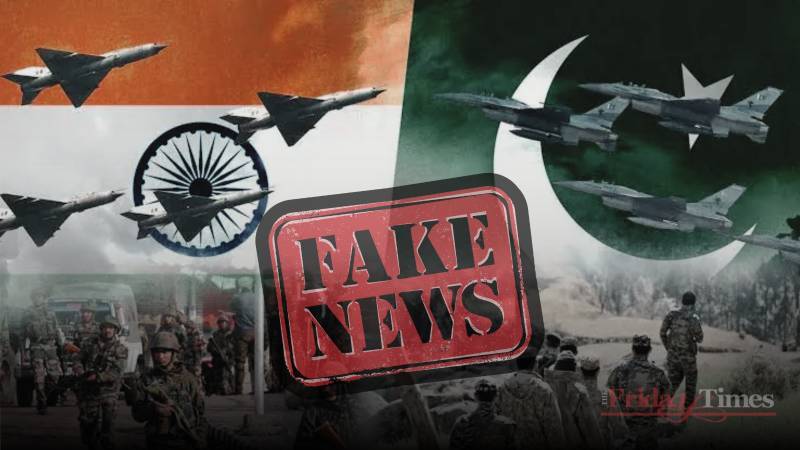
Media, one of the most powerful tools in the modern world, shapes the minds of people, influences decision-making, and builds the image of nations. In the case of India and Pakistan, two neighbouring countries with a long history of political, military, and social tensions, the role of the media becomes even more sensitive. Unfortunately, the Indian media has often been used not as a platform of responsible journalism but as a weapon of propaganda against Pakistan. For decades, sections of the Indian media have spread narratives that are hostile towards Pakistan, creating an atmosphere of mistrust and hatred. This behaviour is not only damaging to the relationship between the two countries but also to the peace and stability of the South Asian region.
One of the key features of the Indian media’s propaganda is sensationalism. Instead of presenting facts in a calm and balanced manner, many Indian television channels and newspapers choose to exaggerate events to create fear and anger among their viewers. This is particularly visible during times of political or military confrontation. A famous example is the coverage after the Pulwama attack in February 2019. The attack killed more than 40 Indian paramilitary soldiers in occupied Kashmir. Within hours, Indian media outlets began pointing fingers at Pakistan without waiting for evidence or an independent investigation.
Channels ran heated debates with anchors shouting and demanding revenge. Social media in India, influenced by this kind of reporting, was filled with hatred and calls for war. The media played a direct role in building pressure on the Indian government, which eventually led to the Balakot airstrike. Later reports revealed that India’s claims of killing a large number of militants in Balakot were highly exaggerated and even questioned by international news agencies. Still, the Indian media presented the incident as a great victory, while Pakistan calmly showed evidence that no major damage had been caused. This is a clear example of how propaganda can influence public opinion and push governments towards dangerous decisions.
Many of the leading anchors of Indian television have played a direct role in shaping hostile narratives against Pakistan. Figures such as Arnab Goswami (Republic TV), Sudhir Chaudhary (Aaj Tak/India TV), Navika Kumar (Times Now), and Rahul Shivshankar (Times Now) are often seen leading heated debates where Pakistan is declared guilty without evidence. Their shows are less about journalism and more about theatrics, with shouting matches, aggressive gestures, and loaded questions designed to provoke anger.
Analysts frequently invited on these channels, including commentators like Major Gaurav Arya (Retd) and General G. D. Bakshi (Retd), add to the atmosphere by calling for tough military responses against Pakistan. Instead of providing balanced assessments, their remarks often encourage a warlike mood. Such voices dominate prime-time television, leaving little room for saner or more neutral perspectives.
This trend became particularly clear during the Pulwama attack and Balakot strikes in 2019, when Arnab Goswami and Sudhir Chaudhary declared Pakistan responsible within hours, running hashtags such as #PakistanBackedTerror and #IndiaStrikesBack. Similarly, during the Asia Cup 2025 controversies, Indian anchors again portrayed Pakistan in a negative light, exaggerating incidents like the anthem mishap and the trophy snub.
By giving space to such aggressive voices, the Indian mainstream media amplifies propaganda, ensuring that public opinion remains hostile towards Pakistan
By giving space to such aggressive voices, the Indian mainstream media amplifies propaganda, ensuring that public opinion remains hostile towards Pakistan. Independent or moderate analysts who question these narratives, such as Barkha Dutt or Shekhar Gupta, are often sidelined or branded as “soft on Pakistan”, further shrinking the space for balanced discourse.
The Mumbai attacks in 2008 also highlight the way the Indian media has operated against Pakistan. Within hours of the tragic incident, television screens in India were filled with stories linking Pakistan to the attacks. The coverage was emotional, aggressive, and focused more on blaming Pakistan than on reporting facts. The investigations were still in early stages, yet the media presented Pakistan as the mastermind. The constant repetition of such claims created a strong impression among ordinary Indians that Pakistan was directly responsible, even before any proof was available. The tragedy was used not only to inform the people but also to deepen hatred and suspicion between the two nations.
Another tool used by the Indian media is disinformation. Fake stories and misleading news items have been spread to damage Pakistan’s reputation internationally. In December 2020, a detailed report by the European Union DisinfoLab exposed a large network of fake websites and media outlets linked to Indian sources. This network, which was running for more than 15 years, was designed to spread negative propaganda against Pakistan at the international level, particularly in Europe. Hundreds of websites and fake NGOs were used to publish anti-Pakistan content and then circulate it as genuine news. This campaign was not just targeting ordinary people but also aimed at influencing policymakers in Western countries by creating a false image of Pakistan as a supporter of terrorism. The revelation of this network was a major embarrassment for India, as it showed the extent to which disinformation had been used as a political tool.
Indian media also plays a significant role during times of conflict along the Line of Control. Every time there is cross-border firing, Indian channels present one-sided stories that blame Pakistan for all the violence. They often show dramatic visuals with patriotic music and aggressive commentary, turning complex military situations into entertainment shows. For example, during the 2016 Uri attack, Indian media again declared Pakistan guilty within hours and built a narrative that justified India’s so-called “surgical strikes”. Later evidence about these strikes was never clearly presented, and many neutral observers questioned India’s claims. However, the media created a national mood of triumph that ignored facts. In this way, the media acts as a tool of war rather than a messenger of truth.
This same behaviour was seen again during the Asia Cup 2025, where cricket between India and Pakistan turned into a political and media battlefield. The Indian team refused to accept the winning trophy from the President of the Asian Cricket Council, Mohsin Naqvi, who is also the Pakistan Cricket Board (PCB) Chairman. The ceremony was disrupted, and Indian media quickly framed the incident as an insult against their team, stirring emotions among fans.
Earlier in the tournament, when the organisers mistakenly played a pop song instead of Pakistan’s national anthem, Indian media outlets again gave the issue heavy coverage, presenting it in a way that embarrassed Pakistan. The media also highlighted controversies such as Haris Rauf’s fighter-jet gesture and the PCB’s complaint against Indian bowler Arshdeep Singh for an obscene gesture, portraying Pakistan as provocative while downplaying the behaviour of Indian players who were also fined by the ICC. Instead of presenting cricket as a sport, the Indian media treated the Asia Cup as another front of hostility, reinforcing the narrative of conflict. Neutral observers, however, noted that mistakes and aggressive behaviour came from both sides, but Indian media used the tournament to push its anti-Pakistan messaging.
The louder they shout against Pakistan, the more popular they become
Besides television and newspapers, Indian social media platforms are also full of propaganda campaigns. Troll armies and fake accounts spread rumours and hateful content against Pakistan. Hashtags blaming Pakistan for every terror attack in India trend within minutes. This creates a digital echo chamber where people only see one side of the story and are made to believe that Pakistan is always the enemy. Many times, even false videos and pictures from other conflicts are circulated as proof of Pakistan’s involvement in violence. This kind of digital propaganda is not only dangerous but also very difficult to counter, as it spreads quickly and reaches millions of people in a short time.
The problem with such propaganda is that it closes the door to dialogue and peace. The media has the power to build bridges between nations, to encourage understanding, and to highlight stories of cooperation. Unfortunately, the Indian media often does the opposite when it comes to Pakistan. By painting Pakistan as a permanent threat, it strengthens extremist voices and weakens those who call for peace. The ordinary people in India and Pakistan have many common interests, from culture and sports to trade and education. But when the media constantly promotes hatred, it becomes almost impossible for citizens to think beyond conflict.
It is important to note that not all journalists and media persons in India support such propaganda. Some independent voices have criticised this trend and called for responsible reporting. However, these voices are often drowned out by the loud and aggressive style of mainstream channels. In recent years, the rise of television anchors who act more like politicians than journalists has further increased the problem. Their programmes are designed not to inform but to excite emotions and raise ratings. The louder they shout against Pakistan, the more popular they become. This dangerous style of journalism may help television channels earn money, but it damages the possibility of peace between the two nuclear-armed neighbours.
The propaganda against Pakistan also serves domestic political purposes in India. By creating a constant sense of threat from Pakistan, ruling parties can divert attention from internal issues such as unemployment, poverty, and communal tensions. Whenever elections are near, hostile media coverage of Pakistan increases sharply. The narrative of a strong government protecting the country from Pakistan becomes a tool to win votes. This is another example of how propaganda is used for short-term political gains at the cost of long-term peace.
Another example of this was seen during the Indian general elections of 2019. The Pulwama incident and the Balakot airstrikes became central topics in the media. Instead of focusing on domestic issues, the media created a warlike atmosphere that benefited the ruling party. Prime Minister Narendra Modi and his supporters were presented as strong leaders who had taught Pakistan a lesson. The timing of this media campaign was so convenient that many analysts believe it had a direct impact on the election results. Again, propaganda against Pakistan was not only a media strategy but also a political weapon.
So, the role of the Indian media against Pakistan is a clear example of how powerful communication tools can be misused. Instead of promoting peace, understanding, and responsible journalism, many media groups have chosen the path of sensationalism, disinformation, and propaganda. From the Mumbai attacks to Pulwama, from the so-called surgical strikes to the Balakot airstrikes, and most recently during the Asia Cup 2025 controversies, the Indian media has repeatedly created hostile narratives without proper evidence.
International reports such as the EU DisinfoLab further confirm that this propaganda is not limited to domestic audiences but is also spread at the global level. Such behaviour is dangerous for regional stability and for the lives of millions of people who deserve peace instead of war. It is the responsibility of journalists to report truthfully and fairly, and it is the duty of governments to ensure that the media is not turned into a weapon of propaganda. Until this changes, the Indian media will continue to play a negative role against Pakistan, deepening mistrust and preventing the possibility of a better future for both nations.