

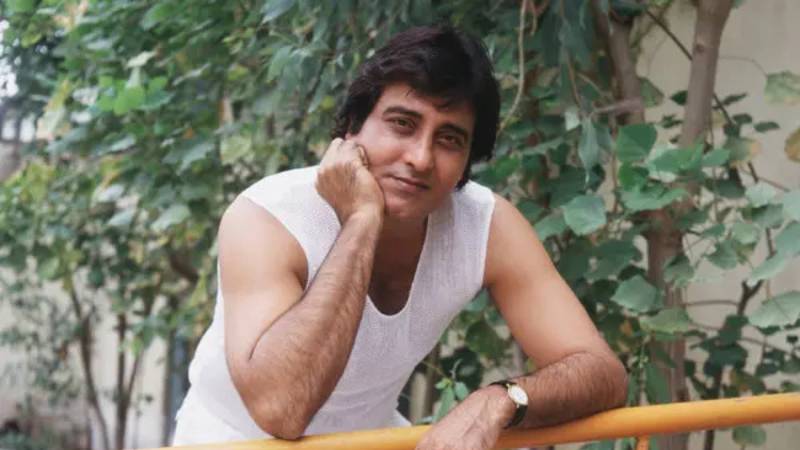
This is the story of Vinod Khanna, a man born in the enchanting air of Peshawar, a city whose magic seeped into his soul and never left. It was a time when the whispers of India’s impending partition echoed through every alley and courtyard. Then came the fateful year, 1947, when the partition was officially announced. And with it, a fire of unrest engulfed both sides of the border. The great migration began. Families were torn from their ancestral homes. For Vinod’s family, it was a heartbreaking decision. They loved Peshawar deeply. It was a city of elegant bazaars, bustling teahouses, and warm-hearted people.
Peshawar had birthed many illustrious artists, Prithviraj Kapoor, Raj Kapoor, and Dilip Kumar, all names that would shine eternally in Bollywood’s history. Back then, Vinod’s father, Kishanchand Khanna, could never have imagined that his young son would one day join this constellation of stars, icons who hailed from Peshawar and lit up the cinematic skies of India.
When the partition was announced, riots erupted on both sides of the border. Troubling news came daily. Yet Kishanchand remained hopeful. He believed that, regardless of political boundaries, Peshawar was still their home, a city of familiarity and belonging. He was convinced they would never have to leave. But each day brought fresh chaos. Eventually, the time came when the Khanna family, with heavy hearts, made the painful decision to leave Peshawar for Bombay.
Bombay was nothing like quiet, romantic Peshawar. It was a city of noise and haste, a whirlwind of motion. Kishanchand enrolled young Vinod at St. Mary's School. After completing his schooling, Vinod moved on to college, where he found opportunities to explore extracurricular activities. Handsome and charismatic, he stood out effortlessly in any crowd.
Bombay was the beating heart of Indian cinema. Countless young men and women harboured dreams of making it in films. Many haunted the doors of studios, hoping for a break. But Vinod had no such ambition. His journey into cinema began unexpectedly when he caught the eye of actor and filmmaker Sunil Dutt, who decided to cast him in his film Man Ka Meet.
He turned away from the lights of film studios and sought spiritual light instead, in the ashram of Guru Rajneesh (Osho) in Oregon, USA
The story of that film is an interesting one. Sunil Dutt had made Man Ka Meet a launchpad for his younger brother, Som Dutt. Ironically, the film did little for Som Dutt’s career, but it became a turning point for Vinod Khanna. He played a negative role, yet his performance won hearts. With his very first film, doors to stardom swung open.
After debuting in a villainous role, Vinod continued to portray antagonists in his early films. His next major role was in Mere Apne, Gulzar’s directorial debut. Again, Vinod played a disillusioned, angry young man. Then came Mera Gaon Mera Desh, where he portrayed a fearsome dacoit. But even in these negative roles, audiences embraced him. His acting breathed life into characters that could have otherwise been forgettable.
By the 1970s, he began receiving roles with more heroic depth. Such was the brilliance of Vinod’s craft that he could transform completely from role to role. As a villain, his voice carried steel and menace. As a hero, his tone softened, full of love and warmth.
In 1971, at the age of 25, Vinod Khanna married Geetanjali. They had two sons, Rahul and Akshaye. The 1970s and 1980s marked the peak of his cinematic journey. His biggest hits came during this era: Haath Ki Safai, Main Tulsi Tere Aangan Ki, Hera Pheri, Khoon Pasina, Amar Akbar Anthony, Qurbani, and Muqaddar Ka Sikandar.
This was Vinod Khanna at the height of his fame, rivalling even Amitabh Bachchan in popularity. He had wealth, respect, and stardom at his doorstep. And yet, something remained absent within. The glitz of cinema brought him no inner peace. In search of a deeper truth, he made a decision that stunned fans across the country.
One day, at a press conference, Vinod Khanna announced his retirement from films. Rarely had a star walked away from fame while at their peak. But Vinod did. He turned away from the lights of film studios and sought spiritual light instead, in the ashram of Guru Rajneesh (Osho) in Oregon, USA.
This unexpected turn had profound effects, not just on his career but on his marriage. The distance, both emotional and physical, between Vinod and Geetanjali widened. Eventually, it led to the end of their union. His quest for knowledge and inner calm lasted five years.
In 1987, Vinod Khanna returned to films. Much had changed in his absence. He made his comeback with the film Insaaf, re-establishing himself as a screen presence. Over the next two decades, he became a central figure in Bollywood once again, working in numerous films like Chandni, Krantiveer, Dabangg, and Dabangg 2.
Following his spiritual journey and return to the industry, Vinod married Kavita in 1990. They had a son and a daughter. Unlike his first marriage, this partnership lasted until the end of his life. Another chapter of Vinod Khanna’s remarkable life was his foray into politics. He chose the Bharatiya Janata Party (BJP) as his platform and was elected to the Lok Sabha from Gurdaspur four times. He also served as Minister of Culture and Tourism in 2002, and later in the Ministry of External Affairs.
His contribution to cinema was recognised through several awards Filmfare Awards, the Lifetime Achievement Award, and Stardust honours. After he died in 2017, he was posthumously awarded the prestigious Dadasaheb Phalke Award for lifetime contribution to Indian cinema. Yet Vinod Khanna’s greatest accolade remained the unconditional love of his fans, millions who adored him with a near-devotional passion.
As he neared the final milestone of life’s journey, Vinod Khanna would often think of his gentle father, Kishanchand, a man forever in love with Peshawar. Till his last breath, Kishanchand would share with his son stories of Peshawar, its fragrant streets, its teahouses, and lively bazaars.
Peshawar was a city of memories, a city of soulful romance. That city, whose scent lingered in Vinod Khanna’s spirit from beginning to end.